
Neanderthals consumed mollusks as early as 115,000 years ago, especially during the colder months
In a cave in Cartagena, Spain, limpet shells and snails were found, collected in the same way modern humans would have done millennia later
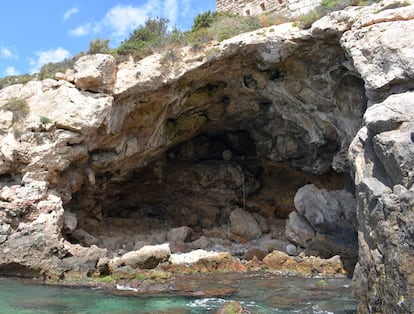

There was a time when researchers doubted that Neanderthals liked the beach. There was no trace of them in marine environments. It was suggested then that these were more complex ecosystems, requiring skills that only Homo sapiens, modern humans, possessed. Several studies have dismantled this ethnocentrism: Homo neanderthalensis had been feeding from the sea for many millennia before Homo sapiens arrived in Europe. Now, a new study published in PNAS shows that, around 115,000 years ago, in a Mediterranean cave, they used strategies that Homo sapiens would employ much later, such as gathering mollusks in the colder months, when the risk of contamination was minimal and their flavor at its peak.
“The Los Aviones cave was occupied year-round; we don’t know if permanently or not, but most likely not,” says Asier García-Escárzaga, a researcher at the University of Burgos and lead author of the study. The cave, near Cartagena (Murcia), now threatened by rising sea levels, was a refuge for Neanderthals for millennia. “There is exploitation throughout the year, but most of the mollusks, most of the shells, are collected during the colder months, that is, from late autumn, around November, until early spring, around April,” García-Escárzaga adds.
The dating of the stratum from which dozens of remains of two mollusk species were recovered indicates that they were collected approximately 115,000 years ago. The exact year cannot be determined, but the approximate month can be. Thanks to the analysis of oxygen present in the calcium carbonate that forms the shells, researchers were able to determine that, although harvested year-round, around 80% of the Mediterranean snails (Phorcus turbinatus) were consumed between November and April, and only 5% during the summer months. The percentage is similar for the ferruginous limpet (Patella ferruginea), the other mollusk included in this study.
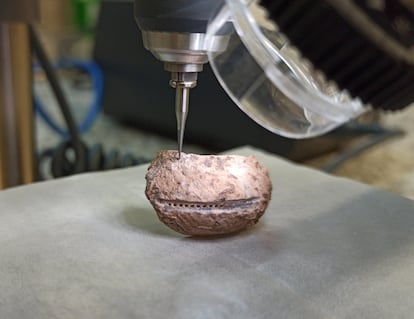
“What’s relevant here is that this seasonal pattern is identical to the one we have for Homo sapiens populations in the Mesolithic and Neolithic periods, in the Mediterranean basin and the European Atlantic, 100,000 years later,” García-Escárzaga points out. For the authors, once the ornamental use of shells is ruled out (“There are no perforations or ochre remains, nor did they use these species,” the researcher adds), the key is that Neanderthals gathered these food resources according to the season.
Looking back, it seems logical that harvesting took place during the colder months. Today, in the southern mid-latitudes, this pattern is still followed for many mollusk species and most hard-shelled shellfish. Summer, with the rise in temperatures, brings algal blooms, such as the dreaded red tide, which makes harvesting mussels, for example, impossible. In the warmer months, in addition to the risk of algal or bacterial contamination, there’s the issue of preservation. But there’s another factor: they taste better in winter.
“The reproductive cycle of Phorcus turbinatus may have had significant implications for its seasonal exploitation,” notes Arnaldo Marín, a marine biologist at the University of Murcia and co-author of the study. The maturity of the Mediterranean snail’s gonads reaches its peak during the colder months, “a time when the digestive gland-gonad complex exhibits high development and a high accumulation of energy reserves, especially lipids and proteins associated with gamete production,” Marín adds. Conversely, at the end of spring, after spawning, the individuals experience a marked reduction in gonadal content, coinciding with the warmer months, leaving the reproductive system practically empty and decreasing the animal’s nutritional value. “These seasonal variations suggest that the harvesting of P. turbinatus by Neanderthals may have been concentrated primarily in the periods prior to spawning, when energy and nutritional yields were at their highest,” he concludes.
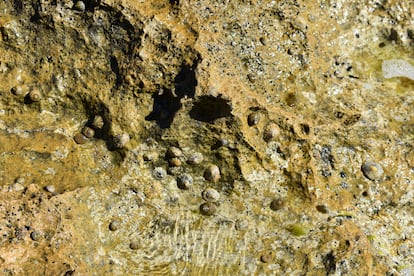
There is no direct evidence that Neanderthals ate mollusks in the colder months because they tasted better, but there is no evidence to the contrary either. And what is known points to the former. In Mediterranean snails, their high fat content and flavor are closely linked to the reproductive cycle. “This pattern is also known in other marine mollusks, such as oysters, mussels, and sea urchins, where they are traditionally considered better before the breeding season,” the biologist notes. In fact, many traditional fishing practices and shellfish harvesting seasons coincide with these periods of peak physiological condition.
According to Miguel Cortés, professor of prehistory at the University of Seville, there is an alternative hypothesis to explain seasonal consumption: “In these latitudes, such as the region of the Los Aviones cave, Neanderthals could have gone up into the mountains in summer and, in winter, gone to the coast to avoid the cold and ate whatever was available,” he suggests. 115,000 years ago, the climate was similar to today’s, although the beginning of the Würm glaciation, the last Ice Age, was already approaching.
Cortés was one of the authors of a paper that caused a stir among scholars of human evolution. In 2011, they published a study on mollusks collected in a cave on the Málaga coast. They were over 150,000 years old. This implies that Neanderthals were consuming marine resources in Europe at least at the same time that modern humans were doing so in southern Africa. “It was very difficult for us to get it published. The [paleoanthropological] community, dominated by Anglo-Saxons, didn’t buy it,” Cortés recalls. In their then-dominant thesis on human origins, “the consumption of seafood could have helped the development of the modern human brain and its evolution,” he adds. And the findings in several caves over the last two decades, all on the Iberian Peninsula, of Neanderthals collecting shellfish and mollusks have dismantled their narrative.
Sign up for our weekly newsletter to get more English-language news coverage from EL PAÍS USA Edition









































