
An experimental therapy saves the lives of more than 60 children with a deadly disease
The treatment, which is administered only once, has allowed a little girl named Eliana Nachem, confined to her home to avoid infections, to go out into the world
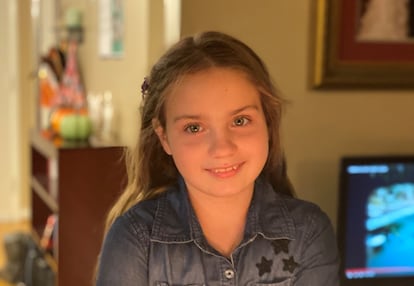

An experimental gene therapy has saved the lives of 62 children affected by the extremely cruel ADA-SCID, a genetic childhood disease that weakens the immune system and facilitates all kinds of deadly infections: pneumonia, meningitis, chickenpox. The father of one of these children, Jeff Nachem, detailed over the phone the ordeal his family endured a decade ago. “It was tough because our daughter Eliana was stuck in the house, so my wife also isolated herself from the world to avoid the risk of infecting her. I still had to go to work. When I came home, before I could pick her up, I had to take a shower and put on fresh clothes first,” he recalls from New York. The revolutionary treatment is administered in just one single dose, with no need for further doses, but it is so sophisticated that it can cost around one million euros. Eliana received it a decade ago and now leads a completely normal life. “She gets great grades in school, plays basketball, and has even joined the school choir. It’s incredible,” her father recounts with emotion.
The treatment consists of extracting blood stem cells from the patient’s blood or bone marrow. A healthy copy of the defective gene is then introduced into the cells, and these corrected cells are then reintroduced into the children’s bodies. The results show a 100% survival rate, after a follow-up period of more than a decade in five cases. One of the leaders of the research, the American physician Donald Kohn, believes it is still too early to declare a cure. “To me, cure means a life-long absence of the disease. We can’t say that at this point. However, over the 7–12 years of observation, the clinical benefits have been completely stable, so I hope it will remain this way life-long,” Kohn, of the University of California, Los Angeles, explains to EL PAÍS.
Up to five out of every million newborns suffer from the disease. Like other rare pathologies, its name is unpronounceable. ADA-SCID stands for severe combined immunodeficiency due to adenosine deaminase deficiency, a protein essential for activating white blood cells, the body’s defenses. Due to the lack of this protein, Eliana Nachem’s parents had to meticulously disinfect everything that entered their home, while their daughter grew up without seeing the faces of her loved ones, hidden behind masks. The disease and others like it are popularly known as bubble child syndrome, especially since the harrowing film The Boy in the Plastic Bubble, starring John Travolta in 1976.
Children no longer have to literally live in plastic bubbles like they did half a century ago, but isolation remains strict. “I remember how upset people around the world were when COVID-19 happened and everyone was asked to stay indoors for two weeks. People were losing their minds over having to stay inside for two weeks. And a lot of these families have to do it for years,” laments Jeff Nachem. To isolate their daughter from viruses, bacteria, and fungi, Eliana’s parents had to send their pets to friends’ houses, give up plants, install filters to clean the air, and forgo eating fresh fruits and vegetables. Without therapy, children often die before their second birthday.
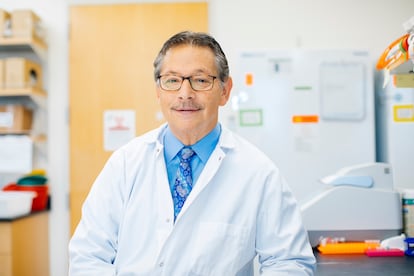
Dr. Donald Kohn and his colleagues underscore that currently available treatments have limitations and risks. It’s possible to improve these children’s immune systems with weekly injections of the missing protein, but deadly infections return over the long term. Another option is a bone marrow transplant, but a compatible donor must be found quickly, and complications often arise. And there is a third alternative: Strimvelis, another gene therapy that has already saved the life of Aitana, a 4-year-old girl from Córdoba, in Spain.
The story of Strimvelis epitomizes the nightmare suffered by families affected by the disease. The treatment was born from research at San Raffaele Hospital in Milan, Italy, developed in conjunction with the British pharmaceutical company GSK. This therapy also involves introducing a healthy copy of the defective gene into children’s cells using a virus that acts as a carrier. The European Medicines Agency approved Strimvelis in 2016, and GSK set a price of approximately €600,000 per patient. However, just two years later, the pharmaceutical company transferred the treatment to another company with headquarters in the United States and the United Kingdom, Orchard Therapeutics, which also ended up abandoning its commercialization. The shortage of patients and the extremely high cost complicate the viability of these early gene therapies, even if they save lives. The system fails with rare diseases. For the time being, the Telethon Foundation, linked to San Raffaele Hospital, has pledged to maintain production of Strimvelis.
Immunologist Manuel Santamaría led Aitana’s case at the Reina Sofía Hospital in Córdoba. In his opinion, the two gene therapies are “similar,” except for two relevant details. Strimvelis uses a retrovirus to introduce the healthy gene into cells. Its results in 43 children show an excellent efficacy and safety profile, but one of the patients developed leukemia due to unwanted DNA alterations caused by the treatment itself. The new therapy from Donald Kohn’s laboratory uses another type of virus, a lentivirus, and no evidence of this problem has been detected. Furthermore, the Los Angeles team managed to freeze the children’s cells after adding the gene, which will allow the treatment to travel and be administered in any hospital. Currently, families must travel to Milan to receive Strimvelis, which consists of fresh cells. “They’re slight improvements, but there aren’t enough differences to warrant running away from one treatment and adopting the other. Essentially, these two gene therapies are comparable,” says Santamaría.
Dr. Donald Kohn says the patent for his treatment belongs to the two institutions that developed it: UCLA and University College London. Orchard Therapeutics also licensed the therapy in 2016, but halted development five years later due to financial difficulties. Frustrated and with no partners in sight, Kohn and two members of his lab decided to found Rarity PBC, the company that now holds the license to the patent. Kohn has also just received a $14.7 million grant from the California Institute for Regenerative Medicine to develop a commercial manufacturing protocol of his therapy for ADA-SCID.
“I do not know what it will cost for each treatment with this gene therapy,” says the U.S. doctor. “It is complex to manufacture the cell product for each patient, requiring a clean room facility, skilled technicians, and rigorous quality oversight. Patients now are often treated for some years with an ADA enzyme therapy and that is also quite expensive. So within a few years after the “one and done” gene therapy, the overall costs should be less,” reflects Kohn, who points out that he owns shares in Rarity PBC. Their latest results, in children treated in the United States and the United Kingdom, were announced this Wednesday in the specialized journal The New England Journal of Medicine.
Juan Antonio Bueren, former president of the European Society of Gene and Cell Therapy, is collaborating with Kohn on another experimental treatment that has already saved the lives of a dozen children with another extremely rare disease, leukocyte adhesion deficiency type 1 (LAD-I). The Spanish researcher applauds the “wonderful” results of the new study, but emphasizes the difficulties. “There is a problem with commercializing gene therapies for rare diseases: their current cost is enormous, due to the production cost of the viruses and genetically modified cells, the cost of all the controls required by regulatory agencies, and the fact that patients must be followed for 15 years,” explains Bueren, of the Center for Energy, Environmental and Technological Research (CIEMAT) in Madrid.
Lentiviruses have already proven to be a potential cure for around 15 rare genetic diseases. They are some of the most expensive medicines on the planet. “Since healthcare in the U.S. is primarily private, the price of this type of therapy is set at four million euros and that’s it, but in Europe, where healthcare is predominantly public, pharmaceutical companies faced the problem that governments wouldn’t authorize such high costs. And many companies aren’t interested in developing gene therapies for rare diseases,” Bueren continues. Jeff Nachem, Eliana’s father, is clear: “I don’t know what’s there to charge for it, but this kind of treatment shouldn’t be denied to a small child who needs it to survive.”
Sign up for our weekly newsletter to get more English-language news coverage from EL PAÍS USA Edition









































