Asteroid that could wipe out a city is near, but don’t fear
Saturday’s close encounter will offer astronomers the chance to study a space rock from just over 100,000 miles away
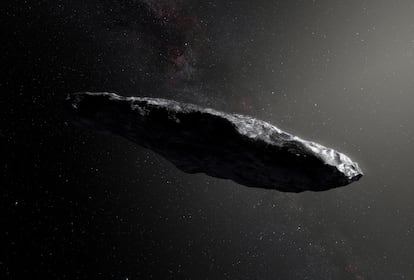
An asteroid big enough to wipe out a city will zip harmlessly between Earth and the moon’s orbit this weekend, missing both celestial bodies.
Saturday’s close encounter will offer astronomers the chance to study a space rock from just over 100,000 miles (168,000 kilometers) away. That’s less than half the distance from here to the moon, making it visible through binoculars and small telescopes.
While asteroid flybys are common, NASA said it’s rare for one so big to come so close — about once a decade. Scientists estimate its size somewhere between 130 feet and 300 feet (40 meters and 90 meters).
Discovered a month ago, the asteroid known as 2023 DZ2 will pass within 320,000 miles (515,000 kilometers) of the moon on Saturday and, several hours later, buzz the Indian Ocean at about 17,500 mph (28,000 kph).
“There is no chance of this ‘city killer’ striking Earth, but its close approach offers a great opportunity for observations,” the European Space Agency’s planetary defense chief Richard Moissl said in a statement.
Astronomers with the International Asteroid Warning Network see it as good practice for planetary defense if and when a dangerous asteroid heads our way, according to NASA.
The Virtual Telescope Project will provide a live webcast of the close approach.
The asteroid won’t be back our way again until 2026. Although there initially seemed to be a slight chance it might strike Earth then, scientists have since ruled that out.

Tu suscripción se está usando en otro dispositivo
¿Quieres añadir otro usuario a tu suscripción?
Si continúas leyendo en este dispositivo, no se podrá leer en el otro.

FlechaTu suscripción se está usando en otro dispositivo y solo puedes acceder a EL PAÍS desde un dispositivo a la vez.
Si quieres compartir tu cuenta, cambia tu suscripción a la modalidad Premium, así podrás añadir otro usuario. Cada uno accederá con su propia cuenta de email, lo que os permitirá personalizar vuestra experiencia en EL PAÍS.
¿Tienes una suscripción de empresa? Accede aquí para contratar más cuentas.
En el caso de no saber quién está usando tu cuenta, te recomendamos cambiar tu contraseña aquí.
Si decides continuar compartiendo tu cuenta, este mensaje se mostrará en tu dispositivo y en el de la otra persona que está usando tu cuenta de forma indefinida, afectando a tu experiencia de lectura. Puedes consultar aquí los términos y condiciones de la suscripción digital.
More information
Últimas noticias
NASA discovers Titan doesn’t have an ocean, but a ‘slushy ice layer’ that increases possibility of life
Innocence lost in the forest of the child soldiers: ‘Each leader of the armed group had his girls’
‘Fallout’ or how the world’s largest company turned an anti-capitalist apocalyptic Western into a phenomenon
From inflation to defending migrants: Eileen Higgins and Zohran Mamdani inaugurate the new Democratic resistance against Trump
Most viewed
- ‘El Limones’ and the growing union disguise of Mexican organized crime
- Christian Louboutin: ‘Young people don’t want to be like their parents. And if their parents wear sneakers, they’re going to look for something else’
- The low-cost creative revolution: How technology is making art accessible to everyone
- ‘We are dying’: Cuba sinks into a health crisis amid medicine shortages and misdiagnosis
- A mountaineer, accused of manslaughter for the death of his partner during a climb: He silenced his phone and refused a helicopter rescue






































