Bewildered in Venezuela
Those who were hoping for change have suddenly found themselves living in a caricature: Donald Trump is now the one leading the Bolivarian revolution

The U.S.-orchestrated military intervention to kidnap Nicolás Maduro bore the hallmarks of a major television production, in which the scriptwriters crafted a heroic narrative devoid of any bloodshed. The background explosions, the gunfire, the din of planes and helicopters, and then the immediate transition to the figure of a handcuffed and humiliated leader: the gray tracksuit, the dark glasses, the headphones, the water bottle. The dead appear only as a minor detail, a number in small print. Donald Trump, the architect of the operation, presented it as if it were a grand spectacle— yet another one of his —, a showy display of overwhelming American power. It also took the form of a sophisticated computer game brought to life, in which the deposed president wishes his captors a Happy New Year and then poses with his thumbs up as if he were the victor.
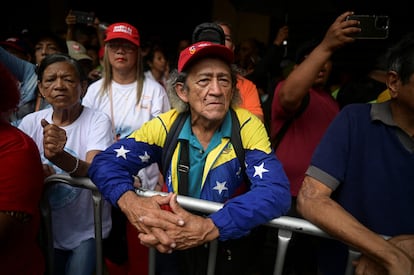
On the other side of the trench, Chavismo, which immediately called for armed struggle to stop the coup: “The entire country must mobilize to defeat this imperialist aggression.” The brave architects of 21st-century socialism were preparing to demonstrate their courage and resolve against their perennial enemy, but it all came to nothing. There was a little noise from the motorcycles of their supporters, and a few hours later the cameras focused on Delcy Rodríguez as she was sworn in as acting president of Venezuela, dressed in an elegant green suit with a gold brooch, earrings and bracelets, her hands clasped as if she were about to pray to the heavens, giving thanks for the blessing of leading her people. No one knows exactly towards what.
The opposition was stunned to realize that neither Edmundo González Urrutia, the undeclared winner of the last elections — which Maduro ignored to cling to power — nor María Corina Machado, whose resilience serves as an inspiration to those yearning for a different country, were part of Trump’s plans. They were discreetly sidelined and placed in a sort of standby mode, who knows for how long. So the Venezuelan people are completely bewildered. They don’t know if, in celebrating the fall of the leader of a dictatorship, they aren’t actually celebrating the arrival of foreign investors who will take their oil barrels and rare earth minerals. It’s as if the White House had wiped the smiles right off their faces. They’ve been hoping for change since Hugo Chávez came to power in 1999, but they’ll have to put their hopes and their desire to build a different country on hold for a while longer. They have suddenly found themselves inhabiting a caricature: Donald Trump is now the one piloting the Bolivarian revolution.
The most complicated thing about what has happened in recent days is using words, because they have lost all meaning. It is quite possible that Venezuelans don’t know what they mean when they talk about freedom. Are they referring to the intervention of a special operations military group tasked with high-risk missions that arrived from Washington to rid them of the tyrant? Or to the new direction that Delcy Rodríguez is going to set for Chavismo under the watchful eye of Washington? In this context, talking about democracy almost has an element of bad taste, of unnecessary audacity, of invoking an antiquated notion that no longer serves any purpose.
Sign up for our weekly newsletter to get more English-language news coverage from EL PAÍS USA Edition