
COP30 in the Amazon: Crucial summit or climate carnival?
That the event is taking place in such a symbolic territory is a powerful statement that offers an extraordinary opportunity to change the narrative, re-center Indigenous knowledge, and reimagine governance
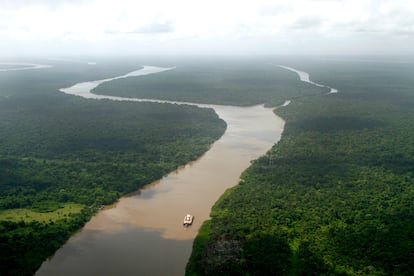
I have just returned from Atalaia do Norte, in the Brazilian Amazon, where I stood on June 5 by the Javari River to honor the memories of my friends, British journalist Dom Phillips and Brazilian Indigenous expert Bruno Pereira, who were brutally murdered there for their unwavering defense of Indigenous rights and the Amazon.
What I witnessed there was not just remembrance; it was a stark reminder of what is at stake: the lives of all humans and the rest of nature, the preservation of Indigenous territories, and the right to dream of an Amazon beyond the plunder of capitalist extraction. The Dom and Bruno mission — to listen to Indigenous voices and defend the forest — continues to guide those of us who believe that the Amazon is not a resource to be exploited, but a living, breathing archive of ancestral knowledge, dignity, and resistance. I have walked both the halls of global climate conferences and the flooded trails of the rainforest, and in both places, I’ve taken time to listen. What I hear are not corporate promises, but ancestral warnings, the same ones Dom Phillips summed up in his posthumous book How to Save the Amazon: “People need to learn from Indigenous peoples that only collective, community thinking, not individual greed, can save the Amazon.”
His words carry added urgency today. The Amazon does not need another showpiece summit centered around a spectacle of world leaders disengaged from the reality of the Amazon. What’s needed are actions grounded in care, justice, and respect for the forest’s original stewards. What I have witnessed in the Amazon is not just environmental degradation, but the erosion of meaning, of belonging. The crisis is not only ecological, but also civilizational.
The price of exclusion
As COP30 approaches, the world’s eyes turn to Belém and to the staggering cost of hotel beds, reportedly up to three times higher than in Glasgow during COP26. It is a bitter irony that these extortionate charges mirror the very predatory capitalism that is destroying the Amazon in its inexorable pursuit of financial gain. However, this is not just a matter of inflated cost; it is about exclusion. Delegates from poorer nations and grassroots civil society organizations, many of whom represent the communities most affected by the climate crisis, are being priced out of participation. (What kind of climate justice is possible when the cost of attending the ‘People’s COP’ (the parallel forum for NGOs and popular organizations) in Belém will range from $8,400 to $16,800 per person?)
If Belém becomes a playground for the privileged, the Amazon will once again be commodified as a spectacle, its rivers, peoples, and ecosystems turned into decor for diplomatic posturing. Climate governance cannot be auctioned to the highest bidder. If COP30 excludes the very voices it claims to uplift, it will not be a summit of solutions, but a symbol of hypocrisy.
Negotiation or performance?
As the recent “United Call for an Urgent Reform of the UN Climate Talks” reminds us, the UN Framework Convention on Climate Change (UNFCCC) process has consistently failed to deliver meaningful outcomes. Emissions continue to rise. Indigenous and traditional communities remain sidelined. The Amazon ecosystem, a crucial planetary regulator, is on the brink.
Meanwhile, over the past 30 years, COP summits have grown into media spectacles, massive, performative, and often hollow. With lavish pavilions, glossy campaigns, and corporate branding, the Blue Zone – the space for official negotiations) has become a climate-themed marketplace, increasingly detached from the communities most affected by ecological collapse. This is not mere optics, it is a political failure.
A recent investigation by The New York Times revealed that the number of participants at climate summits has grown exponentially. While COP29 had 71,000 attendees, COP28 in Dubai hosted more than 84,000, with fossil fuel lobbyists, corporations, and government delegations dominating the event. Far from signaling progress, this bloated attendance reflects the widening gap between decision-makers and the frontline communities most affected by the climate crisis.
The Amazon is not a backdrop
Belém is not just a city; it is a gateway to one of the most complex and threatened biomes on Earth. Holding COP30 in the Amazon is, in itself, a powerful statement and provides a remarkable opportunity to shift the narrative, to re-center Indigenous knowledge, reimagine governance, and elevate biocultural alternatives to extraction.
But how can this happen if fossil fuel companies sponsor the largest pavilions? If the Brazilian government auctions off offshore blocks to oil companies along the Amazon coast? If the same Indigenous communities that defend the forest are invited to perform on stage but are silenced at the negotiating table? If policy reform is discussed in air-conditioned tents while just a few miles away rivers flood and forests burn?
Fix governance, not the optics
The Brazilian government has touted ‘innovation in governance’at this COP, through decentralized forums, task forces, and a multi-actor mutirão, or collective effort. While this signals openness, many within civil society fear dilution. There is little clarity about who is accountable, what decision-making structures exist, and how grassroots knowledge will be valued.
If COP30 fails to meaningfully integrate these voices, if it continues to serve the diplomatic choreography of elite actors and corporations, it will not only fall short of its policy goals but will further erode trust in global climate processes.
In Belém, we have the chance to depart from the path of climate colonialism. To reject the model in which the Global South becomes a showroom for the grammar book of ‘bioeconomies’ and ‘green growth’ while extraction continues under new guises.
Real climate action must dismantle the structures that created the crisis. That means ending fossil fuel expansion. It means confronting agribusiness and mining interests. It means seeing Indigenous knowledge not as ‘complementary,’ but as central.
Rebuild, don’t rebrand
To achieve this we need a COP built on accountability, equity, and radical listening, a COP that enshrines Indigenous territorial rights, ends fossil fuel subsidies, and opens itself up to non-state actors in more than symbolic ways.
Let us not allow COP30 to become another climate carnival of exclusion, greenwashing, and government performance. Let it be a rupture: a moment where the Amazon speaks not from the sidelines, but from the center of the world stage.
The Amazon is not a destination. It is a warning, a teacher, and a mirror. And it will not wait.
Dom Phillips believed the answers were already there, in Indigenous stewardship, in collective responsibility, in learning to unlearn. If we ignore these lessons in Belém, we risk not just failing the forest and its Peoples, we risk losing our last chance to truly listen to it.
Sign up for our weekly newsletter to get more English-language news coverage from EL PAÍS USA Edition









































