
Metal Bros: Why are millennial men obsessed with filling their homes with steel and chrome?
A recent study on Pinterest reveals an uptick in searches for this material among men when it comes to decorating their homes. Is it a generational or gender issue?

A thousand sit-ups and a dozen cosmetics orchestrate Patrick Bateman’s morning routine at the beginning of the film American Psycho. The wide shot of the apartment, which shows a beauty care regime almost as terrifying as the crimes committed by its protagonist, also reveals the space that a successful, single man must have aspired to in Manhattan during the 1980s. American Psycho‘s set designer, Jeanne Develle, and production designer, Gideon Ponte, created a hyperminimalist environment with snowy walls punctuated with black accents, artwork by Robert Longo, and design icons in the furniture such as the Barcelona chair by Mies van der Rohe. The absence of decoration competed with the ubiquity of steel in the kitchen, the living room furniture, and the bedside tables. A house as carefully designed as it is inert, in which it is as difficult to imagine a murder as the existence of a home.
Almost three decades later, and outside of the yuppie realm of New York, it seems that the trends governing bachelor pads have changed little over time. According to the latest study by the social media platform Pinterest on masculine trends among the millennial audience (aged between 28 and 43), searches such as metal furniture design (+75%) or chrome esthetics (+40%) are among their favorites when it comes to finding inspiration for their homes. First place goes to modern-style metal sofas and armchairs (+105%), like the one Bateman chose to decorate his apartment in the fictional American Gardens Building.
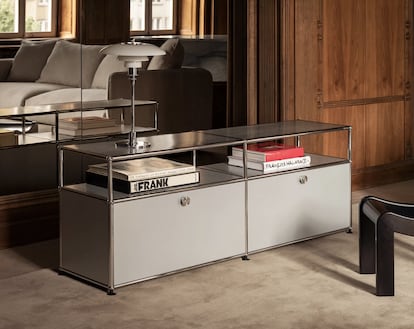
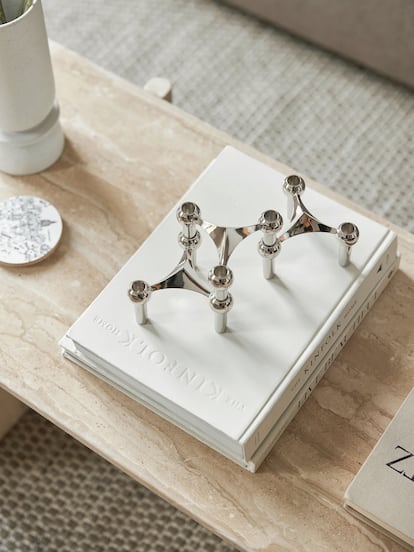
Álvaro Toledo, 31, could add to this statistic. The apartment belonging to this Spanish content creator — who specializes in home decor and has over 300,000 followers on his Instagram account, @planc.home — is an example of the visual power that tubular steel exerts in the life of a modern single man. A staunch defender of the Cesca chairs that preside over his dining room — their creator, Hungarian-born Marcel Breuer, also tops the Pinterest survey with 40% of searches — or the viral furniture by USM Haller, an icon of modular design since 1965 thanks to its chrome-plated steel structures, photographs of his home feature no shortage of metal tableware or Nagel candlesticks, which he confesses to having collected for years. “Chrome-plated metal is timeless; we can see it in designs from 100 years ago, like the Cesca chairs, which are still relevant today, but also in current designs. They represent modernity and add a touch of freshness, enriching the space,” he explains.
For Toledo, the love affair between millennial men and metal begins with pieces from the mid-20th century, when the foundations of functional beauty for everyone were established. “This material represents, in a way, an accessible luxury, something sophisticated but not overdone, like gold. In some ways, we could consider it a ‘masculine’ material; I suppose that’s why many men feel comfortable using it to decorate their homes,” he reflects.
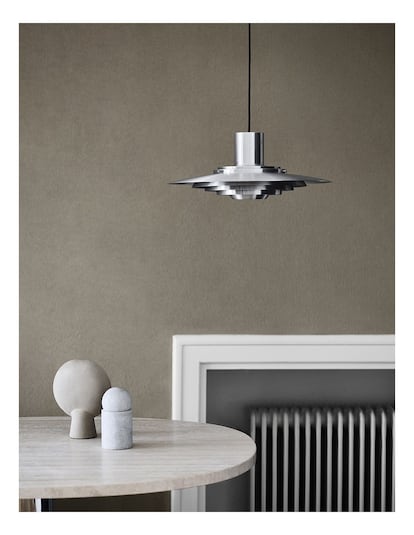
The creative’s list of objects includes aspirational pieces in any millennial apartment, such as the Wassily chair, another Marcel Breuer design inspired by a bicycle frame dating back to the 1920s; the P376 aluminum ceiling lamp by &Tradition; the PH 3/2 table lamp designed by Poul Henningsen for Louis Poulsen; and the unconventional Plopp stainless steel stool, a best-seller at the factory of Polish sculptor Oskar Zieta.
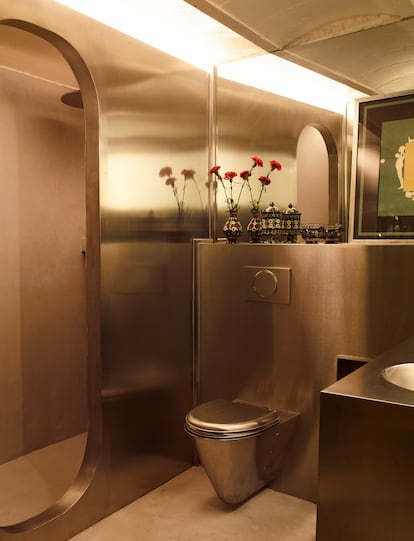
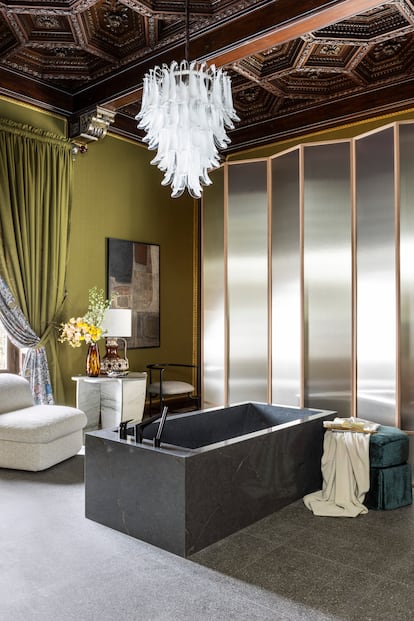
In interior design, chrome-plated metal is a trendy material at industry events such as the CasaDecor trade fair in Madrid. At last year’s edition, one of the most acclaimed projects was the Metallic Harmony bathroom for the Strohm Teka space, where a huge metal screen that reflected light while concealing the toilet and bidet took center stage. Its designer, Erico Navazo, wanted this striking element to clash with the home’s Renaissance interior.
“In my interiors, I always seek harmony by creating contrasts. Steel, more than a masculine material, is a trendy one. It’s very attractive because it updates any space,” he says. The expert cites those futuristic interiors from the 1960s in which it was masterfully combined with carpeting, period antiques, and works of art. He insists on questioning gender bias: “I don’t know if this material appeals primarily to millennial men, to be honest.”
Antonio Matres, a Spanish interior designer based in New York, handles this material with ease. His latest project, Ōpera Brutta, will soon be unveiled in the center of Madrid. This space will be a specialty café and art gallery by day, and after sunset it will transform into an espresso-based cocktail bar with DJ sessions. For this occasion, his studio has designed a collection of chairs, tables, and auxiliary pieces that combine polished steel with leather details and other fine materials.
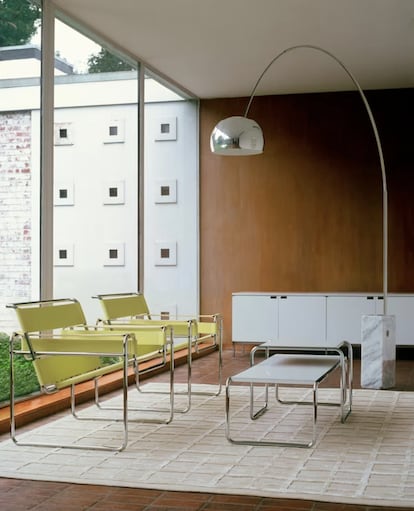
In the commissions he receives from his younger clients, he confesses that chrome is not just a finish, but a statement: “Its visual language refers to the perfect geometry of the Bauhaus, to the rationalist luxury of Le Corbusier and Mies van der Rohe, to that modernism that was once the epitome of the avant-garde and is today perceived as a status symbol.”
In a world saturated with images, the expert continues, metallic shine becomes a sign of control and precision. “It functions as a literal and symbolic mirror: it reflects light, but also attention to detail, the power to define every line of space, and the will to live surrounded by pieces that stand the test of time.”
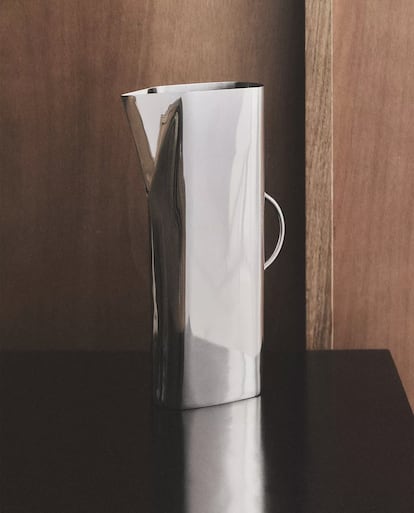
Relegated for years to the cold imagery of offices and hotel bars, metal is returning as a symbol of urban luxury in new-fangled interiors. “Chrome is making a comeback, but not as a passing fad. It’s a resource that, used precisely, adds a language of authority, permanence, and sophistication to interiors,” says Matres. Global searches on social media confirming the growing interest in metal furniture and brushed surfaces would be linked, he notes, to an increase in the catalogs of both major brands and signature pieces. A reflection of the generational shift embracing this material. “In Milan, we saw how metal ceased to be a timid accent and became a protagonist, whether in Lee Broom’s sculptural lamps or the reissues of Van der Rohe pieces. Let’s also not forget that at PAD in London, it was presented in the form of collectible art, as in the case of Rick Owens’ tables or Vincenzo De Cotiis’ functional sculptures.”
“Design bros [male fans of interior design] love chrome because they see themselves in it, they confuse cleanliness with modernity,” laughs designer Ben Ganz in an article on the trend published in the U.S. edition of Architectural Digest. Ganz, in fact, designed a USM collection for the magazine and publisher Pin-Up.
Whatever the Pinterest data says, should we discard the idea of gender in the materials that make up a home? The founders of Casa Josephine, Pablo López Navarro and Iñigo Aragón, believe the topic could be a podcast: “We think it’s yet another echo of a cultural cliché, associating the cold and functional with the masculine. In contrast, it also implies that the opposite vocabulary (warm, ornamental, fluid, or superfluous) is the essence of the feminine, understood, of course, as hetero feminine.” What the creators of the famous lamps featured in Almodóvar’s latest film, The Room Next Door, do agree on is that we’re talking about a trend that’s sweeping all audiences.
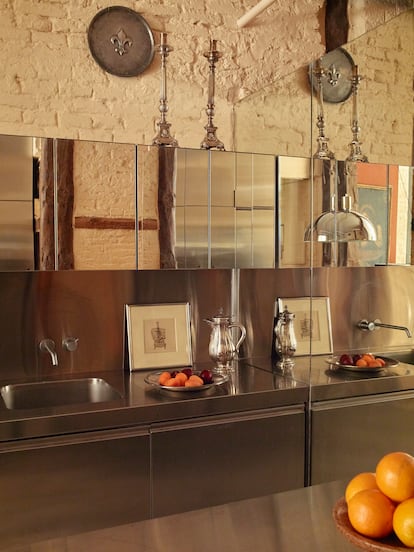
Pioneers in knowing how to anticipate industry trends before anyone else — such as the use of tiles in their rental home near Segovia, or the esthetic potential of an antique in modern settings found in their Madrid store — Navarro and Aragón recall a project they developed based on different metal finishes such as brushed or polished stainless steel, silver, and mirrors. “It’s currently being widely shared on social media, but we first published it in 2020,” they note. The home includes a stainless steel bathroom inspired by airplane restrooms, a kitchen in the same material combined with chrome, mirrors, and silver, and furniture that fuses steel, velvet, and more mirrors. “I wish it were unnecessary to say it, but this is a project made for a woman. At no point in the conversation with our client did we talk about the supposed masculine or feminine qualities of the materials because we don’t believe in that idea. It was her house, not a gender statement.”
Sign up for our weekly newsletter to get more English-language news coverage from EL PAÍS USA Edition









































