
A Model Law to address digital violence against women in Latin America
The tool is a legal standard for governments and parliaments in the region to use. It establishes obligations for digital platforms, such as the timely removal of violent or non-consensual content
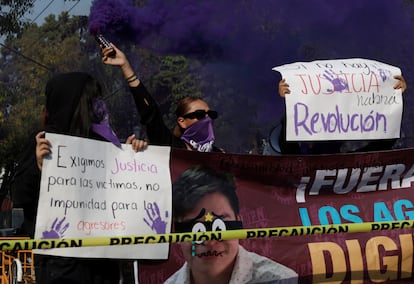

Deepfakes, threats, doxing (disclosure of personal information), hate speech spread through troll farms and bots, the use of viral hashtags, gender-biased fake news, and the non-consensual sharing of intimate content. The landscape of digital violence against women is increasingly broad and sinister. And although it is on the rise, most Latin American countries lack legal frameworks to protect them from this type of violence, which tends to be minimized despite its serious physical and psychological consequences.
We need only recall cases like that of Olimpia Coral, a Mexican woman who attempted suicide three times after a former partner shared intimate videos of her; or the anguish women face regarding the obstacles they encounter on digital platforms when non-consensual information continues to be disseminated. So far, only initiatives like the Olimpia Law and the Belén Law, in Mexico and Argentina respectively, have been put in place. But a comprehensive legal framework is needed that addresses all facets of violence in digital environments and those responsible.
This is the gap that the Inter-American Model Law to Prevent, Punish, and Eradicate Technology-Facilitated Gender-Based Violence against Women, launched on December 10 in Brazil, seeks to fill. The tool was designed by the Committee of Experts of the Follow-up Mechanism to the Belém do Pará Convention (MESECVI) of the Organization of American States (OAS). On Wednesday in Fortaleza, it will be received by the ministers and national authorities of the States Parties that ratified the Belém do Pará Convention. It is a document with the highest legal standards on the subject, intended to serve as a guide and foundation for the protection of women from violence in digital environments by the congresses, governments, and judicial systems of countries in the region.
The responsibility of platforms
The most innovative aspect of this Model Law is that it establishes clear obligations for digital platforms and internet intermediaries to promptly remove violent or non-consensual content, design transparency measures, preserve evidence, and establish avenues of cooperation with the authorities.
The Law emphasizes that the dignity of women must be above economic interests, as it points out that monetization models based on increased traffic and dissemination of content on platforms, including content shared without consent, have facilitated practices that allow profiting “through the creation, dissemination or commercialization of misogynistic or violent digital content, in which the harm and exposure of victims become a source of economic benefit.”
“The goal is not only for them to share responsibility for not harming women, but also to be transparent in their policies to prevent this type of violence from occurring in digital environments,” explains Mónica Maureira, vice president of the MESECVI expert committee. The Chilean expert adds that it is a “digital governance model” that requires intermediaries to design processes for detecting digital violence, involving trained personnel with an intersectional approach.
Among the specific mechanisms included in the Law are, for example, that platforms must provide accessible and effective procedures for users to file complaints; comply with government requests issued by competent authorities through precautionary measures of content removal or restriction and through court orders; and have automatic labeling, through algorithms designed to detect content that could constitute digital violence against women.
The development of this tool — which took three years — involved approximately 1,000 organizations and specialists from various sectors across eight Latin American countries. UN Women and the European Union, with its Act to End Violence against Women program, also participated in the process, as did the Republic of Italy and several organizations and specialists in digital rights.
The faces of digital violence
This Model Law addresses a wide range of digital violence, including that which already occurs with artificial intelligence. It covers everything from coercion to facilitate a woman’s suicide, or providing her with assistance to do so, through the use of digital technologies; to the exposure and sale of intimate photos, videos, or audio recordings without her consent, whether real, created, or altered through the use of artificial intelligence, or with applications and other technological programs.
This includes installing tracking devices in cars or personal belongings without consent and using applications or installing spyware on electronic devices to access and control a woman’s privacy without authorization, including remote control of cameras, microphones, or geolocation functions, among many others.
The document pays particular attention to women who participate in public life and politics, as violence against them often silences their voices in public discourse. According to the 2022 United Nations study “Online gender-based violence against women with a public voice. Impact on freedom of expression,” 80 percent of women with public voices who experienced digital violence limited their participation on social media and avoid expressing opinions or speaking out on certain issues.
The ministers and other female politicians meeting Wednesday in Brazil are precisely the ones called upon to take the Law and implement it in their respective countries.
“Since it is a framework law, the various States that ratified the Belém Convention can adopt the law in its entirety or some parts to harmonize it with the regulations they have in force regarding cybersecurity or digital violence against women and girls based on gender,” Maureira concludes.
Sign up for our weekly newsletter to get more English-language news coverage from EL PAÍS USA Edition









































