Deported Haitians return to an unfamiliar country with no resources for them
After the Trump administration ended TPS protection, hundreds of people have been returned to a nation in crisis where they cannot find work or stability

It was Saturday night and Jean, a Haitian who arrived in the United States nearly 20 years ago, had left his job in Broward, north of Miami, hours earlier. But he never made it home. He wasn’t answering his phone and the location of his AirPods remained in the same place. Around 1 a.m., his doctor—also a family friend—went out to look for him and found the car unattended in a parking lot. At that point, Jean himself called and said he had been detained by immigration and was at a Border Patrol station in Dania Beach.
The doctor went there to inquire. The place looked deserted. He pressed the intercom and an agent came out and confirmed that Jean was being held and, the agent told him, that he had two options: either he would be deported to Haiti within the next 48 hours, or he would be transferred to the Krome detention center, southwest of Miami, to appear before an immigration judge.
“He told me that if he had his passport he could return [to Haiti]. That they could make it a very simple process, that they could send him back with dignity. Those were the exact words he used: ‘We can send him back with dignity.’ That he wouldn’t be shackled or anything like that,” the doctor—who asked to remain anonymous—says. “But if he went to Krome, it would be a long process. He would be detained, essentially jailed, for three to six months, sometimes longer, depending on how long it took to see a judge. And even then there were no guarantees he could stay.”
The next day the doctor returned to the station with Jean’s passport, his prescription medicine and a Bible. “He had said they hadn’t given him a toothbrush, so I brought one. He had said it was cold there, so I brought a hat” and some socks, he says. Officials accepted the prescription medicines, the passport and the Bible, but not the other items.
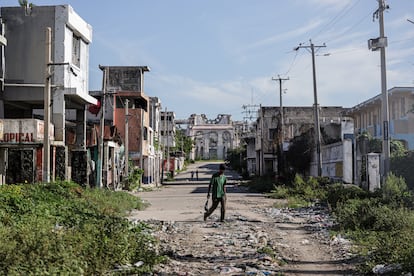
By Monday afternoon Jean was already in Cap-Haïtien, in northern Haiti, a country mired in a severe crisis of food, medical care and infrastructure, without the resources to meet the basic needs of those already there, and where gang and paramilitary violence has forced millions to flee.
“Haiti is not in a position to receive these people, whether they come from the United States, the Dominican Republic, Cuba, Chile or Brazil. They are all arriving to a place that cannot support them,” Allie Pasieka of the International Rescue Committee (IRC) told EL PAÍS from Port-au-Prince. “Even if they can reach their families, assuming they can move around, they will probably face the same vulnerabilities as those families. It is not a country with sufficient resources to support these people.”
“Haiti is right now a humanitarian disaster. So sending anyone here contributes to that humanitarian disaster,” she added.
According to figures from Human Rights Watch (HRW), 749 people had been returned from the United States on nine flights since August 20, HRW’s senior researcher for the Americas, Nathalye Cotrino, told this newspaper. The researcher visited Cap-Haïtien in August and interviewed 44 deportees who had arrived on the first two flights since the Donald Trump administration ended Temporary Protected Status (TPS) for Haiti in July, a program that had allowed about 350,000 Haitians to live and work legally in the U.S.
A blow to remittances
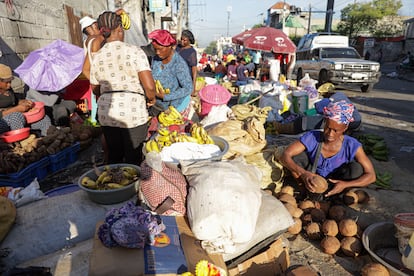
The people Cotrino interviewed told her their biggest difficulty after returning was finding work. Some had left partners and children in the U.S. and now depend on the money that those relatives send them.
“The main thing they are saying is that they need money and job opportunities. And that if they leave Haiti it will be for another country that allows them to work, not for the United States,” she says. “They are thinking maybe of trying to go to Brazil, to Chile or to nearby Caribbean places, because it’s less costly to arrange that trip.”
Haitians who emigrate “are not fleeing only the violence but also a prolonged humanitarian, economic and political crisis,” Cotrino adds.
Pasieka says the deportations could destabilize families that depended on remittances sent by the person abroad. “Remittances are a very important part of Haiti’s economy. If those people are suddenly sent back, they may have been supporting a family that can no longer sustain them.”
Pasieka recently visited Artibonite, in the country’s north-central region, where the health system is on the brink of collapse. Only two hospitals in the region are still operating and only one is accessible without crossing gang-controlled territory.
“That hospital urgently needs beds, medicines, medical equipment and power. It is costing them more money to keep operations running, for example fuel for generators. Also, they are receiving many more people than before, and often those people cannot pay,” Pasieka explains, “not even the most basic fees.”
Forced displacement also disrupts education and leaves families homeless. Schools can be occupied by gangs, and some parents avoid sending their children to class because of the dangers of the journey.
“The gangs are trying to control crucial communication routes, like roads, where they set up checkpoints. That provides them with income, but it also lets them control exactly who enters and who leaves,” Pasieka says. For those returned to a place that is not their place of origin, reaching relatives is difficult.
That is the case with Jean, who is originally from Port-au-Prince but was deported to Cap-Haïtien. His family says they are trying to reach the capital.
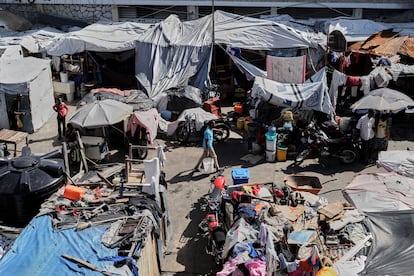
Once in Haiti, the available aid is insufficient. “When you arrive at the places where people are sheltering, there is a very basic amount of assistance to help the most vulnerable. Not everyone,” Pasieka explains.
Cotrino is concerned about whether the deportees had the opportunity to defend their cases before being sent back. Most of those she interviewed were already detained before TPS ended, and told her they had no criminal records in the U.S., something she has not been able to verify. Some had deportation orders but said they did not know about them.
A Department of Homeland Security (DHS) spokesperson told this outlet that, under the Trump administration and with figures updated through August, they have “deported more than one million undocumented immigrants and arrested more than one million.” The spokesperson also noted that TPS is temporary and that “for too long” it has been allowed to function “as a de facto amnesty program, although Congress never intended it to be permanent.”
“What we would say now is that the time has come to close it: they don’t have to return to their country, but they cannot stay here,” the spokesperson added. He urged people to self-deport and accompanied his emailed response with a list of people deported to Haiti whom he attributed serious criminal records to.
Jean’s doctor says he does not know what Jean’s immigration status was when he was detained. “I don’t ask people about their immigration status. I take care of their medical problems,” he says. He often recalls that early-morning visit at the start of the month: the abandoned car and the items he brought to the station.
Sign up for our weekly newsletter to get more English-language news coverage from EL PAÍS USA Edition