Mexican government relieved after US lifts restrictions on airlines
After conceding to the US demand to open more slots to US carriers at Mexico City International Airport, Claudia Sheinbaum’s administration has revived plans to open flights to US cities from Felipe Ángeles International Airport
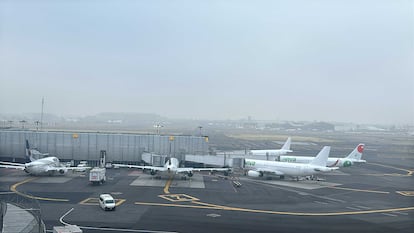

Tension between Mexico and the United States over flights to the Valley of Mexico has eased. The announcement that Washington will lift air restrictions so Mexican airlines can open routes to U.S. cities from Felipe Ángeles International Airport (AIFA) and Mexico City International Airport (AICM) ends months of uncertainty over connectivity between the two countries. Aviation policy has been one of the most complex fronts in the bilateral relationship and has reflected how government positions also spill over into this sector.
A year ago loud announcements at AIFA heralded the launch of new routes to the United States. Mexican carriers began selling the first tickets for the 2025 Christmas season, when the news dropped: U.S. Transportation Secretary Sean Duffy was canceling authorization for 13 new routes from the new Valley of Mexico airport to the United States, arguing that Mexico had “trampled” the 2015 air transportation agreement the two countries had signed. Duffy’s complaint was linked to the reorganization the Mexican government undertook after AIFA was built in 2022, affecting the allocation of air routes with the AICM.
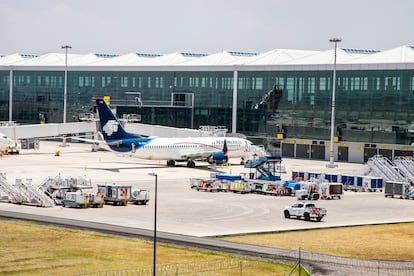
AIFA did not exist in 2015. Its construction began at the start of Andrés Manuel López Obrador’s administration (2012–2018) as one of the government’s flagship projects and as a controversial decision that canceled the Texcoco airport project. Since its opening in 2022, López Obrador promoted Felipe Ángeles among the airlines, which continued to prefer operating from the AICM, so he took measures to reorganize the distribution of flights between the two airports. In February 2023 the president ordered by decree that all cargo flights, regardless of origin, had to land at AIFA to unload goods destined for the Valley of Mexico. That decision helped to slightly ease traffic at the AICM, which was already overwhelmed.
Tensions between the two countries over air transportation measures intensified in the following months with U.S. carriers complaining about the reduction in slots —the time window assigned to a flight for takeoff or landing at an airport— available to them at the AICM. “By restricting slots and requiring cargo operations to be moved out of Mexico City, it broke its promise, destabilized the market and left U.S. companies with millions of dollars in additional costs,” the U.S. Department of Transportation protested at the time.
This year, after the cancellation of 13 AIFA routes, the Mexican government entered into negotiations and conceded to the U.S. demand to open more slots to U.S. carriers at the AICM. Claudia Sheinbaum’s government had continued López Obrador’s approach of moderating AICM air traffic; however, U.S. pressure has altered those plans. The AICM handles roughly 44 million passengers a year, while AIFA reached seven million travelers in the last year. “The decision reflects both governments’ willingness to move to a new stage in the bilateral aviation relationship, based on dialogue, respect for sovereignty, institutional cooperation, the application of international best practices and the ongoing strengthening of air transport safety and efficiency,” the Mexican government praised.
Mexican airlines have jubilantly welcomed the possibility of expanding their U.S. flight offerings. “The revocation gives Aeroméxico greater flexibility to assess opportunities to increase frequencies and introduce new services between Mexico City and the United States,” Aeroméxico said in a statement. “This outcome represents a very significant step toward continuing to strengthen connectivity in the continent’s largest cross-border air market,” Volaris said in its official communication. The agreement closes one front in the Mexico–U.S. bilateral relationship, although others —such as security and trade— remain precarious.
Sign up for our weekly newsletter to get more English-language news coverage from EL PAÍS USA Edition