
Latin America remains the deadliest region for land and environmental defenders with 85% of cases in 2025
The Global Witness report once again ranks Colombia as the country with the highest number of murders, with 39 out of 124 worldwide. Brazil follows with 26, double the 2024 figure

The map of Latin America is dotted with red markers representing land and environmental defenders who have been murdered. Cándido Esaú Román Pérez, a leader and protector of communal lands in Cihuatlán, in the state of Jalisco in Mexico, was killed in November 2025, and in February of the same year the same fate befell Suyapa Guillén and her husband, José Luis Hernández, members of a peasant cooperative, in Honduras’s Caribbean region. Over the past year in Colombia, Aida Damaris Flor Camayo, a member of the Indigenous guard in Cauca, was killed, as was a Pataxó Indigenous person in the far south of Bahia, Brazil. With 85% of cases confirmed by Global Witness in 2025, the region again ranks as the deadliest for activists and environmental defenders, a pattern that has not changed since the international organization began publishing its reports in 2012.
Titled “Collective power: The struggle for protection for land and environmental defenders,” the document states that worldwide in 2025 Global Witness verified the killing of at least 124 land and environmental defenders — a figure lower than the two previous years (142 in 2024 and 196 in 2023). And although this may seem like a positive sign, Toby Hill, the report’s lead author, warns that “we need to be cautious about interpreting this indicator as an improvement.” Figures may be underestimated because some killings go unreported and are harder to investigate in repressive, increasingly authoritarian contexts that have expanded in recent years.
During 2025, land disputes were behind more than half of the deaths (84), followed by opposition to extractive projects: 11 were linked to mining, eight to logging and six to agribusiness. Nearly three-quarters of those killed were Indigenous people and smallholder farmers, and seven of the former were members of an Indigenous guard group. Of the 124 killings verified by Global Witness, 109 were men, 14 were women and one was a non-binary person.
In Latin America, the study notes, violence against human rights defenders has been exacerbated by organized crime. In the six countries with the highest number of cases — five of which are in the region — the researchers were able to trace deaths linked to organized crime. In Colombia alone, Hill notes, “just under a third of all cases occurred,” with 39 murders.
Colombia, the deadliest country
“Colombia once again was the most violent country according to our data,” Hill adds. Although killings also fell compared with past years — 48 were reported in 2024 and the historic figure of 79 was recorded in 2023 — it has remained on the tragic podium. Almost half of the people killed were Indigenous and in 15 cases they were smallholder farmers. “Reflecting that, 35 of the 39 deaths were related to land conflicts,” Global Witness states. In 17 cases there are signs of organized crime involvement and in five of those cases the defenders were executed by hired gunmen.
Cauca, again, is the department with the most killings: 13, including four members of the Indigenous guard. Since 2012, when Global Witness began its reports, 171 killings related to defending the environment and land have been documented in this department alone. “Colombia is at the heart of cocaine trafficking,” Hill says. “And we have seen repeatedly how the presence of organized crime is associated with greater lethality in reprisals.”
Colombia, the deadliest country
During 2025
were Indigenous people
were smallholder farmers
organized crime groups may have been involved
murders occurred in Cauca
Brazil and Honduras double their numbers
With 26 murders in Brazil and 12 in Honduras, both countries share a common trait: their murder rates doubled compared to 2024. Honduras, moreover, once again holds the distinction of having the highest murder rate relative to its population.
In the South American country, the report adds, most cases are linked to recognition and demarcation of ancestral territory: 11 of those killed were smallholder farmers and seven were Indigenous. Nearly half of the reported deaths were concentrated in the states of Rondônia and Pará, in the Amazon.
Meanwhile, in Honduras, most of the murders took place in the department of Colón, on the country’s Caribbean coast — a strategic area for cocaine trafficking routes. The 10 people killed in this department were farmers.
Among the countries Global Witness highlights for this type of violence are Mexico, Guatemala, Peru, Nicaragua, and Ecuador. In Mexico the figure fell from 19 to 10, but other forms of violence have intensified. Citing the Mexican Center for Environmental Law, the report refers to 107 cases of criminalization, as well as disappearances, stigmatization, and intimidation. In Guatemala, which recorded eight killings, two were linked to opposition to mining projects and two to protests against the impacts of hydroelectric plants. And in Ecuador (three cases), two involved Indigenous people who were participating in a demonstration against state repression of their communities and rising fuel prices.
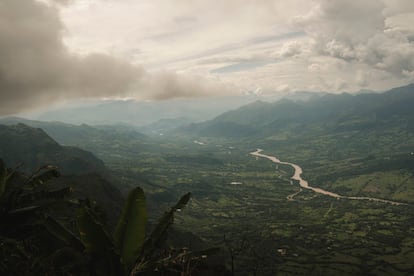
“Ecuadorian President Daniel Noboa has used the military to repress social protests,” the report says, highlighting the region’s political shift and what the rise of authoritarian governments implies. In Daniel Ortega’s Nicaragua, where there are only three confirmed cases, the organization points out that tightly restricted civic freedoms “reflect the difficulties of accessing data in places controlled by highly repressive regimes.” The lack of data on killings in many places does not mean they are not occurring.
Worldwide, but especially in Latin America, governments need to consider policies aimed at changing this specific panorama. Global Witness offers some clues, such as securing collective rights, prior consultation, and creating specialized investigative units. They also note the security role Indigenous people have developed themselves, such as in Peru, where four killings were confirmed. There, in the Amazon, the Kakataibo communities patrol their territory and monitor illegal incursions to shield themselves from violence. “In our culture, the work of defending our resources and territory is taught from an early age. But for the next generation, this work is more dangerous than ever,” says Segundo Ispón, commander of the Kakataibo Indigenous Guard of Peru.
Credits:
Sign up for our weekly newsletter to get more English-language news coverage from EL PAÍS USA Edition