
San José del Palmar, the town at the epicenter of Colombia’s earthquake: ‘We thought it was the end of the world’
The only route for delivering aid to the Chocó municipality is a mountainous, unstable road prone to landslides
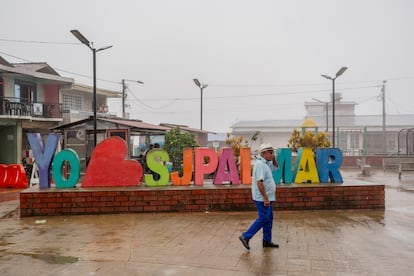
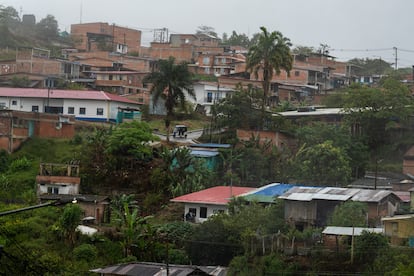
A group of children plays soccer on the central park field in San José del Palmar on Sunday morning, with a calm that would hardly suggest a tragedy had just struck there. For the past week, this municipality in western Colombia has been known nationwide as the epicenter of the magnitude 7.4 earthquake.
In the Chocó town of 5,000 residents, nestled in the Western Cordillera on the border between the departments of Chocó and Valle del Cauca, no one was killed. Nor were there any serious injuries. Even so, residents are still struggling to recover from the devastation.
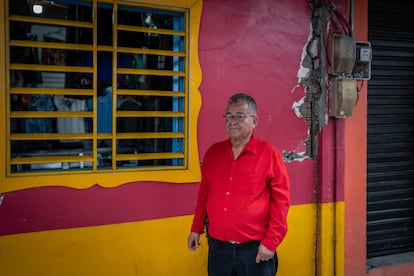
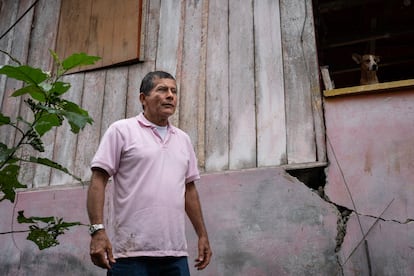
“I grabbed hold of a utility pole and felt like that sports arena was about to come crashing down. I almost ended up in the hospital. I’ve never been so scared in my life,” says Hoved Osorio, a 70-year-old shopkeeper, standing in front of the cracked facade of his home, which also serves as his clothing store.
More than 580 homes were damaged, and 42 were destroyed. A week after the disaster, some rural areas still remain without electricity.
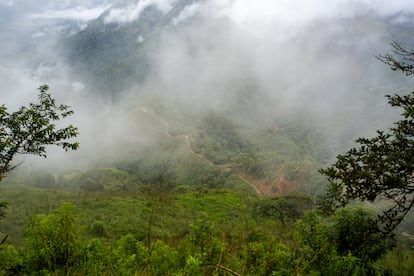
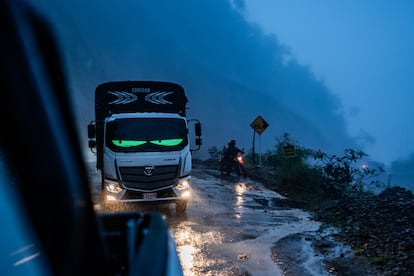
San José del Palmar was cut off from the outside world on the day of the earthquake. Its only access route is an unpaved road that was blocked by landslides, and the first aid deliveries by land did not arrive until later in the week, after crews cleared the debris. The road runs along the edge of a rugged, rain-soaked mountain range where every mile is uncertain, hemmed in by steep drop-offs.
The town lies a five-hour drive from Cali, the capital of Valle del Cauca. The first stretch is paved, but the farther one travels, the rougher the road becomes, and the fewer vehicles are seen carrying supplies such as food and water. That lone access route reflects the contrast with urban areas, where aid arrived far more quickly than it did at San José del Palmar, at the earthquake’s epicenter. The final hour of the journey crosses unstable terrain, where drivers grip the steering wheel more tightly, carefully navigating between the mountainside on one side and a sheer ravine on the other.
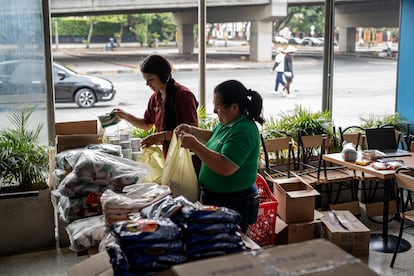
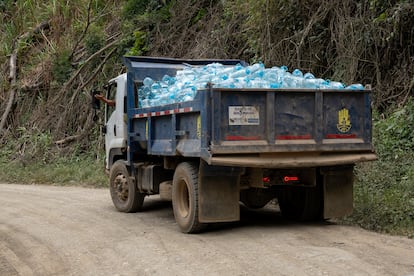
Regardless of the danger and long hours of fatigue, Maricel Solarte, a customer service assistant at a supermarket in Cali, joined fellow employees on Sunday to pack more than 500 food parcels for families affected by the disaster. The determined efforts of individuals, foundations and private companies willing to help, many of whom had never heard of San José del Palmar, were coordinated with Chocó’s disaster risk management agency to complete the donations: finding the lentils that were in short supply, collecting contributions to buy more pounds of rice, locating six-liter bottles of water.
“It’s putting in my grain of sand with all my love. I feel sad about the tragedy and at the same time grateful to be able to help,” Solarte says.
***
Despite the fear that gripped Osorio as the ground shook beneath San José del Palmar, the sports arena is still standing. The aging town hall and parish church also remain intact, along with the homes, shops, restaurants and businesses surrounding the town center. Some buildings suffered visible damage, with cracks running through walls like scars.
“What’s needed most is a stockpile of building materials to begin repairing the homes. There were sinkholes, collapsed roofs, and damage to water pipes,” says Mayor León Fabio Marín. Outside City Hall, the mayor is accompanying a team of officials who are filling out forms by hand with information about the affected families.
Residents say the disaster at the earthquake’s epicenter could have been far worse. In San José del Palmar, an area where illegal armed groups such as the National Liberation Army (ELN) operate, there is only one health center and two doctors in the municipal seat, plus another facility in a rural village that was damaged by the quake.
The nearest cities equipped to treat patients requiring specialized care are Cartago, Pereira and Cali, located two, three and five hours away, respectively, accessible only via the treacherous mountain road. The latter two cities were among those hardest hit by the earthquake, suffering building collapses and fatalities, and their healthcare systems are already overwhelmed. On the day of the disaster, San José del Palmar was even more isolated than usual: without running water, electricity, road access or internet service.
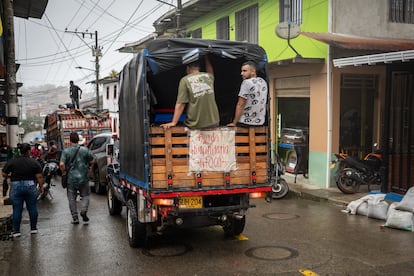
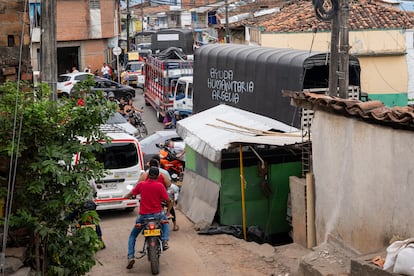
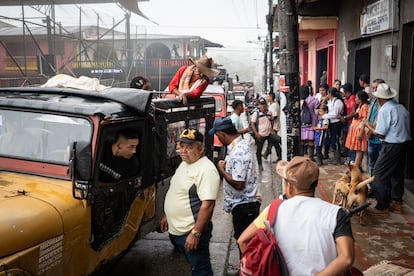
On the first Sunday after the earthquake, people gather in the town center just as they do every weekend. Jeeps and motorcycles carrying farmers to and from their rural communities move back and forth through the streets. People greet one another, honk their horns, and load and unload chontaduros (peach palm fruit). At last, their legs have stopped shaking. “I spent two days with a headache and chest pain. But you just have to learn to stay calm,” says Adriana Polo, who works at a clothing store.
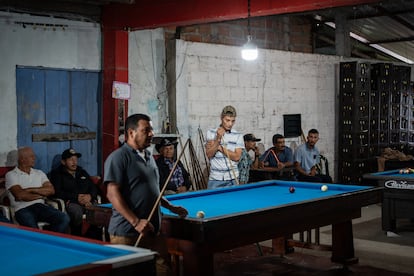
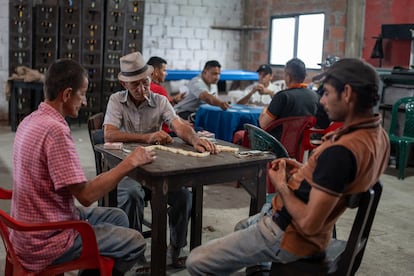
The strains of heartbreak music blare from a nearby pool hall. Beatriz Soto, who manages the place, admits she has cried many nights since the quake. “I have to keep going despite the sorrow, despite the pain. This is how I support myself and my children,” she says. The sharp crack of billiard balls colliding is not enough to drive away memories of the earthquake. “Thirty more seconds and we wouldn’t be here,” says one man, speaking to two friends over a beer, his throat still as tight as it had been the previous Monday.
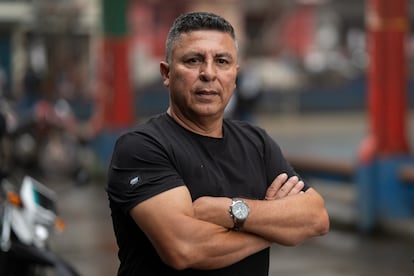
“We thought it was the end of the world,” replies Antonio Arenas, 56, his voice unsteady and his light-colored eyes still reflecting disbelief. He sets down his bottle and heads to the hamlet of Corcovado, a 12-minute drive from the town square, to show what the earthquake had done to his home. Rural areas suffered the worst damage, and some communities remain cut off from the outside world.
The wooden wall of Arenas’s bedroom was left hanging in midair. Cracks in other walls and in the concrete floor testify to the force of the tremor, even in these remote mountains. When the quake struck, the farmer was harvesting chontaduros with his nephew.
“I stayed under the palm trees because where else could we go? It was terrifying. In any case, God’s power is very great,” he says. For the rest of that Monday, still shaken by the ordeal, Arenas could not bring himself to eat a single bite.
***
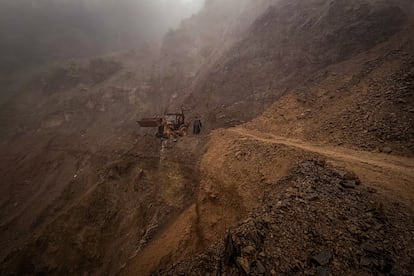
On Sunday afternoon, a week after the earthquake, another landslide strikes and the only road into San José del Palmar is closed once again. Truck drivers and motorists who managed to reach the town center or nearby rural communities wait in uncertainty, soaked by the rain. The municipality that Colombia came to know on the day of the earthquake is cut off once more, if only for a few hours.
Rocks tumble down from a mist-shrouded mountainside as the town’s backhoe operator maneuvers perilously close to the edge of a precipice, trying to clear the road.
“This is part of everyday life here,” Mayor Marín says over the phone.
“This is nothing,” adds a truck driver familiar with the road, who has just delivered aid supplies collected in the neighboring municipality of Albán.
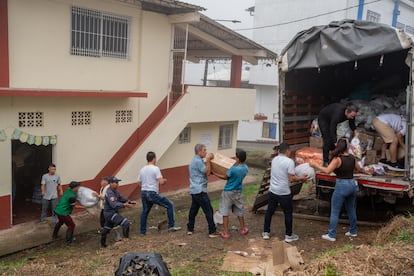
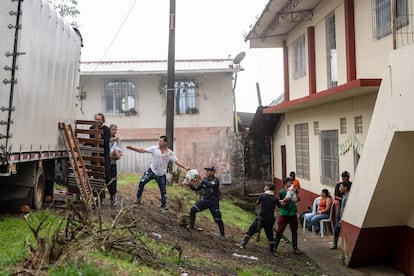
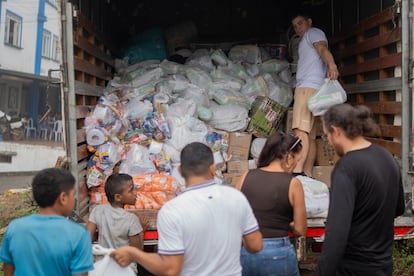
It is not until the early hours of Monday morning that another 15-ton truck arrives in Cali to pick up the 500 food parcels that Solarte and her co-workers had packed after a remarkable community effort driven by solidarity. Later that same morning, the truck delivers the supplies to a childcare center next to San José del Palmar’s main square, which has been serving as the town’s aid distribution hub.
“Come on, come on, don’t fall asleep on me!” someone shouts from inside to the human chain helping unload the truck.
Sign up for our weekly newsletter to get more English-language news coverage from EL PAÍS USA Edition









































