
Chantal, the young woman who survived Mexican boxer Omar Chávez’s beatings
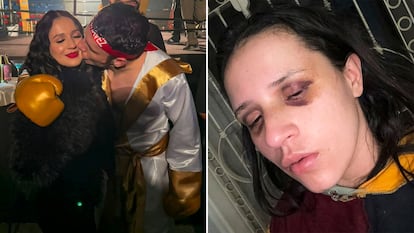
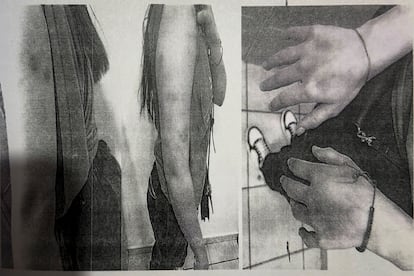
The complaint includes photographs of the young woman with bruised arms, torso and face. She received blows very similar to those her partner, a professional boxer, deals to his opponents in the ring
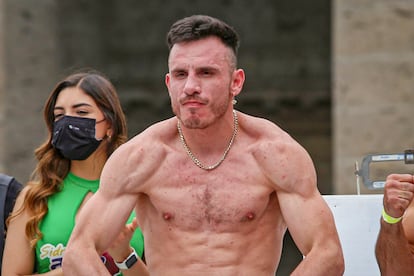
“Sport invites us to live a full, peaceful life,” reads an Instagram post by Rubén Rocha Moya published on April 6 —at that point he was still the sitting governor of the Mexican state of Sinaloa. That day he led a boxing class with athletes, including Omar Chávez Carrasco, who a month earlier had been the target of a formal complaint for domestic violence: the man, trained to knock out professional boxers, beat his sentimental partner so badly that she required hospital treatment.
“That felt like a mockery to me, them posting that they were with the governor, as if they had his support, using that so I wouldn’t be able to move forward with my complaint because they had everyone’s backing,” says Chantal, the woman who survived that violence in the home of retired boxer Julio César Chávez’s son.
The complaint she filed in early March marked the start of a legal process, but also the beginning of further violence.
Chantal says it all began with the boxer’s addiction. Omar Chávez used an appetite suppressant called Itravil. “He had to take two to three pills to lose weight, but sometimes he would take the whole box of 30 and that made him gamble,” she says.
The amounts of money and the amount of medication kept growing. She says Chávez had already been a gambler, but the money was not enough.
“The first time he assaulted me was when he forced me to ask my relatives for money, forced me to do it with acquaintances and friends so he could bet it and buy more drugs,” claims the young woman, who now lives outside the country to try to protect herself.
That March incident in 2025 left her badly beaten, with visible injuries, but she managed to get care and leave the house. She left her clothes and other personal items behind —“I didn’t care about them, I just wanted to save myself,” she says— and laments that the complaint did not go beyond taking her statement.
The Attorney General’s Office did not issue any precautionary measures and there was little effort to summon the boxer. In May of that year, Chávez allegedly sent two men after her.
“They wanted me to drop the complaint,” she says. She adds that they detained her for 13 days, monitored her social media communications, beat her personally and kept her alive to stage additional assaults.
“They even planned to bury me in a pit,” Chantal says.
While Chantal was recounting this story, the Sinaloa Attorney General’s Office also acknowledged in a public information request that 452 women had gone missing in the last year and a half, and that of those only 181 had been located, of whom 11 had been found murdered.
Chantal planned her escape over and over. She was determined to survive and she did. She ordered food through an app, taking advantage of the fact that there was no food in the house where she was being held.
“Omar started telling me that I should cancel the order because he was sure I would ask for help, that I would leave. That was my plan. Then the Uber Eats driver arrived and I was saying, ‘Don’t go, wait for us, I’ll be down for the food in a minute.’ While Omar and I were arguing, I told him I was hungry, that I had to go down for the food, that we couldn’t lose it because we had no money.”
“So I said, ‘then we’ll both go down if you don’t want me to go by myself.’ His house is very large and he told me not to open the gate. Omar told me, ‘No, you stay there, don’t leave the house. I’ll go out for the food,’ so while Omar went to pick up the food I opened the gate, ran out and began to scream.”
The delivery driver froze and did not dare to help the woman, who besides her desperate screams had visible, severe injuries. She ran and screamed, and the athlete was already behind her —“he was barefoot. He didn’t care.”
A few feet away a woman cleaning a neighboring house saw Chantal screaming. Chantal asked her for help and showed her the wounds on her arms and torso. The woman, looking frustrated, said she could not do anything, that she didn’t even have a phone to lend her. She only urged her to run more, but Omar Chávez caught up with her.
“He began to carry me by force, to take me back to his house. I told him that if he was going to take me he should at least take me to the hospital or to my home to get treatment. He didn’t do that; he forced me back to his house.”
Up to that point everything seemed lost, but someone was able to change the course of events.
“When I arrived at the gate again, a car pulled up and it was a young woman. She told me: no, don’t go in, don’t listen to him, get in. ”
Chantal didn’t hesitate and got into the vehicle without knowing who the woman was.
“I still don’t know who she was, I don’t remember, but I got in the car and she told me she knew the people who lived in that house, that she already knew what they were like,” she recalls.
The woman took Chantal to the General Hospital of Culiacán and left her there. Mrs. Amalia, Omar’s mother, was waiting. Chantal told her what had happened and the woman took her away from the place —“I think they didn’t want me treated there so there wouldn’t be a record that I had been assaulted.” Public hospitals have a protocol to notify the Public Ministry when a woman is treated for an assault.
The boxer’s mother took her to her house, promising care, but that did not happen. However, there Chantal could use phones. She called a sister and asked to be picked up. Together they went to file a complaint against Omar Chávez on May 26, 2025, for comparable domestic violence, unlawful deprivation of liberty and injuries. She then sought refuge outside Culiacán.
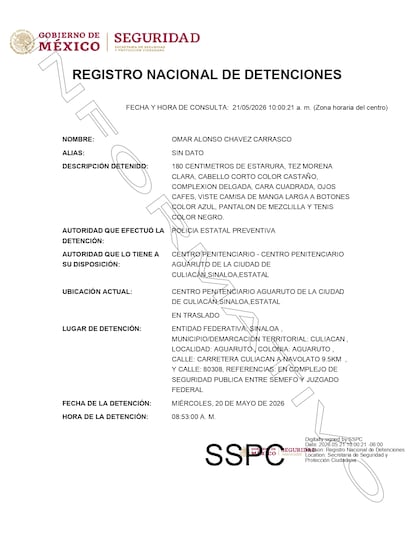
The case did not advance for almost a year, until May 20, 2026, when he was arrested by the Sinaloa Attorney General’s Office. The family has publicly said, through the retired boxer Julio César Chávez, that it was just an argument and scuffles, but the evidence tells a different story.
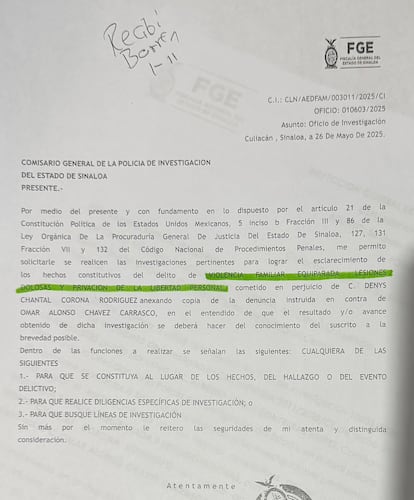
The file includes photographs of the young woman with bruised arms, torso and face. Chantal received beatings from her partner, a professional boxer, very similar to the blows he delivered to opponents in the ring.
“When he beat me, he would later post photos or videos as if he were training at the gym instead. You shouldn’t believe everything posted on social media,” says the survivor.
At the initial hearing a decision was made not to remand the boxer in custody during the process Six months of precautionary measures were also ordered, including a restraining order against Chávez and other people involved, but she says those orders have been violated.
“I even have a message from him on Instagram, when he’s not supposed to contact me, but nothing has happened,” she says. “That’s why I ask for help publicly, because I no longer know whether the people at the Attorney General’s Office are helping him; I no longer know who is corrupt or not, because for me it’s exhausting to send them another letter and say it’s the second time he’s been harassing me… What are they waiting for? Omar is waiting for the six months to end so he can come and do something to me, to have the green light to hurt me because the Attorney General’s Office won’t be on his case anymore. He will do it, you’ll see, because he already tried.”
Sign up for our weekly newsletter to get more English-language news coverage from EL PAÍS USA Edition









































