
US strikes targets in Iran in response to downing of an Apache helicopter
Tehran said it had launched its own attacks on sites in Bahrain, Kuwait and Jordan in retaliation, further complicating the prospects of a lasting ceasefire
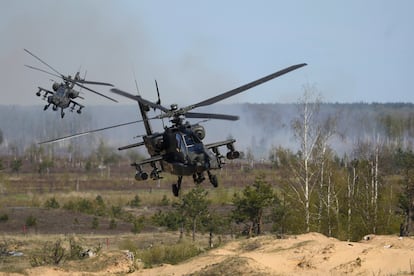

U.S. President Donald Trump has made good on his warning. U.S. forces deployed near the Persian Gulf struck targets in Iran early Wednesday after that country shot down a U.S. Apache helicopter flying over the waters of the Strait of Hormuz, according to Central Command, which is responsible for those troops in the Middle East. The news website Axios reported that the targets were radar and air defense systems in Iran.
“The operation was a proportional response to recent attacks on U.S. forces and international commercial ships transiting regional waters,” Central Command said in a statement.
Iranian state media reported that explosions had been heard at various locations near the Strait of Hormuz in the south of the country, while Iranian Foreign Minister Abbas Araghchi stated on social media that “the United States has chosen to test our resolve, despite its defeats on the battlefield. Our Mighty Armed Forces will not leave any threat or attack unanswered.”
Iran launched attacks on sites in Bahrain and Kuwait, which both sounded alerts and fired air defenses in response. Jordan also reported shooting down five missiles that Iran shot at an air base hosting U.S. forces, the Associated Press reported.
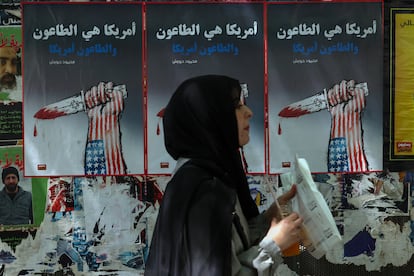
The most recent military action appears to be the final nail in the coffin of efforts to reach a peace agreement that were already in critical condition following the exchange of attacks between Israel and Iran on Sunday and Monday, which forced Trump himself to intervene to resolve the situation.
Although Iranian and U.S. forces have been engaged in increasingly serious skirmishes since April 8—when the current ceasefire went into effect—Trump had until now avoided characterizing any of those incidents as a violation of the ceasefire. But last week, in an interview with the New York Post, he made it clear that if Iran attacked U.S. soldiers, U.S. forces would respond.
Central Command, which oversees U.S. forces in the Middle East, reported that the two helicopter pilots had been rescued by a U.S. Navy aquatic drone near the strait after the crash, in the first operation of its kind.
The Apache was shot down on Monday around 7:30 p.m. Washington time, and the crew was rescued about two hours later, according to the military statement. The two airmen are in stable condition, and the details of the incident are under investigation, Central Command said.
Last week, Iran announced that it was suspending its participation in indirect peace talks with the United States, mediated by Pakistan. It did so after Israel intensified its offensive in Lebanon following Hezbollah’s entry into the conflict and ordered the evacuation of the Shiite suburbs south of Beirut with the intention of attacking them. For Trump, this came as a shock: the U.S. president insists almost daily that peace negotiations are moving forward and that the signing of an agreement is within reach.
The Republican leader is eager to turn the page on a war that has become far more complicated than he initially anticipated, one that has sent gasoline prices soaring in the United States and left his popularity at an all-time low just five months before the midterm elections.
Sign up for our weekly newsletter to get more English-language news coverage from EL PAÍS USA Edition









































