
The United States and Europe gauge the depth of their rift in Munich
Distrust toward Washington — and its perception as a threat — is rising worldwide, according to a survey released by the Bavarian city’s Security Conference
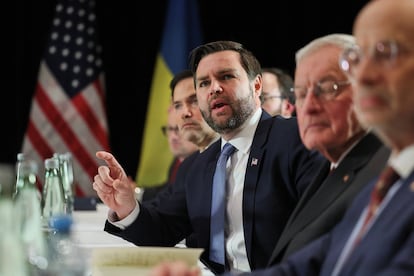
The first year of Donald Trump’s second presidency has opened the biggest rift between the United States and Europe since the forging of the transatlantic bond at the end of World War II. The first blow was struck in February 2025 by Vice President J.D. Vance at the Munich Security Conference. Vance caused astonishment by arguing that the greatest danger to Europe was not Russian missiles, but European leaders themselves, whom he accused of undermining democracy and censoring far-right ideas.
Europeans and Americans will meet again starting this Friday at the same Bavarian forum, a temple of transatlantic relations for over half a century. The worst predictions are coming true. Trump is threatening to annex Greenland, a NATO territory, and repeatedly humiliating the allies. The Munich Security Conference will gauge the deterioration of relations between the shores of the North Atlantic and offer insight into how Europe intends to respond to what the conference organizers describe as the United States’ “wrecking-ball” policies.
“We believe that the international order, and the Alliance itself, face a significant risk,” Benedikt Franke, executive director of the Security Conference, told EL PAÍS. “This makes it even more important for Europe to demonstrate the value it brings, while at the same time remaining true to its principles and not compromising on its fundamental values.” The worst headline that could emerge from Munich this weekend, according to Franke, would be: “Europe crumbles after the U.S. throws another stone.” In other words, a repeat of Vance’s broadside last year, with similarly destructive effects.
Vance will not be participating this year: the United States will be represented by Secretary of State Marco Rubio, leading the largest U.S. delegation ever seen in Munich. But it will not be a delegation made up exclusively of Trump loyalists or the MAGA movement, the faction most hostile to the European Union and NATO. The group includes senators and members of the House of Representatives, among them Democratic left‑wing star Alexandria Ocasio‑Cortez, as well as California Governor Gavin Newsom, who traveled to the World Economic Forum in Davos in January to encourage global resistance to Trumpism. Rubio, unlike the vice president, is a more traditional Republican on foreign policy, and therefore more predictable in his dealings with Europe.


Before Rubio and dozens of U.S. lawmakers, Europe and its allies are represented by German Chancellor Friedrich Merz; French President Emmanuel Macron; and the prime ministers of the United Kingdom, Spain, and Poland (Keir Starmer, Pedro Sánchez, and Donald Tusk). Ukrainian President Volodymyr Zelenskiy will be one of the most anticipated speakers. He will be speaking four years after Russia’s full-scale invasion and as three‑way negotiations with Washington and Moscow continue. While former U.S. president Joe Biden offered firm support to Kyiv, Trump has cut off aid, rationed even pre‑paid supplies, and often echoes narratives that appear to come from the Kremlin.
Munich is both a platform where guests deliver speeches and debate in public, and a space that allows for confidential meetings and negotiations in the corridors and halls of the Bayerischer Hof, the historic hotel hosting the event. China and India will be represented by their foreign ministers. Russia has not been invited since the 2022 invasion. Hundreds of other heads of state, foreign and defense ministers, and high-ranking military and diplomatic figures will participate in the meetings, which conclude on Sunday.
New cracks are opening in the already strained transatlantic relationship: from Trump’s interest in annexing Greenland and the unfolding war in Ukraine to the U.S. military presence in Europe, which appears to be shrinking, and Europe’s technological and economic dependence on the superpower. Everything is on the table, in a process of reconfiguration that is causing unease among former allies and jubilation in Russia and China, countries that have long dreamed of the collapse of the alliance that has dominated global affairs for eight decades.
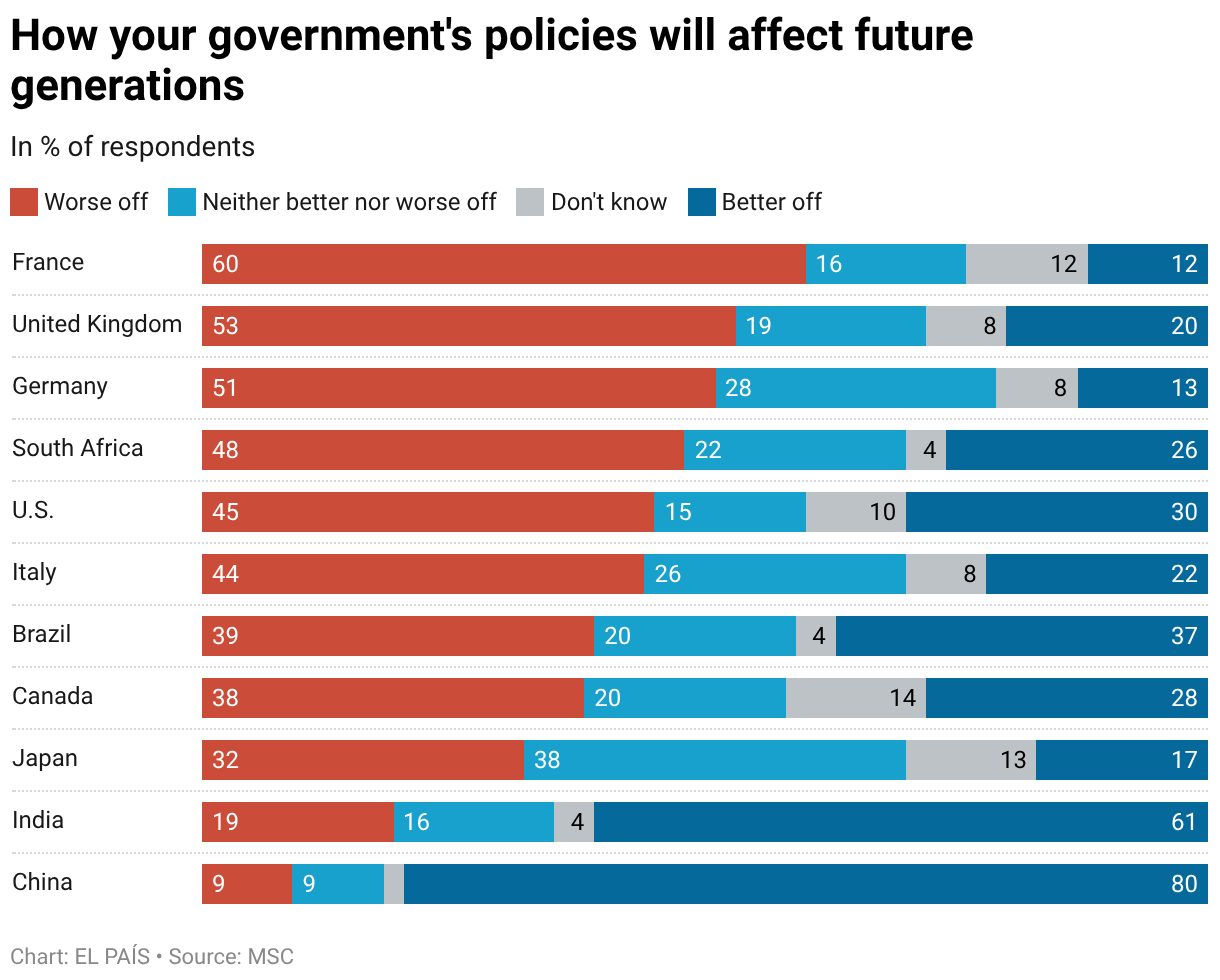
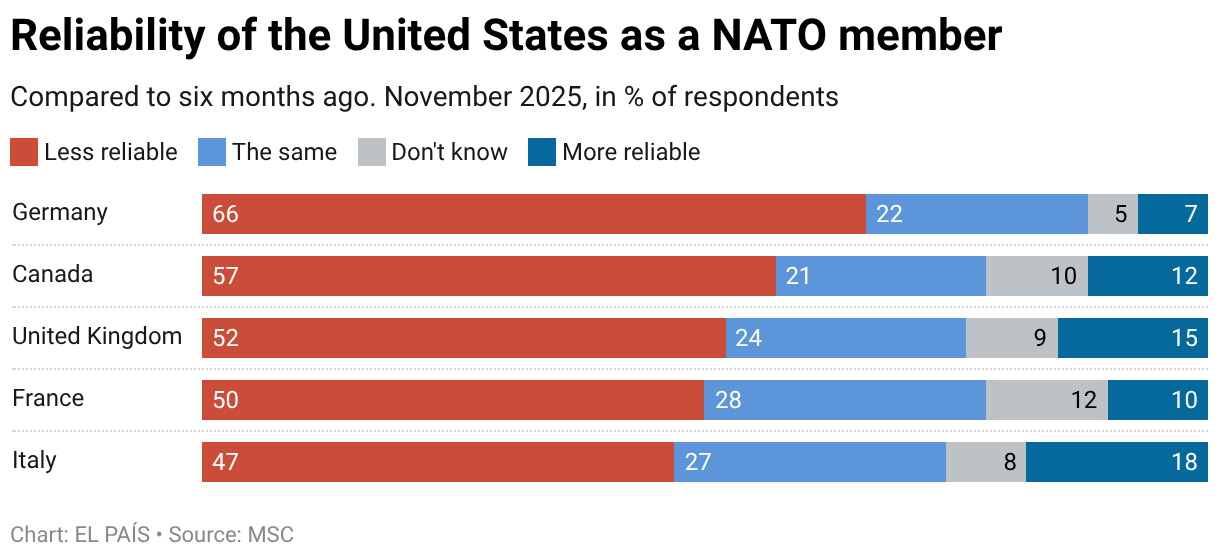
In U.S.‑allied countries, distrust toward Washington is surging, according to a survey by the Munich Security Conference. The superpower is increasingly seen as a threat. In countries such as France, the United Kingdom, and Germany, there is widespread dissatisfaction with national‑level policies — a dangerous breeding ground for radicalized voting, the kind favored by Trump’s allies and his destructive agenda.
A report from the Munich Security Conference, published this week, advises Europeans against bowing to Trump and suggests bolder responses than pandering to him or waiting for a more favorable president. “Actors still invested in a rules-based order are organizing, trying to contain the effects of wrecking-ball politics and probing new approaches that do not depend on Washington’s lead,” it reads. “Many understand that, if they continue to be bystanders to bulldozer politics, they will end up at the mercy of great power politics.”
The prospect of a rupture in the transatlantic alliance will loom over Munich in the coming days, but Franke believes that with Europe’s rising military spending, there is little reason for Trump to abandon NATO. The idea that Europe must reduce its dependence on the United States is already widely accepted. “At the same time, we must not be naïve,” said the head of the Security Conference. “The transition will take time.”
Sign up for our weekly newsletter to get more English-language news coverage from EL PAÍS USA Edition









































