
Russian drones silence one of the voices of the Chernobyl disaster
Natalia Khodemchuk, the widow of the first victim of the 1986 nuclear disaster, died from the impact of a Shahed strike on her apartment building in Kyiv
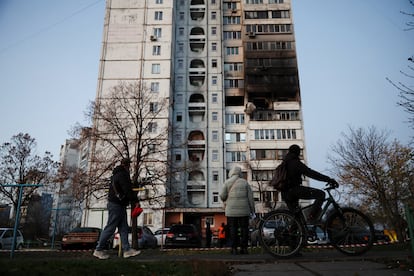

Valery Khodemchuk literally vanished on April 26, 1986, when reactor 4 at the Chernobyl nuclear power plant exploded. Valery was in the reactor’s water circulation pump room. His body was never found, but he was recorded as the first fatality of the worst nuclear disaster in history. Nearly four decades later, his widow, Natalia Khodemchuk, died last Saturday at the age of 73 in a Kyiv hospital: the night before, a Russian drone strike had hit her apartment while she slept.
The resulting fire has left a black stain on the seventh floor of the building, around what used to be Khodemchuk’s apartment. It’s a 20-storey block, a massive structure on the outskirts of Kyiv. Some of the families displaced from Pripyat, a town near Chernobyl, were relocated there. Pripyat is now a ghost town, frozen in time, famous as a pilgrimage site for disaster tourism.
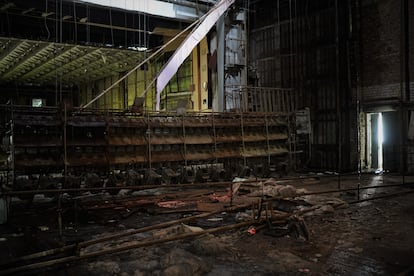
Khodemchuk was displaced from Pripyat to Kyiv, a little over 60 miles south of the nuclear power plant, with almost nothing but the clothes on her back, with the few belongings the Soviet army allowed her to pack before leaving her home forever. She made the journey alongside other families of plant employees, like Marina Voloshina’s father-in-law. “Natalia was an icon, we all knew her, but my father-in-law was also remembered as a hero; he saved colleagues at the plant,” Voloshina explains, pausing at the bar she runs in the neighborhood. This man, who passed away in 2024, was one of the first “liquidators,” plant employees who, in the aftermath of the disaster, prevented further explosions. One of the best-known liquidators, Oleksiy Ananenko, also lived in Khodemchuk’s building.
Both Ananenko and Valery Khodemchuk are figures who appear in the acclaimed TV series Chernobyl, broadcast by HBO in 2019.

The bombed building is part of a neighborhood in Kyiv that was built in just over a year to house the evacuees of Chernobyl. The block is one of the locations featured in the celebrated 1987 documentary The Bell of Chernobyl. This film by director Rollan Sergienko sent shockwaves through the Soviet Union. Both the nuclear disaster and the end of the invasion of Afghanistan were crises that accelerated the disintegration of the USSR.
Voloshina lives on the sixth floor of the building, and her face still reflects the anguish of what happened on November 14. That morning, Russia launched more than 400 Shahed drone bombs at the Ukrainian capital. Fourteen impacts were recorded on civilian buildings. One of these Shahed drones was the one that killed Khodemchuk, the seventh victim of that bombing.

Voloshina believes the drone’s target was an electrical substation near the neighborhood. Russia is carrying out a campaign to destroy Ukraine’s energy system, causing power outages of up to 14 hours a day in the country’s major cities. For her, the worst memory of that early morning was seeing one of her neighbors, a friend of hers, emerging from her apartment with half her body burned. “She saved her two children by forcing open the door amid the flames,” Voloshina says, fighting back tears. “She was alone because just the day before, her husband had been drafted into the army.” Voloshina’s neighbor was one of 36 people wounded in the Russian bombing.
Natalia Khodemchuk was known in Ukraine for her activism in remembering the victims of the nuclear disaster, the State Agency for the Chernobyl Exclusion Zone noted in a statement. President Volodymyr Zelenskiy also dedicated a message to her on social media: “Almost four decades later, Natalia died in a new tragedy caused by the Kremlin. Ukrainians who survived Chernobyl, who helped rebuild the country after the disaster, are once again suffering the danger and terror of an aggressor state.”
Khodemchuk shared a similar profile to other women interviewed by Nobel laureate Svetlana Alexievich in her acclaimed Voices from Chernobyl. This book also includes testimonies from children whose lives were completely changed by the catastrophe: “I was little, eight years old,” one of them said, “I was afraid to run barefoot through the grass. My mother would scare me by saying I was going to die. I was afraid to bathe, to dive into the water… Afraid of everything. Picking hazelnuts in the forest. Picking up a beetle with my bare hands, because beetles walk on the ground, and the soil was contaminated. The ants, the butterflies, the blowflies, everything was contaminated.”

That boy could have been Oleksandr Shinkaruk. When the Chernobyl reactor exploded, he was also eight years old and living in Pripyat. Today, he lives on the same floor in the same building where Natalia Khodemchuk died. He survived, he recounts, his hands still trembling from the trauma, 24 hours after the incident, because his apartment faces the opposite side of the drone’s impact. Shinkaruk and a friend are unloading repair materials they’re transporting in a van. On November 14, he says with a nervous smile, he turned 48.
Did he also tremble with nerves when the atomic catastrophe happened? “I can’t compare it,” says Shinkaruk, “that night we saw a flash of light in the sky, but nothing more. And the next day we went to school. They gave us iodine tablets and we even had two hours of class. But then they told us we had to go home.” “What’s happening now has affected me much more,” he admits, “especially the buzz of the Shaheds; you hear it getting closer, you feel powerless, you don’t know who it will hit.”
Sign up for our weekly newsletter to get more English-language news coverage from EL PAÍS USA Edition









































