



A snapshot of the LeBarón massacre in Mexico: Semi-automatic guns purchased in the US and 1,893 bullets
In the Mexican state of Sonora, in 2019, three mothers and six children were gunned down. The trail leads to two semi-automatic rifles, which were sold in U.S. gun shops. No authority on either side of the border has thoroughly investigated the origin of the weapons, nor how they ended up in the hands of Mexican drug cartels
It was March 9, 2019, when Rhonita María LeBarón-Miller, a 30-year-old American woman belonging to a Mormon community in Mexico, was preparing for the birth of her twins. She was four days away from her scheduled delivery date at the Madero Hospital, in Nuevo Casas Grandes, Chihuahua.
She and her husband, Howard Miller, lived in the Mexican town of La Mora. Based in the municipality of Bavispe, in the Mexican state of Sonora, they were part of a Mormon community located between Sonora and Chihuahua. They had five young children together, as well as two more — Howard and Krystal — from previous relationships.
That same March 9, a man went to a gun store across the border in the United States and bought an Anderson 5.56 caliber semi-automatic rifle. Eight months later, this weapon would be used in the massacre of Howard and Krystal, Rhonita, and her twins, who were less than a year old. Two other mothers and two more children would also be killed.
In the armed attack, attributed to drug cartels, there were 14 children in total, four of them infants. Only eight survived.
The three SUVs, which were traveling on a dirt road along the border between the two Mexican states, were riddled with bullets. A total of 1,893 shell casings of various calibers were recovered from the scene… some of them from U.S. army rifles. The attackers used 31 weapons, with two of the rifles being traced back to two gun shops in Arizona and New Mexico. However, no authority on either side of the border has thoroughly investigated the origin of the weapons, nor how they ended up in the hands of Mexican drug cartels.
EL PAÍS obtained access to the case file of the LeBarón massacre, which includes the investigation that looked into the ballistic evidence. This newspaper traced the origins of the ammunition, in order to locate two of the weapons involved.
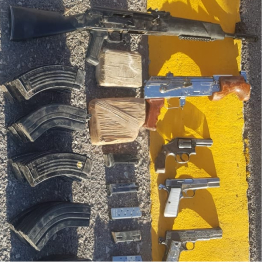
- Colt
- Armalite
- Anderson
- Essential Arms
- US Military Weapons
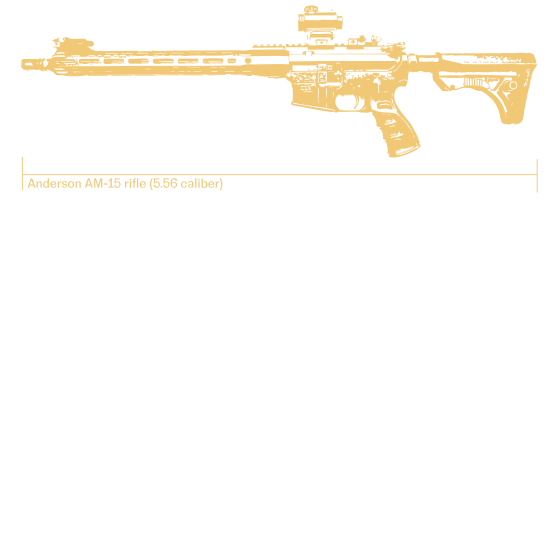
Type: Rifle
Manufacturer: Anderson Manufacturing
Model: AM-15 (5.56mm)
Serial no.: 18288602
Range: Effective up to 800 meters; multi-caliber platform compatible with .223 Remington rounds
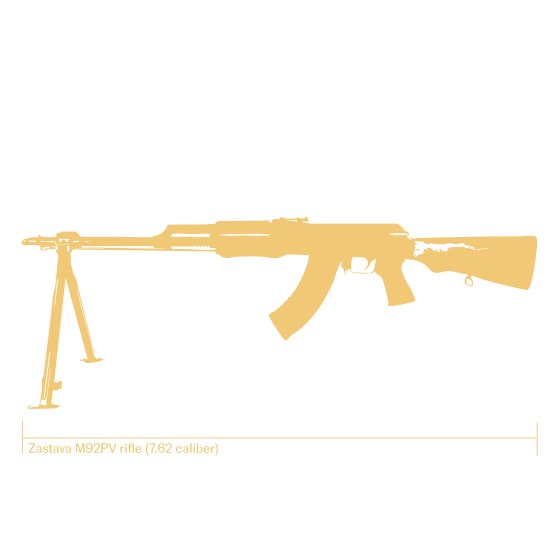
Type: Rifle
Make: Zastava
Model: M92PV, 7.62 x 39 mm caliber
Serial number: M92PV039918
Effective range: Up to 300 meters
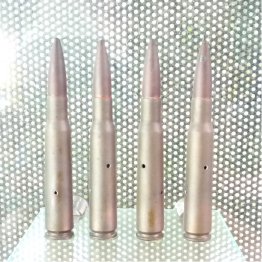
Caliber: .50 (12.7 x 99 mm)
Range: Up to 2,000 meters
- United States
- Serbia and Montenegro
- China
One of them is an Anderson 5.56-caliber semi-automatic rifle. A 24-year-old man, originally from Sacramento, California, bought it on March 9, just a few hours from the border. The man, who lives in Phoenix, Arizona, traveled 15 miles from his home to Tombstone Tactical. Along the way, he passed at least two other gun shops that were closer: one of them a mile away from his home, with the other about four miles away.
On its website, the store describes itself as a family-owned business with a federal license. It boasts of “its incredible selection of handguns and rifles, including .223 and 5.56 calibers, AR-15 and AK-47 long rifles.” The man chose a 5.56-caliber Anderson AM-15 rifle — serial number 18288602 — which is a semi-automatic long gun that follows the AR-15 design and has a range of up to 500 feet. It’s lightweight and multi-caliber, also compatible with .223 ammunition.
The rifle, purchased four days before the LeBarón-Miller twins were born and eight months before the attack attributed to drug cartels, traveled 350 miles from the Tombstone Tactical store in Phoenix to the site of the tragedy in La Mora.
John Lindsay-Poland is coordinator of the Stop U.S. Arms to Mexico project, which studies the illegal trafficking of weapons from the United States to Mexico. He explains that the choice of weapons coincides with a trend in Arizona, where weapons made by Anderson Manufacturing have become the preferred option.
“Anderson manufactures inexpensive assault weapons… and their use in Mexico is growing. According to data we see on weapons seized by the Mexican Secretariat of National Defense (SEDENA), [weapons sales from Anderson Manufacturing] are on the rise. Therefore, we must interrupt this flow of assault weapons from Arizona to Sonora and other Mexican states,” he told EL PAÍS. Over the summer, Anderson Manufacturing was acquired by Sturm, Ruger & Company.
The other rifle used in the attack on the LeBarón family — which left a wound that still aches in the Mormon community along the border — was a 7.62 x 39 mm caliber Zastava M92PV semi-automatic rifle. With the serial number M92PV039918, it was sold in New Mexico on August 9, 2014, at Shooters Outpost, located at 20A Gunbarrel Rd Española.
The buyer was another American: a 27-year-old resident of Hurley, New Mexico, located about a five-hour drive from the gun store. He has been charged criminally on 20 occasions in the United States and served time in prison for the sexual abuse of a minor aged under 13.
THE DAY OF THE MASSACRE
The first alarms were raised in the Mormon community on the very day of the attack: November 4, 2019, when the LeBarón-Miller twins were just eight months old. Rhonita and two other mothers left La Mora in three SUVs around 8:30 a.m., with 14 of their children. Adrián LeBarón, Rhonita’s father, and his nephew, Julián LeBarón, reported to the authorities that they had lost contact with them.
The three women were heading toward Colonia LeBarón, in the municipality of Galeana, Chihuahua, about 55 miles away. The journey would have taken them about four hours by car, because the route is along a dirt road. According to the Attorney General’s Office, organized criminal groups — such as the Sinaloa Cartel and La Línea, the armed wing of the Juárez Cartel — operate in that area.
In the first SUV were Rhonita, her twins, Tiana and Titus, and two more of her kids, Howard and Krystal, who were 12 and 10 respectively. The second vehicle was driven by 43-year-old Dawna Ray Langford. With her were her children Kylie (14), Devin (13), Trevor (11), Mackenzie (nine), Cody (eight), Jake (six), Xander (four), Rogan (two) and 10-month old baby Brixon.
In the third vehicle, 29-year-old Christina Marie Langford had her seven-month-old daughter, Faith, riding with her. Faith survived the attack and stayed with her mother’s lifeless body for eight hours until the authorities arrived.
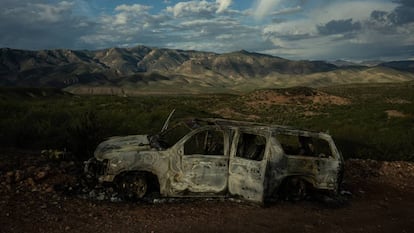
Barely 30 minutes had passed since they left when Rhonita got a flat tire and was stranded near a rural intersection called Rancho La Mora, a short distance from another town called San Miguelito. This is a mountainous area with poor cell phone service, which prevented her from calling for help. At approximately 9:30 a.m., she was ambushed by a group of armed men. The attack was so brutal that the mother and her four children were burned alive. The SUV — riddled with hundreds of bullets — burst into flames.
About 15 minutes later, Dawna arrived at a nearby location, unaware of what had happened. She, too, was attacked. She and two of her children were killed. The other seven survived, some with serious injuries.
The third attack occurred after 10:00 a.m., targeting Christina Langford’s SUV. She tried to plead with the criminals, but to no avail: she was shot to death. Her baby was unharmed.
THE TRAIL OF THE ARSENAL
The criminal file on the attack revealed that a total of 1,893 bullets were fired that day at the three women and 14 children of the LeBarón and Langford families. They were fired from 31 different firearms. The majority — 1,792 shell casings — were .223/5.56 caliber, followed by 80 7.62 x 39 mm casings and 20 7.62 x 51 mm .308 Winchester caliber casings. Finally, the dreaded .50 caliber — capable of penetrating armor — was found: a single casing.
In the drug traffickers’ arsenal, most of the weapons were manufactured in the United States, including brands such as Colt, Armalite, Anderson and Essential Arms. It’s noteworthy that 19 of the shell casings that were found came from U.S. army rifles. There was also one Chinese-manufactured gun, as well as another made in Serbia and Montenegro. The latter was the one purchased in New Mexico, which had been imported by the Vermont-based Century Arms.
That semi-automatic rifle subsequently had to travel 671 miles from the Shooters Outpost store in New Mexico across the border to La Mora. Five years passed between the sale and the day of the attack. In contrast, the Anderson semi-automatic rifle — which was acquired in Phoenix — took only eight months to go from its purchase to its appearance in the massacre. This relatively short timeline would have been easier to trace had the goal been to determine who trafficked the weapons in the LeBarón case… but the investigation almost immediately stalled.
LOOSE ENDS IN THE INVESTIGATION
Buying a firearm is legal in the United States. And if someone acquires a gun in the U.S. and it ends up being used to commit a crime in Mexico, this doesn’t mean that the original buyer is involved in the criminal act. As a result, neither of the two buyers has ever been summoned to testify in any judicial investigation related to the trafficking of the weapons used to murder members of the LeBarón and Langford families. This is despite the fact that they’re the first lead to follow when it comes to determining who acquired those rifles and how they ended up in the hands of the Mexican drug traffickers responsible for the shooting.
“[The investigators] did the bare minimum, so to speak: ballistics, classification… but [they] never [put together] any record of where they were purchased, who brought them, or anything like that,” attorney Víctor Zúñiga sighs. The LeBarón family’s lawyer, he spoke with EL PAÍS about the case. “Furthermore,” he adds, “there isn’t even an investigation into who supplied the weapons to the hitmen.” This is despite the fact that the victims were American citizens.
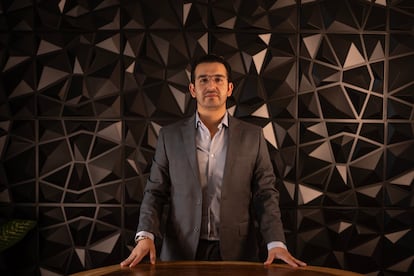
According to Zúñiga, officials from the Mexican Attorney General’s Office and the FBI participated in the investigation. However, the lawyer laments that the Bureau of Alcohol, Tobacco, Firearms and Explosives (ATF), the appropriate U.S. agency for prosecuting arms trafficking, was never assigned to the case.
Timothy Sloan was the special agent in charge of ATF operations in Mexico when the massacre occurred. He tells EL PAÍS that the agency was excluded from the case due to a lack of personnel. “We didn’t have the power or enough agents to conduct the investigation properly. I spoke with the ATF chiefs in Washington and they refused to send reinforcements for the case. So, I spoke with the [U.S.] ambassador to Mexico, Christopher Landau, and upon learning that they hadn’t authorized additional agents, he decided to assign the FBI, which has greater resources,” Sloan explains.
Last November, the LeBarón family’s lawyer requested that the Specialized Prosecutor’s Office on Organized Crime — the division of the Mexican Attorney General’s Office that investigates cases related to the cartels — facilitate a meeting with the FBI. However, Zúñiga laments, the request was denied.
“They refused, stating that the FBI didn’t have more information than [the Mexican authorities] and that there could be no collaboration. However, we know that the reality is different,” the lawyer recounts. “In the first few days [after the massacre], we knew that the FBI intervened. We knew that the FBI — in conjunction with the Sonora Attorney General’s Office — carried out an operation [and] processed shell casings. But those reports were never given to the police.”

The two rifles used in the attack on the Mormon families are now in the custody of the Attorney General’s Office in Mexico City, after having been seized. Their origins and how they were trafficked into the country were not investigated. In fact, after massacring the women and children, the weapons continued their deadly trajectory. They were used by organized criminal groups in another incident, described by the Attorney General’s Office as “a complex attack,” also in the state of Sonora, on July 7, 2020.
According to John Lindsay-Poland, coordinator of the Stop U.S. Arms to Mexico project, the fact that the investigation was assigned to the FBI instead of the ATF had repercussions on the outcome. “There’s a disconnect [when it comes to] gun investigations and gun crimes between Mexico and the United States and even among the federal agencies in both countries. What do I mean? Well, the FBI, which investigated the LeBarón family massacre, has its own political interests. And the ATF has its own as well. Each [agency] has its own capabilities,” he notes, alluding to a lack of coordination and differing priorities.
“The FBI’s objective — and that of many authorities in Mexico as well — is to target the people who perpetrated the massacre,” he points out. “It’s not so much about who bought or sold guns and then trafficked them. So, if the FBI [is] leading the investigation, they [aren’t] going to be as interested in what happened at a gun store in Phoenix or New Mexico, because that’s not their portfolio.”
GUN TRAFFICKERS DON’T GO TO JAIL
“Were any people arrested for trafficking those weapons?”
“No,” Sloan admits.
“Why?”
“Because nobody goes to jail for trafficking firearms. That’s why [Mexico has] 40,000 murders a year. Generally speaking, nobody ever goes to jail or is charged with arms trafficking.”
The FBI gave the ATF information about three weapons seized in July of 2020: the date of the “complex attack” in Sonora. The so-called “ballistic fingerprints” matched those used in the LeBarón massacre. But only two — the Anderson rifle and the Zastava rifle — could be traced and linked to the two incidents. The serial number on the third weapon had been erased.
The ATF subsequently learned that the weapons had been sold at the Tombstone Tactical gun shop in Arizona and Shooters Outpost in New Mexico. Agents also learned when the guns were purchased and who purchased them. But, again, this line of inquiry led nowhere when it came to determining how the weapons ended up in the hands of Mexican drug cartels.
During his tenure as the ATF director in Mexico between 2018 and 2022, Sloan maintains that he documented and turned over at least 1,150 “good and perfectly integrated” gun trafficking case files to the United States. But the agency only investigated 5% of those cases, closing the rest. And of that small percentage, the former official insists, the U.S. Department of Justice only actually investigated a few. “For them, it’s not important enough to follow through on a case like this, because the charges would essentially be for lying on a [gun purchase] form,” Sloan explains. He’s referring to the federal document that must be filled out when buying a firearm in an American store.
As an example of the United States’ lack of interest in (and failure to punish) arms trafficking, Sloan cites the case of Michael Blake Huff, an American gun buyer who trafficked 1,000 weapons to Mexico and received a mere 28 days in prison. In the U.S., arms trafficking is a serious federal crime punishable by up to 10 years in prison, with fines running into the thousands. In Mexico, the penalties can reach up to 45 years. But Huff was punished for lying about the purchase — not for the actual shipment of the weapons.
The arsenal that crossed the southern border included several .50-caliber rifles, but Huff claimed that they had been stolen from his warehouse in Texas. He later confessed to smuggling them into Mexico. Most were sent to the state of Michoacán, one of the most-affected by drug trafficking.
“I have evidence. I opened the Michael Huff case in 2019. Those guns were involved in the murders of police officers, politicians, women, families… and he got 28 days in jail. Just 28 days. Not 28 years: 28 days. Wow. Approximately 1,000 firearms [were smuggled] by him alone,” Sloan recalls indignantly. Given that precedent, he argues, it’s “a lot of work to build a case if the court is going to give an arms dealer 28 days.”
OTHER CASES, SAME PATTERN
On May 1, 2025, the murder of Mexican Federal Police agent Iván Morales and his wife shocked the public. Morales had already survived a 2015 attack by the Jalisco New Generation Cartel (CJNG), which shot down the helicopter he was traveling in during a failed operation to arrest Nemesio Oseguera, alias “El Mencho,” in Jalisco.
During the 2015 attack, to bring down the Cougar helicopter belonging to SEDENA, the cartel members used two .50-caliber rifles: a Barrett and an M2HB. They also used an Iranian-made grenade launcher and a Russian rocket launcher, according to reports from the ATF, which EL PAÍS had access to.
Following the attack, the Mexican Attorney General’s Office seized the M2HB round that pierced the aircraft’s armor and struck the rotor. The ATF then traced the rifle and discovered that it had been sold at JNC Manufacturing in Rainier, Oregon. Today, the business still offers the weapon for $15,375.
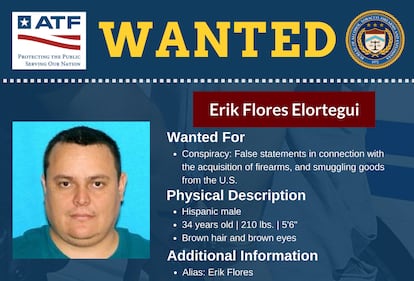
Tracing the weapon back to the location identified the buyer as Erik Flores Elortegui, a Mexican-American man originally from the state of Durango. He was accused of trafficking weapons into Mexico following the helicopter attack: the ATF issued a wanted poster with his photo and name. He is considered armed and dangerous… and yet, he still hasn’t been arrested by either U.S. or Mexican authorities. This is despite the fact that he and his family recently shared his location in Durango on social media.
“I don’t understand why the ATF still lists him as ‘most wanted’ but has never arrested him. Because he has dual citizenship, they should have requested his extradition. It seems like they just want to give the impression that they’re doing something,” the former director of the agency in Mexico complains.
Regarding the 2015 attack: back in 2023, Republican Senator Chuck Grassley of Iowa demanded that the U.S. Department of Justice explain what exactly had been done about the case of the weapon used to shoot down the Mexican army helicopter and about the suspect who purchased weapons used by the Jalisco New Generation Cartel. In his letter, Grassley stated that he was in contact with an anonymous whistleblower who revealed irregularities in the handling of the investigation, as well as a pattern of disinterest in pursuing these arms trafficking cases.
MEXICO’S CLAIM AGAINST THE U.S.
In 2021, the Mexican government sued 11 of the largest U.S. arms manufacturers. In 2022, it also sued five gun stores in the state of Arizona.
The families who were affected by the 2019 massacre — who are not listed as plaintiffs in these legal actions — have expressed their support for the Mexican legal offensive, given that the killing of the three mothers and their children served to highlight the impact of arms trafficking and the power that drug traffickers acquire with arsenals from the neighboring country.
However, the first of the cases ran into trouble with the U.S. justice system. In June of this year, the Supreme Court ruled that the lawsuit against the gun manufacturers was inadmissible, due to the Protection of Lawful Commerce in Arms Act (PLCAA). This law grants immunity to gun manufacturers and sellers in the country, protecting them from lawsuits that may be filed by victims of attacks carried out with their weapons. This law was passed by the U.S. Congress in 2005 and received the support of Ken Salazar, the former U.S. ambassador to Mexico. He was one of the few Democrats who backed the initiative.
Despite the legal setback, the Mexican government maintains its claim and has requested a ruling from the Inter-American Court of Human Rights on the matter. “[The U.S.] Supreme Court decision does not affect the course of the second lawsuit Mexico filed in Tucson, Arizona, in 2022, against five gun stores. This lawsuit continues to advance and is currently in the discovery phase,” stated the official press release, which was put out this past June.
For the coordinator of Stop U.S. Arms to Mexico, the discovery that one of the weapons used to massacre the LeBarón family was sold in an Arizona store “could be an important element in Mexico’s lawsuit against gun shops.” He also mentions another factor in favor of the cause: that the victims were American citizens, who were killed in an attack of such magnitude and public impact.
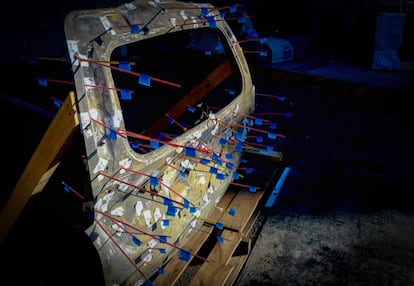
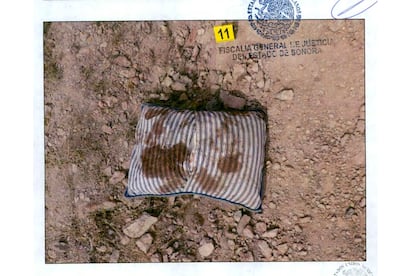
Of the nearly 2,000 bullets fired, Rhonita’s truck was hit 321 times. Dawna’s vehicle had 87 holes, while Christina’s had 41. “If the idea was to instill terror and fear, it worked,” Adrián LeBarón says. His daughter Rhonita and four of his grandchildren were murdered in the attack.
Credits:
Sign up for our weekly newsletter to get more English-language news coverage from EL PAÍS USA Edition