
Death toll from Rio de Janeiro police operation rises to more than 132
Residents found more than 70 bodies following the previous day’s raid aimed at halting the spread of organized crime
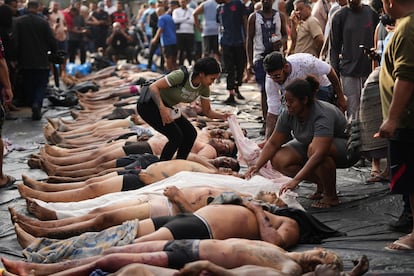

Residents of the Rio de Janeiro favelas targeted by a police raid, aimed at capturing Comando Vermelho (Red Command) leaders, found at least 70 additional bodies overnight in a nearby forest. The residents have been placing the bodies in a row on the ground, covered with blankets, in a square in the Vila Cruzeiro favela so their relatives can identify them.
The 70 victims were not included in Tuesday’s official count (64 fatalities, including four police officers), which raises the death toll from the operation to more than 132, according to Rio’s Attorney General’s Office. The new death toll makes the Rio operation not only the deadliest in Rio de Janeiro, but also the deadliest in Brazil’s history.
Wednesday’s official report also listed 81 arrests and around 90 rifles seized. The drug traffickers even launched grenades at officers using drones.
Rio, Brazil’s second most populous city, awoke under a somber gray haze — its roads cleared of barricades, but its residents still gripped by fear after a day when the city was held hostage by crossfire between criminals and police. Around 2,500 officers were mobilized in the raid on two favela complexes considered the headquarters of Comando Vermelho.
This group, founded in Rio de Janeiro, is the second most powerful criminal organization in the country, after the Primeiro Comando da Capital (First Capital Command, known by its initials PCC), which is based in São Paulo.
The PCC was born in São Paulo’s Carandiru prison in 1992 as a collective of inmates defending their most basic rights, after police killed 111 prisoners during an operation to quell a riot. Until this Wednesday, that massacre was considered the worst police killing in Brazil’s history.
Brazilian President Luiz Inácio Lula da Silva returned from an official trip to Asia and met with his team in Brasília to assess the crisis. The day before, the governor of Rio had criticized the federal government for its lack of support in confronting organized crime.
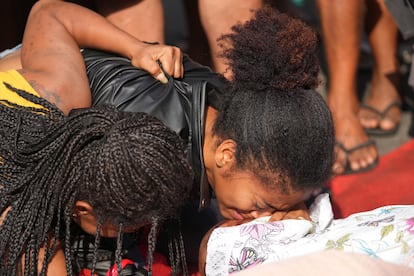
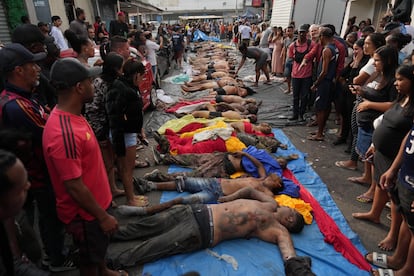
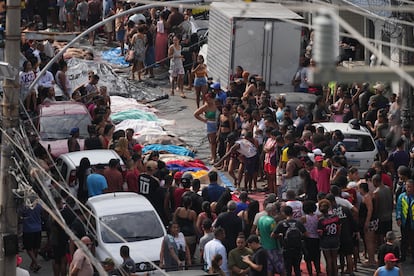
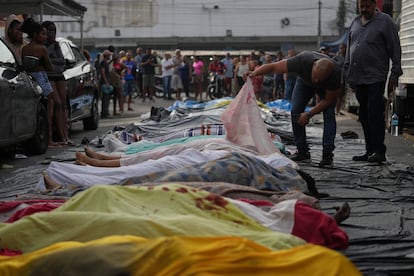
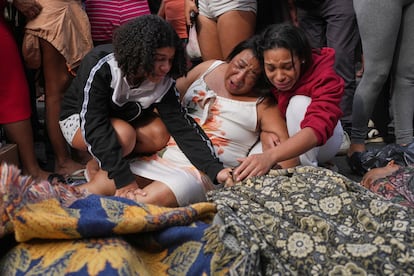
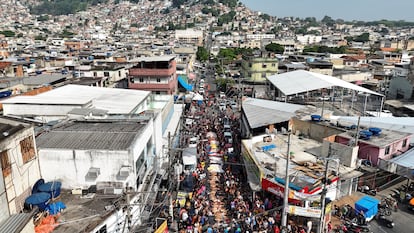
The death toll could rise even further, as residents say there are still bodies lying in the narrow alleys. Police officers withdrew from the forest at dusk but remained in the favela’s tight streets, where gunfire continued through the night.
Rio’s governor, Cláudio Castro, has embraced the idea — echoing U.S. President Donald Trump’s rhetoric — that drug traffickers are terrorists who can be dealt with through extrajudicial force. He has referred to them as “narcoterrorists,” a term also used by Senator Flávio Bolsonaro, son of the former president, Jair Bolsonaro. Last week, Bolsonaro’s son even suggested that the United States should attack boats allegedly carrying drugs through Guanabara Bay, off Rio’s coast — though he provided no evidence for the claim.
Repercussions inside and outside Brazil
The police massacre took place just days before Brazil is set to host next week’s United Nations-organized World Climate Summit, which will bring mayors from around the globe to Rio and world leaders to Belém, in the Amazon region. The meeting, chaired by President Luiz Inácio Lula da Silva, is expected to include figures such as Britain’s Keir Starmer and Spain’s Pedro Sánchez.
The U.N. Office for Human Rights said it was “horrified” by the massive police operation. “We remind authorities of their obligations under international human rights law, and urge prompt and effective investigations,” the office, led by High Commissioner Volker Türk, said on its official X account.
Governor Castro declared on Wednesday, after it became known that residents had found dozens of bodies in the forest, that the operation against the Comando Vermelho was “a success, except for the death of the four police officers.” To leave no doubt about his stance, he emphasized that only the uniformed officers “are victims.” In previous police operations that ended in massacres, organizations such as Amnesty International have denounced extrajudicial executions.
Castro met Wednesday morning with the top security officials of Rio de Janeiro. He also held a politically charged meeting via videoconference with other conservative governors, including several potential successors to Jair Bolsonaro as the right-wing candidate in the 2026 elections, who would face President Lula.
Sign up for our weekly newsletter to get more English-language news coverage from EL PAÍS USA Edition









































