
Relatives of the 124 victims of adulterated fentanyl in Argentina demand justice: ‘This is an unprecedented massacre’
Those who lost a loved one to the bacteria detected in the clinical drug demand an investigation into the entire chain of responsibility
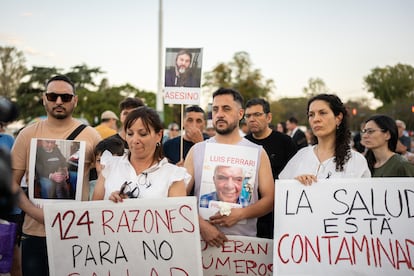

The first warning signs appeared in the corridors of the intensive care unit. “Many are dying,” the relatives of patients admitted to the Italian Hospital in La Plata, about 35 miles south of Buenos Aires, whispered. It was early April, and everyone feared their loved one would be next. The situation was repeated in other medical centers across the country, but no one suspected that this string of deaths was being caused by clinical fentanyl contaminated with two highly resistant bacteria. This powerful opiate drug, injected as an anesthetic and pain reliever, was the cause of the severe respiratory illnesses patients developed and ultimately died from.
Six months later, the number of deaths being investigated by the courts has now reached 124, and the executives of the two Argentine laboratories responsible for the production of clinical fentanyl are under investigation and in pretrial detention. The affected families believe the real number is much higher and are calling on the courts to investigate the entire chain of responsibility for this unprecedented health catastrophe.
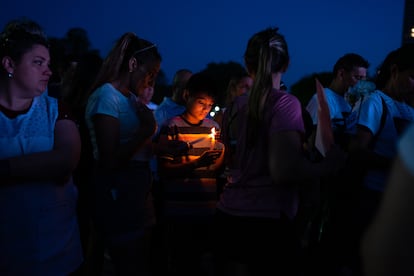
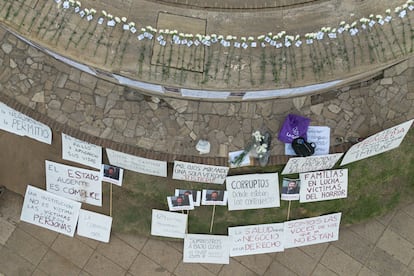
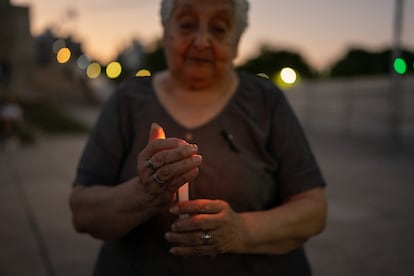
On Thursday, in the city of Rosario, the third-most populous in Argentina, a tribute was held at the foot of the Flag Monument. A white carnation for each of the 124 victims. Lit candles. Demands for justice. Signs bearing the photograph of Ariel García Furfaro, owner of the Ramallo S.A. and HLB Pharma laboratories, and, in red capital letters, “murderer.”
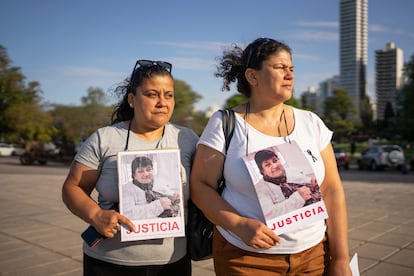
“Control failed and their lives were extinguished,” they wrote on another banner, recalling the irregularities detected in both laboratories and ignored by supervisory bodies over the course of seven years. The last inspection, carried out at the end of 2024, found “critical deficiencies” that compromised the quality and safety of the manufactured drugs and warranted the closure of the facilities. The disqualification was ordered three months later, after more than 300,000 ampoules of fentanyl contaminated with the bacteria Klebsiella pneumoniae and Ralstonia pickettii had already been distributed to 118 medical centers across the country.
“It was a silent murder,” says lawyer Ivana Esteban, who lost her 75-year-old mother, Ángela Campos, to the administration of adulterated fentanyl. “The number of victims recorded in the case file is 124, but we know there are many more; some families don’t know. There was negligence and corruption; all of this could have been avoided,” she emphasizes. Her mother went to the emergency room at the Italian Hospital in Rosario on March 2 with a leg infection — “Being diabetic, it was dangerous, but she walked in, she was fine” — and died on April 6 from complications arising from bilateral pneumonia. “They killed the soul of the family. My mother wasn’t just my mother. She was a grandmother, a wife, a sister, an aunt. It’s unfair that she lost her life due to negligence; we can’t allow it,” she says, close to tears. When she recovers, she asks that what happened be made visible so that justice can be done, and so that it never happens again.
The stories of many of the family members have common threads, such as the desperation of not understanding what was causing the onset of respiratory illnesses that suddenly worsened the patients’ initial medical condition. “I asked to speak to the director [of the hospital], I asked her to review the treatment because something was happening, but I didn’t know what,” Esteban recalls. “In the hallways of the therapy center every day, we saw someone coming out crying,” she continues. When medical reports were handed out, questions piled up, but the answers they received were elusive: “We asked, ‘What does he have?’ and they told us it was a bacteria. But what bacteria? Doesn’t it have a name? And the antibiotics aren’t working? Why isn’t there any improvement?”
Doctors in La Plata discovered the problem after an outbreak of Klebsiella pneumoniae and Ralstonia pickettii killed 18 patients in just a few days. They discovered the presence of both pathogens in fentanyl batch 31202 and informed the National Administration of Drugs, Food and Medical Technology (ANMAT) on May 7. The regulatory body issued an alert to stop the use of that batch nationwide. The following week, it ordered the recall of all adulterated ampoules that had already been distributed from that and a second batch. At the same time, a judicial investigation was launched.
In the city of La Plata, the fentanyl was immediately discontinued, but not in other parts of the country, where relatives report that it was used until June. Ana Belén Salazar, 38, died on May 12 at the Italian Hospital in Rosario, when the ANMAT alert was already in effect. She spent 40 days in intensive care. “They gave her that anesthetic until the last day,” says her mother, Ana María Carranza. “They tried four or five different antibiotics, and none of them worked. They told me she had an infection, but they didn’t tell me what was causing it. With the infection, she had a fever and convulsions. They killed the princess of the family,” laments this mother, who is silently accompanied by her husband. “He tells me: stop, don’t cry so much, you’re going to get sick, but it’s the only thing I can do, because I can’t believe it. If it had been due to an illness, I would be happy, but not if they killed her. I want those who killed her to pay.”
Upon receiving the death certificate, most of the 124 families returned home heartbroken. None of them knew that behind these deaths was a painkiller manufactured without meeting current quality standards. They learned about it on television, hearing about the first cases and seeing that they matched the experience they had just endured. They began investigating. They exchanged messages. They met with each other. They spoke with lawyers. They discovered that there was a list of potential victims in the hands of the Prosecutor’s Office, and when they called, it was confirmed that their loved one’s name was on it.
“It was a shock because no one told us anything,” says Gisela Amin. “They never called us from the hospital to tell us anything, not the health authorities, not the justice system, not anyone. If we hadn’t seen the fentanyl case on the news, I think we would have been left with uncertainty, because we couldn’t understand how she could have died in 10 days from multiple organ failure. When we brought her to the emergency room, all she had was an earache that she said was taking away her appetite. She was fine,” continues Amin, the eldest of five siblings, all present at the rally in Rosario.
Her mother, Elia Inés Ruiz, 75, was hospitalized for further testing because she was experiencing dizziness and anemia. On May 2, she collapsed and was transferred to intensive care. She died on May 10. Gisela printed a photo she took of her mother the last time she visited her home in the city of Gobernador Gálvez, on the southern outskirts of Rosario. She shows it to the camera as a way of remembering her and, at the same time, demanding justice.
Up to 25 years in prison
The case is being handled by Judge Ernesto Kreplak of the city of La Plata. So far, 16 people have been prosecuted for the alleged crime of adulteration of medicinal substances, which caused the deaths of at least 20 people, in conjunction with the crime of adulteration of medicinal substances in a manner dangerous to health, which aggravates the charges. “We are facing a case of complex criminality involving a large number of victims and an organized business conglomerate,” stated prosecutor María Laura Roteta. The top executives of the laboratories and their senior technical staff are accused of knowing about the serious production deficiencies and face sentences of up to 25 years in prison.
This is a very complex legal case, with victims in different provinces. The families want to extend the investigation to the regulatory agencies, and some are calling for political resignations from a government that promotes deregulation and has cut funding and staff at ANMAT.
Congress created a commission of inquiry to listen to the victims, analyze what went wrong, and determine what regulations can prevent Argentina from experiencing a similar incident in the future. “We are looking at what traceability, early warning, quality assurance, and control mechanisms we can improve, as well as what administrative and political responsibilities existed both at ANMAT and the Ministry of Health,” says the commission’s president, Socialist representative and biochemist Mónica Fein. “Contrary to what the national government says — which claims that regulation is unnecessary — this incident, which I wish hadn’t happened, demonstrates the importance of the state as a regulator and controller,” she adds. The representative points out that ANMAT was created in 1992 after the deaths of 21 people from ingesting a toxic propolis tonic, and since then, there hasn’t been a fatal incident of this magnitude.
The families are asking Argentine society to stand with them. “We want to make what happened visible so that we are all aware of this unprecedented massacre,” says Luis Ayala, father of 32-year-old teacher Leonel Ayala, who died in La Plata. “Let it be known that there was a gang of negligent people, of murderers, and that we will not stop until the whole truth is known.” They hope that the perpetrators receive an exemplary sentence.
Sign up for our weekly newsletter to get more English-language news coverage from EL PAÍS USA Edition









































