
Escape of 20 Barrio 18 gang members from a maximum-security prison sparks crisis in Guatemala
The United States, which has designated the gang as a terrorist organization, will support polygraph interrogations to identify those responsible for the jail break
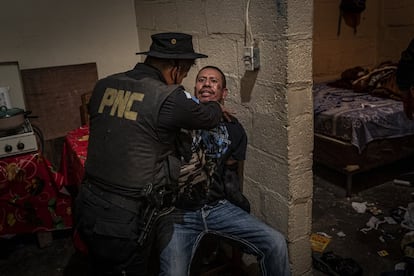
Guatemalan authorities confirmed that 20 inmates, members of the Barrio 18 gang, escaped from the Fraijanes II maximum-security prison, located about 12 miles from Guatemala City, two months ago, although the information had not been released until now. The news has sparked a crisis for Bernardo Arévalo’s government: both his own party and the opposition are calling for an investigation to find those responsible for the escape. Barrio 18 was designated a foreign terrorist organization and a global terrorist organization by the U.S. Department of State in September for its involvement in violent acts against security forces, public officials, and civilians in Guatemala, El Salvador, and Honduras.
Guatemala’s Minister of the Interior Francisco Jiménez explained that on Friday, October 10, prison intelligence units raised the alarm about a possible prison break, so they conducted a biometric verification and a head count of inmates. “During the procedure, it was reliably established that 20 inmates had evaded security controls and were no longer in Fraijanes II,” Jiménez said at a press conference on Monday.
According to authorities, the escape was planned, carried out in groups, and had internal and external support, so the involvement of guards and officials from the prison system cannot be ruled out.
US issues warning
In a press release, the United States called on the Guatemalan government to act “immediately and vigorously” to recapture the escapees and issued a warning those who may have assisted in the gang members’ escape. “The escape of Barrio 18 terrorists from prison is totally unacceptable. The Guatemalan government must act immediately and vigorously to recapture these terrorists, who pose a threat to both Guatemala and the security of the United States homeland. All those involved in these escapes must be held fully accountable,” reads a statement posted on its embassy’s official social media channels.
Barrio 18 makes its money through extortion payments from small vendors in neighborhoods located in red-light districts, as well as through right-of-way payments from large companies that distribute their products in neighborhood stores, and through contract killings, according to police investigations.
The organization’s operational orders are issued from Guatemalan prisons. The current leader of Barrio 18 is Aldo Dupie Ochoa Mejía, alias “El Lobo,” whom the Ministry of the Interior has attempted to isolate and control in a maximum-security prison, a move that has proven unsuccessful as the courts have backed his various bids to prevent a transfer.
Ochoa Mejía is married to María Marta Castañeda Torres, a niece of former first lady and presidential candidate Sandra Torres. Castañeda Torres is in prison for her alleged involvement in the murder of a prosecutor from the Public Ministry.
Demands for dismissal of minister
Deputies from the suspended Semilla ruling party, which brought President Bernardo Arévalo to power, called for the dismissal of Minister Jiménez following the escape of the prisoners. “I spoke with President Arévalo to request the dismissal of the leaders responsible for these events, starting with the Minister of the Interior. The party supports President Arévalo and his administration, but not the incompetence displayed by his officials,” said Representative Samuel Pérez.
Pérez added that Jiménez no longer enjoys the public’s trust to continue in office and that the “least” he expects is a strategy to recapture the escaped inmates. For the moment, Arévalo, who is on an official trip to Europe, has not officially commented on the escape. He has limited himself to replying to a message on his social media account from his vice president, Karin Herrera, in which she reported the capture of one of the 20 escaped inmates and assured that the rest were “being sought so that, as soon as possible, they face all the consequences before the law.”
Tuve comunicación con el Presidente Arévalo para solicitarle la destitución de quienes ya no gozan de la confianza del pueblo de Guatemala, responsables de la fuga de 20 mareros. pic.twitter.com/dNdHOFq6hz
— Samuel Pérez 🌱 (@samuel_pz) October 13, 2025
Meanwhile, Jiménez was accused by former Public Prosecutor’s Office prosecutor Juan Francisco Solórzano Foppa of having negotiated a “pact” with Barrio 18 with his deputy minister for anti-narcotics to free the prisoners and reduce the wave of violence in Guatemala. He also said, in a video posted on his social media, that the 20 inmates escaped from the prison disguised as National Civil Police officers.
However, during a press conference at the Presidential Palace, Jiménez denied the accusations and also stated that he will not resign. “I will not leave my post until this problem is resolved. I cannot leave this problem half-resolved,” the minister stated.
In 2018, a report published by the newspaper Prensa Libre recounted how 14 inmates belonging to the Barrio 18 and Mara Salvatrucha gangs escaped from two prisons in the country with the support of prison guards in exchange for a payment of approximately $260,000.
On that occasion, the escape was detected following a prisoner count, after police investigators assigned to the gangs encountered several of those they remembered capturing on the streets. Guatemalan judges also commented on that occasion that, since many of the members of these gangs have been handed life sentences, or those in pretrial detention have hearings scheduled months in advance, it is easy for them to change their identity or simply evade prison.
Among the 19 fugitives on the loose are murderers, gang leaders, and rapists. The Minister of the Interior also confirmed the dismissal of several prison officials and announced that it will have the support of the United States to conduct polygraph examinations of the those suspected of involvement to determine whether to proceed with the respective charges.
Sign up for our weekly newsletter to get more English-language news coverage from EL PAÍS USA Edition









































