The orphans of Santo Domingo’s Jet Set nightclub: ‘The pain will never go away’
Six months after the roof collapse that killed 236 people in the Dominican Republic, the investigation remains stalled; 130 children were left without one or both parents
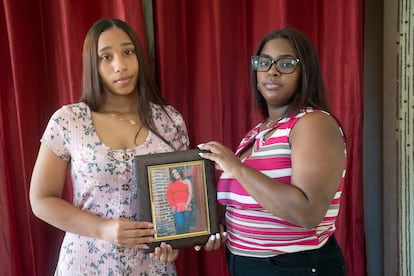

Estefany García Melo was sleeping when her aunt woke her up at 5 a.m. to tell her that her mother, Nércida Anabel Melo Arias, hadn’t arrived home. The 20-year-old told her not to worry, to try calling her. They did so again and again, with no answer. Minutes later, she checked her Instagram account out of inertia and was puzzled by the dozens of Dominican influencers and singers posting mourning and crying emojis and images of a terrible structural collapse at one of the Dominican Republic’s most famous nightclubs, Jet Set, on that same night of April 8. “Where did Mommy go dancing last night?” she remembers asking her aunt. “Jet Set, Rubby Pérez’s show. Why?” she replied.
The following hours were a blur. A torrent of images and videos arrived on WhatsApp and Instagram, Nércida’s coworkers called to see if they had found her yet, a neighbor explained what had happened to her five siblings, aged between nine and 23, and a pent-up hope faded with the passing hours. They zoomed in on the images, and none of the 180 injured people being pulled from the collapsed building was Nércida. At 5 p.m., Catherine Anavel Marte Melo, the oldest sister, received the dreaded call. “They told me Mom had died of respiratory failure, after a large block fell from the ceiling, and from bleeding in her leg,” she says.
However, it wasn’t until April 12 that they received the matriarch’s coffin, “in terrible condition.” Before then, Estefany recounts, they had twice been given the wrong body. Six months after the accident, Catherine still grieves for not being able to attend her mother’s funeral. She lived in Spain and couldn’t make it in time. “It’s very hard, but we have to learn to live with the pain, because it will never go away.” Until the collapse, Nércida’s job as a masseuse supported her four biological children and two orphaned children from a previous partner who died and whose ex-wife never took care of them due to mental health issues. Now, it’s her three older siblings, without any state assistance, who are keeping the family afloat. The National Council for Children and Adolescents (CONANI) informed EL PAÍS that the Melo family initially requested assistance with school fees for their older siblings, but ended up “self-managing” these payments.
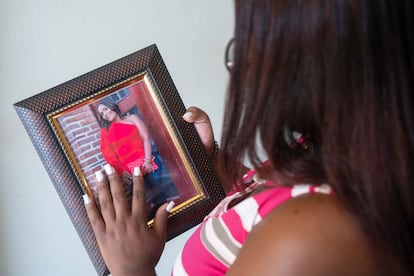
The Jet Set disaster left 130 children and adolescents without one or both parents, according to data shared by CONANI. Like Catherine and Estefany, many seek justice and protection from a state they feel could provide more support for them. “What became clear to me is that when someone is poor and commits a crime, they pay, whether there is evidence or not, but when you have money, they get away with it,” Catherine says over the phone. She is referring to the Espaillat brothers, charged with involuntary manslaughter and released on bail despite a damning report from the public prosecutor’s office revealing “systematic and gross negligence,” an excess weight of about 100 tons on the roof, and messages from the establishment’s managers warning them days or even hours before the doors opened that “pieces of the roof” were coming loose.
Antonio Espaillat, owner of Jet Set, is one of the most influential people in the country. President of the media conglomerate RCC Media, which controls more than 50 radio stations and several television channels, he also owns the Jalao restaurant, located in the Colonial Zone of Santo Domingo, which also has a branch in New York. Many relatives fear that the brothers’ last name will carry more weight than that of their dead relatives. “Justice doesn’t exist in my country, much less with guys like him,” the older sister says.
“No prompt justice”
Salvador Catrain, legal representative of 11 of the more than 100 complaints filed and nine orphaned children, laments the slowness of the judicial processes. “So far, there has been no significant progress that offers clarity or prompt justice. We persist so that responsibilities are not diluted or the case goes unpunished,” he said by phone. The lawyer points to the demands of the victims, who are filing charges through all three legal avenues. In the civil case, they seek financial compensation for the damages suffered; in the administrative case, a lawsuit has been filed against the state for its responsibility “in allowing conditions that led to the tragedy”; and, in the criminal case, they are suing the Espaillat brothers to “ensure they are held accountable.”
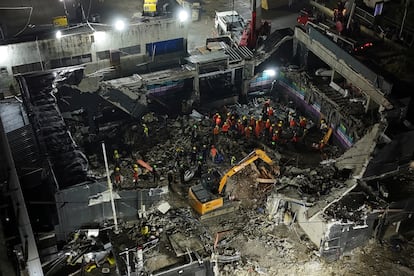
Since the Espaillat brothers were released on bail on June 19, they have remained silent on social media and in the press. Aside from a timid statement from Antonio Espaillat and a video offering condolences in the days after the collapse, they have said nothing further. Until late September, when they asked the supervisory judge to approve two experts, put forward by them, to conduct a new evaluation of the nightclub’s structure.
The professionals suggested for the new assessment are José M. Lockhart, a soil analysis expert, and technical consultant Nicolás Saens, with experience in structural engineering assessment. Osiris Disla Ynoa, one of the victims’ attorneys, told local media that the proposed experts claim to have a “specialty in English” that “does not exist as a specialty or as a degree.” “If someone wants to conduct an expert appraisal of an explosion or a building, the minimum requirement is to have previously participated in a similar case, and they haven’t done any of that. They are lying,” he said. The judge will decide whether or not to accept this new appraisal on October 24.
“Evelyn had two daughters”
For 17-year-old Sariela Corporán Navarro, things are moving too slowly. She doesn’t understand how a flawed establishment was allowed to open without any authority reviewing it. Her mother was trapped between iron bars and cement blocks for 11 hours, and after being freed, she struggled to survive for 24 days. “She was in the ICU five times; it was too much. She herself told me she was tired,” she says through tears. Evelyn Mariela Navarro de León was just 34 years old when she died.
Sariela and her younger sister, 13, also decided to file a lawsuit to honor the memory of their mother, who sent money from Spain, where she lived and earned her living as a waitress. The young woman goes from pain to rage when asked about government assistance. “They asked for my phone number to give me psychological help, but they never contacted me. And my uncle kept the financial aid in our names,” she laments. Now, the minors have moved from Santo Domingo to the United States with their father. “We want to go to court because I need them to know we’re here. Evelyn had two daughters. I want the government to know that there are two minor girls who lost their mother. And they’ve forgotten us,” she says, heartbroken. Sariela has had three panic attacks since her mother’s death, and she has learned to self-regulate on her own.
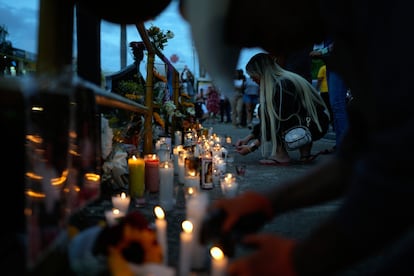
CONANI acknowledges that, although it initially allocated the aid money to a maternal uncle who never gave it to the minors, they did not send any subsequent financial aid because the girls’ biological father assured the state agency that “on a social level, they do not require any type of support.” This testimony is contradicted by Sariela and her father. For Catrain, the precariousness of government aid has been a form of revictimization. “This has increased the feeling of abandonment and makes it difficult for families to cover basic needs while they wait for justice,” he explains by phone.
Last Sunday, Sariela celebrated her mother’s birthday without her. “It was very hard, a very sad day,” she recalls. But they celebrated. They gathered at her father’s house with friends and family and reminisced about the delicious meat lasagna she cooked, how much she enjoyed coffee, and how she would jokingly say that she was the most beautiful woman in the world. Sariela wonders when they’ll be able to remember her without crying; she hopes justice will help.
Sign up for our weekly newsletter to get more English-language news coverage from EL PAÍS USA Edition