
A ‘hunt’ for migrants in the Spanish town of Torre Pacheco triggers fear: ‘There is peace for nobody’
The anti-immigrant protests are targeting a generation of young people born in Spain who are now around 20 years old and have always been marginalized
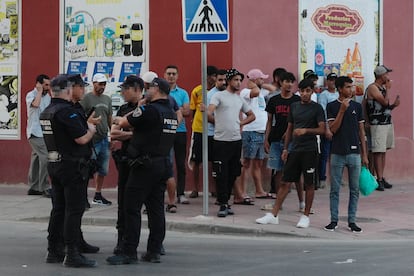

Fear is palpable on the boiling asphalt. Glass from broken bottles and smashed car windows is still scattered on the sidewalks of San Antonio. This neighborhood is the heart of the Moroccan community in Torre Pacheco, a Spanish municipality with a population of around 40,000 in the southeastern region of Murcia.
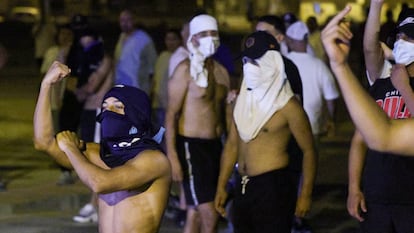
Everybody in town is talking about what happened last night. Older folks are sipping coffee on the terrace of the Istanbul café, which marks the entrance to the neighborhood. But the younger residents are preparing for another attack like the one they faced on the night of Saturday, July 12: dozens of burly men – dressed in black, some of them hooded – entered the neighborhood, carrying out what they themselves have called a “hunt” for North African immigrants… who, in reality, have been living in the town for three decades.
Three days of riots resulted in mild injuries and several people being arrested. Patrols from the Civil Guard law enforcement agency– which has deployed 75 officers throughout the municipality – and the local police are roaming the streets.
Everyone knows something is going to happen. The question is when.
The photograph of the face of Domingo, a 60-year-old resident of the town, went viral on Thursday, July 10. His face was stained with blood, while one of his eyes was completely swollen from a beating he had received the day before. There’s also a video circulating, in which a young man with a foreign accent allegedly assaults him. The incident is still under investigation, but the verdict of the streets has already been issued: a handful of Moroccan youths were the ones who beat him up, supposedly to make the video go viral on TikTok.
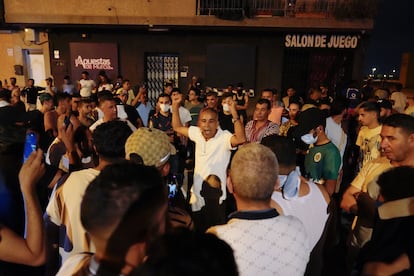
The next day, the City Council called for a demonstration to condemn the attack. Tempers were already running high. A handful of immigrant youths attended the event, with the intention to provoke. Youths from far-right groups, organized on Telegram, were already there and responded to the taunt by attacking the migrant youths and trying to lynch them, with the few law enforcement officers unable to contain them.
The fuse was about to be lit, and the fire came from outside. 25-year-old Omar – who has spent 20 years of his life in Spain – is firm in his opinion: “[The far-right assailants] came from outside the municipality to provoke, because they know we live here; otherwise, why would they come?” the young man asks.
Omar grew up and studied in Torre Pacheco. He says that those who came looking for them weren’t their former classmates or the town’s residents, but other men encouraged by extremist agitators on social media.
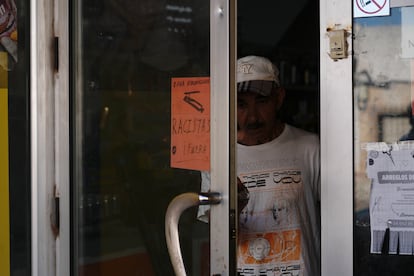
The call to “hunt” – that exact word has been used – targets a specific population: a generation of young people who were born in the town. Now in their twenties, they’re the children of immigrants. They spend their days on the streets. While they grew up in Spain, they’ve always been marginalized. “They’re foreigners back home and ”moros" [a derogative term for North Africans] when they’re in the streets,” says the journalist and sociology professor Paulino Ros, who teaches at Spain’s National University of Distance Education (UNED) in Cartagena. He also runs a blog titled Islam en Murcia (“Islam in Murcia,” referring to the region where Torre Pacheco is located. These young people, he points out, are neither studying nor working: they’re “absolutely neglected.” They don’t speak Arabic and they haven’t set foot in Morocco… yet they don’t feel like they fully belong in Spain.
Fátima – who prefers not to share her real name, for fear of reprisals – was once a child in this neighborhood. Today, she’s almost 30. A doctor by profession, she no longer lives in San Antonio, but her entire family still does. When she spoke with EL PAÍS, she was visiting, and afraid.
“I’m forbidding my nephews from going out. But one of them is almost 19; how do you tell him not to go out? How do you demand that he stay locked up out of fear?” she asks.
Like her, some of the young people raised here have managed to get an education, build a career and rise up. For many others, however, this hasn’t been an option. They’ve ended up being pushed out onto the streets, with some now involved in crime.
“It’s the violence of frustrated children. Why don’t they study or work? They’re children who are lost, but instead of addressing why they’re there, they’re singled out and persecuted,” she laments.
On the other side of town, there’s also fear. A family that runs a bar finishes eating on the terrace. Lifelong residents of the town, they say that they’ve been living with the immigrants for decades. For a long time, their daily interactions have been on good terms: their customers are mainly of North African descent. They themselves shop at Moroccan stores. But when it comes to this group of kids – between 16 and 20 years old – they say that things are different, that these youths feel like they own the streets. The family claims that they take part in the drug trade and that they’re hostile.
There’s a general weariness with crime in the town. However, it wasn’t the residents who came looking for the youths, but rather people from outside the town, who showed up specifically to find them. “And now we’re the ones who’re going to [suffer] the consequences of whatever happens,” says one of the family members, who prefers not to give his name or appear in the press.
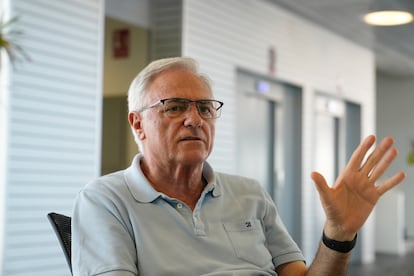
Mayor Pedro Ángel Roca, of the conservative People’s Party (PP), supports the feeling of being fed up with crime. And he doesn’t see a lack of attention for young people in marginalized neighborhoods.
“In the end,” he shrugs, “nerves are triggered by a long period of crime.” He associates the rise in crime with an exponential increase in the town’s population, which has grown by almost 200% in recent decades – from 15,000 inhabitants to almost 42,000 – driven mainly by immigrants who have come to work in the agricultural sector. He says that he sees no difference in the state support provided to immigrants and to people of Spanish origin, arguing that they’re quite integrated. However, a member of the city council who is responsible for the educational sector within the municipality acknowledges that, in secondary schools, in predominantly North African areas, the dropout rate stands at around 30%.
“Vox (the biggest far-right party in Spain) is waiting for an incident to happen so they can go on their summer rounds,” says Mariola Guevara, a central government delegate in the Region of Murcia, who accuses the extremist party of “encouraging violence.”
“Radicalized, xenophobic, racist political organizations – which constantly incite hatred and associate any type of crime with immigration – are being normalized and given a place in institutions. This generates social alarm among the population, she affirms, adding that “Torre Pacheco has always been a municipality with a very good [state of] coexistence.”
Guevara defends the actions of the security forces, which have reinforced their presence and are working in a “coordinated” manner. She notes that the police officers and members of the Civil Guard have prevented incidents from escalating. “We had maximum resources and much more availability and personnel activated, so that they could be deployed whenever necessary,” she points out.
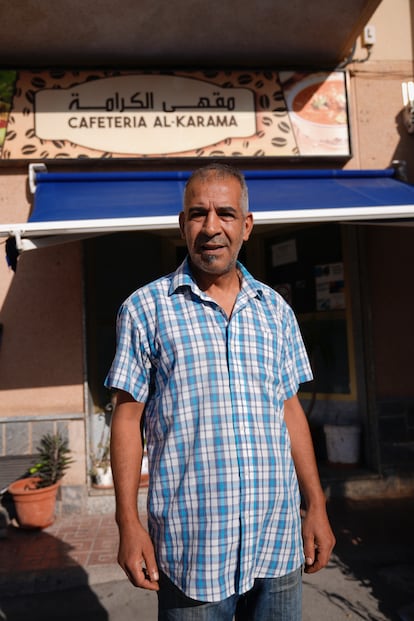
The cafe owned by 55-year-old Allal Abbou, who has spent 15 years of his life in Spain – is called Al Karama in Arabic, which means “dignity.” Abbou – who runs an association that works toward the integration of the immigrant community – cannot believe what he’s seeing. “Right now, we have no security,” he laments. “But I’m not talking about Moroccans or Spaniards: there’s no peace for anyone. We’re all [residents of Torre Pacheco] and we breathe the same air,” he sighs.
He says that Moroccans don’t feel safe now. He adds that this has never happened before… that something external is fueling hatred on the streets. He watches the patrol cars move back and forth. “I hope nothing happens,” he sighs. Outside, officers are beginning to cordon off the streets.
Sign up for our weekly newsletter to get more English-language news coverage from EL PAÍS USA Edition









































