
US calls Nicaragua’s decision to leave Organization of American States a ‘step away from democracy’
The regional body, known by its initials OAS, has long criticized rights violations under Nicaraguan President Daniel Ortega
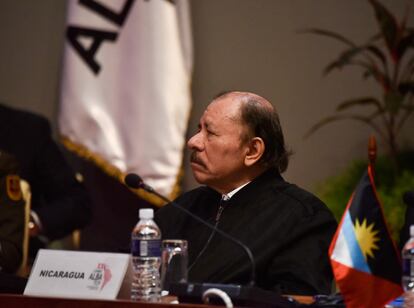
The U.S. State Department called Nicaragua’s formal withdrawal from the Organization of American States on Sunday “another step away from democracy.” The regional body, known by its initials OAS, has long criticized rights violations under Nicaraguan President Daniel Ortega. Ortega, who governs alongside his wife, Vice President Rosario Murillo, has rejected those criticisms and started the two-year process to leave the OAS in November 2021.
“The Ortega/Murillo regime’s withdrawal from the OAS is another step away from democracy and further isolates Nicaragua from the international community,” U.S. State Department spokesman Matthew Miller wrote on X, the social media platform formerly known as Twitter.
Neither Ortega’s office nor the government commented Sunday.
The OAS has said it will continue closely monitoring Nicaragua’s democracy and human rights record even after the country’s exit from the group, which it has belonged to since 1950.
According to a resolution approved by the OAS permanent council earlier this month, the OAS “will continue paying special attention to the situation in Nicaragua” and will try to promote respect for human rights and fundamental freedoms there.
Arturo McFields, Nicaragua’s representative at the OAS until he publicly denounced Ortega and Murillo in 2022, said earlier this month that Nicaragua’s withdrawal would be “a heavy blow to the fight for democracy and defense of human rights.” But he was encouraged by the OAS resolution.
Ortega’s administration has sought to suppress critical voices since popular street protests in April 2018 turned into a referendum on his government. After the protests were violently put down, with some 355 people killed and hundreds imprisoned, the government set about silencing institutions he perceived as supporting the protesters.
Targets have included private universities, the Roman Catholic Church, civil society organizations and tens of thousands of individuals driven into exile.
Ortega’s government started the two-year process to leave the OAS shortly after the body joined others in the international community in condemning the elections, widely criticized as flawed, that led to Ortega’s latest term.
The last country to leave the OAS was Venezuela in 2019.
Sign up for our weekly newsletter to get more English-language news coverage from EL PAÍS USA Edition









































