
Ana Fernández-Arcos, neurologist: ‘There are people who give so much importance to dreams that they can change their lives’
The researcher reviews the latest advances in sleep science: ‘You can train yourself to have more lucid dreams. This is even used for therapeutic purposes’
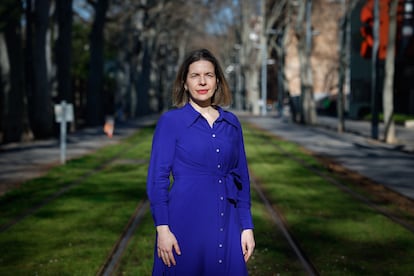

Ana Fernández-Arcos, 42, is a neurologist specializing in sleep medicine and a researcher at the Pasqual Maragall Foundation in Barcelona. She talks to EL PAÍS by phone from her office at 11 a.m. on Tuesday.
Question. Did you dream last night?
Answer. Yes.
Q. Why do some people remember their dreams and others don’t?
A. We don’t know for sure. But, in part, it depends on the importance we give them. When someone makes a habit of explaining or recalling their dreams, or gives them more meaning, the simple act of doing so trains the brain to remember them better.
Q. Is remembering a dream indicative of something?
A. If a person who doesn’t usually remember their dreams suddenly starts remembering them very frequently, it could be indicative of a problem. Or it could mean that the dream is more fragmented for some reason, even a medical reason.
Q. There are also things we don’t want to remember, yet they appear when we sleep.
A. Yes, that’s possible. During sleep, especially in REM sleep, emotional content is activated. We dream in different sleep phases, but [this happens] particularly in REM sleep, when the brain is very active, almost like when we’re awake. In other phases, there’s more rest. In REM sleep, areas related to intense emotions are activated, so it’s common for memories that have impacted us to surface: significant life events, personal situations.
Q. Do you have any recurring dreams?
A. I’ve dreamed several times that I was taking the MIR exam. Everyone dreams about their own things [laughs]. When the amygdala, which is related to fear, is particularly activated, it can lead to nightmares. Furthermore, there’s a bias: unfortunately, we remember dreams with negative content more than positive ones.
Q. Does it make sense to look for a meaning in dreams?
A. From a scientific point of view, no. There is no evidence that the specific content of a dream has a hidden meaning. We are more interested in what happens during sleep than in what is dreamed.
Q. For example?
A. REM sleep behavior disorder. In these cases, dreams are usually very intense, and the person feels they have to defend themselves against something. It typically appears after age 50 and must be confirmed with a sleep study in a hospital. When confirmed, it can be a very early sign of diseases like Parkinson’s. The specific details of the dream — “I dreamed a dog bit me” — are not as important as the feeling of defense or struggle. Something similar occurs with sleepwalking in young people, where dreams often involve escape or claustrophobic situations. But we are speaking in very general terms.
Q. Are we sleeping worse than we were 20 years ago?
A. We think so. First, because we cut back on sleep. In this very productive lifestyle, we want to do everything, and it seems acceptable to sleep little, especially when you’re young. What’s more, it’s hard to relax. Many people want to go to bed and fall asleep immediately, and sleep doesn’t work that way. You need to gradually disconnect from the day, have routines, ease into drowsiness, and then fall asleep.
Q. And that doesn’t happen.
A. Clearly. And sometimes we’re not even aware of it. There are 20-year-olds who complain about falling asleep at university, and when we analyze it, we see that they sleep six hours when they need close to nine or 10. Their brains are still developing.
Q. What are the consequences of sleeping poorly?
A. In the short term: irritability, fatigue, drowsiness, worse mood, impulsivity, poorer academic or work performance, more mistakes. Drowsiness while driving is especially dangerous and is behind very serious accidents. In the long term, it has been seen to lead to a greater risk of cardiovascular disease, mental health problems, and, increasingly, a link to neurodegenerative diseases. In population studies, we usually talk about adults who sleep less than six hours. However, I like to differentiate between general recommendations and what happens in people with insomnia, because these people already know the guidelines, and talking about it can cause them more discomfort.
Q. However, it’s rare to hear someone say, “I’ve been sleeping badly for two weeks, I’m going to the doctor,” despite the disruption that causes on every level. What signs should lead someone to a sleep clinic?
A. When you’re already trying to get the recommended amount of sleep for your age [between seven and nine hours for adults], keeping regular schedules, eating light dinners, avoiding alcohol and tobacco close to nighttime, and you still sleep poorly or don’t feel rested and experience daytime sleepiness, that’s a clear sign you should consult a doctor. Self-medication is very common: melatonin, pills recommended by others… The important thing is to see a doctor for a proper diagnosis.
Q. We also have to deal with cell phones.
A. First, it steals our time. Then there’s the light, which inhibits melatonin secretion, as well as the constant stimulation of scrolling and algorithms, which make relaxation difficult. What’s more, the content also influences us: reading newspapers or news at night can be very stimulating. It certainly doesn’t help you sleep.
Q. There are people who only fall asleep with the radio or television on.
A. That’s about routines. You have to respect what each person finds enjoyable. It could be the radio, reading the Bible, a skincare routine, or always watching the same series. A familiar voice or known content can induce a feeling of security. What is advisable, though, is using a timer.
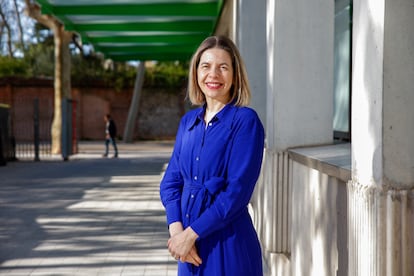
Q. With respect to lucid dreams: can we ever control our dreams, or is this science fiction?
A. No, it’s not science fiction. What has been observed is that people who have lucid dreams exhibit a specific type of brain activity. Even though they are in a particular sleep stage — something we can identify using an electroencephalogram — they show specific patterns. We know that most vivid dreams occur during REM sleep, and characteristic gamma waves have been detected in people who have lucid dreams. Furthermore, some people can train themselves to have more lucid dreams.
In certain clinical contexts, this is even used for therapeutic purposes. For example, in people with post-traumatic stress who suffer from nightmares, techniques are used to help them redirect those nightmares toward less distressing content. The work involves recalling the dream while awake and practicing how to modify it, with the idea of being able to exert some control when it reappears during sleep. This type of approach has been studied especially in veterans in the United States, where there are large veterans’ hospitals with extensive series of clinical cases.
Q. It’s thrilling to realize you’re dreaming: having no responsibility, jumping off a balcony, flooring the accelerator. Dying in a dream just means waking up.
A. Outside of the therapeutic context, lucid dreams can be experienced almost as a superpower or a form of entertainment: the feeling of being able to do whatever one wants within the dream. Attempts have also been made to induce them through non-invasive brain stimulation, trying to generate the gamma waves associated with lucid dreaming. However, the results are still limited. Some laboratories, such as one in Germany, have obtained promising results, but it is difficult to achieve studies with sufficient scientific validity and, above all, to ensure that the results can be consistently replicated by other research groups.
Q. Are sleep apps and watches useful?
A. They are based on movement, breathing, and heart rate. They have limitations and are not medical devices. They can provide guidance and help improve habits, but they can’t make a diagnosis. And in people with insomnia, they can lead to obsessive behavior. Now there are even devices that attempt to detect sleep apnea or rings with monthly subscriptions that analyze data. They can be useful for guidance, but must always be used with caution.
Q. What can artificial intelligence contribute?
A. Polysomnography is, currently, the most comprehensive test we have: it records brain waves using electroencephalography, heart rate, respiration, and even muscle activity. It’s a very complete picture of sleep. Everything is monitored simultaneously with electrodes. Now, we’re trying to harness all that information with artificial intelligence. With thousands — or perhaps millions — of sleep recordings, we can analyze patterns that could indicate a risk of certain diseases in the future. For example, in the research I conduct at the Pasqual Maragall Foundation, we study slow-wave sleep. This is the phase in which, theoretically, the brain most effectively eliminates waste proteins, including amyloid protein, which is the one that accumulates in Alzheimer’s disease. We’re investigating whether people at risk of developing the disease, but who don’t yet have symptoms, might have alterations in these slow waves. If we analyze millions of sleep recordings with artificial intelligence tools, we could detect patterns associated with that risk. That is one of the most promising fields right now.
Q. A personal question: what led you to specialize in sleep medicine?
A. I really like neurology because it has a very human dimension. You talk a lot with people. Asking someone about their dreams is entering into a discussion that’s very intimate. In fact, the older I get, the more self-conscious I feel, because it’s a very personal sphere and everyone decides how much they want to share. But I’m fascinated by alterations in the level of consciousness, hallucinations, everything our own brain creates. I find it fascinating. I’m also fascinated in the value of sleep as an indicator of illnesses, especially neurodegenerative ones. The involvement of different brain areas can manifest itself in sleep. In that sense, sleep can be a window into what’s happening in the brain, also on a psychological level: what impacts us most, post-traumatic stress, certain emotional conflicts.
Q. Do you recall any case that particularly impacted you?
A. I’m deeply struck by how dreams influence some people’s lives. And also by how their environment interprets those dreams. For example, if a child starts having certain dreams, the family’s interpretation can greatly affect their development. Some people, depending on their personality and circumstances, can give those dreams a very strong meaning, even changing the course of their lives because of something they dreamed about at a particular time. It all depends a lot on their underlying personality and their environment.
Q. Is it possible not to remember something — even something traumatic, especially from childhood — and have it surface later in dreams?
A. It’s not entirely clear when certain memories are fixed and to what extent they can be retrieved in that way. But we do see interesting phenomena related to memory and sleep. For example, in Spain we have the peculiarity of bilingual populations. There are people in Catalonia who always speak Catalan and practically never Spanish, but when they have sleep disorders and talk in their sleep, they may do so in Spanish. And their partner says: “They never speak Spanish, except when they dream.” Often this is related to memories of [mandatory] military service, which for many was an intense or even traumatic experience, especially under [Spanish dictator Francisco] Franco. In other words, sleep can reactivate very specific emotional contexts associated with certain periods of life. These kinds of phenomena do show how sleep and emotional memory are deeply connected.
Sign up for our weekly newsletter to get more English-language news coverage from EL PAÍS USA Edition









































