
Why mosquitos love to bite you (and how to avoid them this summer)
Not all of us are created equal when it comes to attracting the blood suckers — and a bit of prevention can help avoid health conditions that go beyond your standard itch
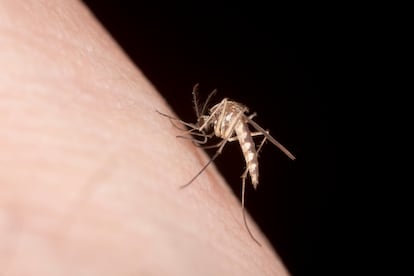

They’re uncomfortable, awake an uncontrollable need to scratch, and sometimes become the bearers of illness and infection. They may come back every summer, but mosquitos aren’t attracted to all of us equally. Behind certain individuals’ vulnerability lie factors like exhaled carbon dioxide, body heat, moisture, and even a person’s physical appearance. Skin odor is also a key factor when it comes to explaining why certain people get bitten more than others.
“Body odor is determined by chemical compounds such as carboxylic acids and aldehydes. People who release larger quantities of certain substances tend to be more attractive to mosquitos,” says Isabel Fernández de Alba, allergist at the Hospital Universitario HLA Inmaculada in Granada, Spain. For those unfortunate individuals, the attraction they hold for mosquitos is unlikely to change over time. According to Fernández de Alba, there is a genetic component at play, as research conducted on identical twins, who often equally entice the bloodsuckers, has borne out.
Mosquitos do not bite all humans equally, and nor are our reactions to them necessarily the same. Normally, their bites cause minor inflammation and irritation of the skin but, as Fernández de Alba says, there are people who suffer from more exaggerated reactions. Such individuals can see bites swell to nearly four inches across, with considerable localized symptoms. For some, the affected patch of skin heats up, reddens and can be the source of much discomfort — and must be treated with antihistamines, corticosteroids, and if necessary, local antibiotics (or oral antibiotics in more severe cases). To identify a severe allergic reaction, the key is to watch for generalized symptoms that affect the entire body, or lesions that form at a distance from the bite itself. “If, for example, we’ve gotten bit on our hand and a rash forms on our legs, or if we also have generalized symptoms like dizziness or loss of consciousness, difficulty breathing, vomiting or diarrhea, we are having an allergic reaction,” says Fernández de Alba.
Is it possible to experience anaphylaxis from a mosquito bite in serious cases of allergy? Raúl de Lucas Laguna, chief pediatric dermatologist at Madrid’s Hospital La Paz explains that if a person is sensitive to an insect bite, they can go into anaphylactic shock, although this is unusual with mosquito bites. Such a reaction is more common, according to the expert, in the case of wasp or bee stings, because the amount of poison involved is much greater. “Normally in the case of mosquitos, bites produce hypersensitivity, which is to say, that the bite is more inflamed,” he says.
Although there has been no documented increase in serious reactions to mosquito bites, De Lucas says that they have observed more intense responses among people with immunological illnesses, like atopic dermatitis and chronic lymphocytic leukemia. There has also been a spread of the tiger mosquito in Spain and southern Europe caused by climate change, a species that not only causes more aggressive reactions, but also carries an increased risk of the transmission of diseases such as dengue and chikungunya. This calls for greater monitoring and prevention campaigns.
To prevent mosquito bites within the home, one can use mosquito nets or electric anti-mosquito diffusers. But outside, prevention may be limited to mosquito repellants. There are chemical formulas based on DEET, icaridin, or IR3535 that are effective and widely used in areas with large mosquito populations, especially in areas where there is a risk of diseases such as dengue or malaria. There are also natural repellants, though not all of them are as effective.
Fernández de Alba says it’s important to look for formulas that have been studied both in laboratories and in outdoor tests. To that end, she considers citronella oil and catnip essential oil (Nepeta cataria), containing a substance called nepetalactone (which is also what makes cats euphoric and playful), to be among the most effective natural repellants, able to repel up to 70% of mosquitos even when used in small quantities. However, the allergist warns that natural repellants tend to last less time than synthetic formulas, and that it is important to reapply them every one to two hours to maintain their effect.
Your best weapon: soap and water
When it comes to mosquito bites, there are a plethora of myths and folklore that can lead bite sufferers to make mistakes or even take steps that can worsen the issue. According to Esther Gómez, an ER nurse and professor at Madrid’s Universidad Autónoma, such misinformation can be avoided by adopting an evidence-based approach. “One of the most common myths is thinking that scratching helps the itch to go away faster, when in reality, it worsens the inflammation and can provoke secondary infections. Scratching can produce microscopic tears that make it easier for microorganisms to enter the skin,” she says.
Another myth is the idea that using products like vinegar, toothpaste, or alcohol can help to treat itching. According to Gómez, in many cases such products can irritate the skin even more and have no proven efficacy. Lastly, the nurse says that it is important to clarify that if a bite gets infected, it is not because the mosquito has injected something into you, but rather due to scratching and bacteria that is present on the skin’s surface.
What can you do after you’ve been bitten? Although a mosquito bite tends to go away quickly on its own, Gómez thinks that it is important to know how to act to avoid complications and relieve irritation. Firstly, she recommends washing the area with soap and water to reduce the risk of bacterial infection. “Many times, what complicates a simple bite is not the mosquito itself, but the subsequent scratching, which breaks the cutaneous barrier. That’s why avoiding scratching is key, even if the itch is intense,” she says.
Applying something cold (like a compress or ice cubes wrapped in a cloth) can help calm the infection and itching. But if something stronger is required for more intense irritation, Gómez says the most effective treatment is mild topical corticosteroids, such as 1% hydrocortisone, which can help to reduce local inflammation when applied within the first few days following a bite. Oral antihistamines like loratadine or cetirizine are also very useful if there are many bites or if the itching is severe. For milder options or for bites on children, lotions containing calamine, aloe vera, or menthol can be used for their soothing effects.
Sign up for our weekly newsletter to get more English-language news coverage from EL PAÍS USA Edition









































