
Venezuela closes its border with Colombia after attack on military
Maduro shuts frontier for at least 72 hours after three officers injured during raid
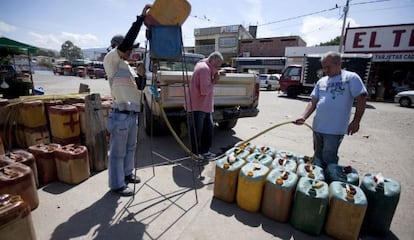
Venezuelan President Nicolas Maduro has ordered his country’s border with Colombia closed for at least 72 hours after three military officers and a civilian were injured in an incident that the government has described as an “ambush.”
According to Venezuelan authorities, the officers were conducting a raid against “extraction contraband” – subsidized products taken across the border to be sold at higher prices in Colombia – in the frontier city of San Antonio del Táchira at the time of the incident.
The officers were shot at by “a couple riding a motorcycle, in a very paramilitary style,” Maduro explained
This is the first time that Maduro has issued a border closure between the two nations since he took office in 2013 and the move could set off more diplomatic tensions between the two South American nations.
The officers had surrounded a warehouse in the Simon Bolívar district of San Antonio del Táchira, a well-known haven for smugglers, when they were shot at by “a couple riding a motorcycle, in a very paramilitary style,” Maduro explained in a phone interview that was broadcast on state-run VTV television.
He added that he would “look under the rocks” for the suspects.
Caracas and Bogota have long had disputes over border crossings and violence along their frontier. In 1999, then-Colombian President Álvaro Uribe accused the late President Hugo Chávez of offering insurgent rebels and drug traffickers a safe haven in Venezuela. The dispute led to the recalling of each countries’ ambassadors and a chill in bilateral relations.
In 2014, Maduro declared an “economic war” against speculators and price gorging. Venezuela is grappling with severe food shortages caused by drops in oil revenue, misguided economic policies, currency devaluations and high inflation.
According to the Venezuelan government, 40 percent of the country’s goods end up crossing the border into Colombia to be sold at higher prices.
English version by Martin Delfín.









































