
Santos faces second Cabinet crisis in wake of violent farm protest
President accepts the resignation of 16 ministers to pave the way for government changes
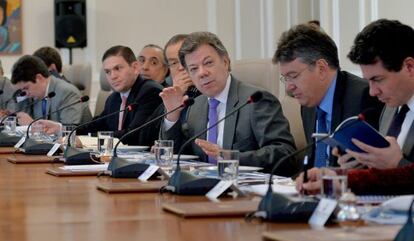
President Juan Manuel Santos late Monday accepted the resignation of 16 members of his Cabinet as a protocol gesture in an effort to reorganize his administration following a two-week-long strike by agriculture workers in which he was forced to impose a nationwide curfew.
In their collective letter, the ministers said they “totally supported” Santos and his policies but stressed that their decision was based on the need for the president to make necessary changes in order for a possible run for re-election.
The announcement of the mass resignation was made by presidential secretariat minister Aurelio Iragorri, who explained that the Cabinet’s withdrawal would give Santos “free will” to make the changes he wants.
Nevertheless, this is now the second Cabinet crisis of Santos’s term in office. In August 2012, all of his ministers resigned to reportedly allow Santos to “make changes” to his midterm administration, as the president explained then.
During the last mass resignation, key members of his Cabinet, including the defense, energy and mines, housing, justice and transportation ministers, gave up their positions.
As the farm crisis continues, Santos will now determine who will take over the Agriculture Ministry, which had been headed by Francisco Estupiñán, who replaced Juan Camilo Restrepo – a government official who was severely criticized by leaders in the sector.
On Friday, Santos ordered a curfew and announced military patrols in Bogota following violence that broke out during a march supporting farmers’ strikes. He also called his negotiators to walk away from negotiations with farmers from Tunja, Boyacá department.
Farmers have been protesting free-trade policies which they claim are ruining them, including high prices for fertilizer and fuel and the lack of government subsidies to make them more competitive.
Santos called out about 50,000 troops to patrol the streets of the Colombian capital and threatened to send in more soldiers to other areas if violence broke out.









































