The Federal Reserve leaves interest rates unchanged less than a week before the midterms
September’s inflation uptick leaves the door open to a rate hike in December. The decision drew two dissenting votes from policymakers who favored another increase
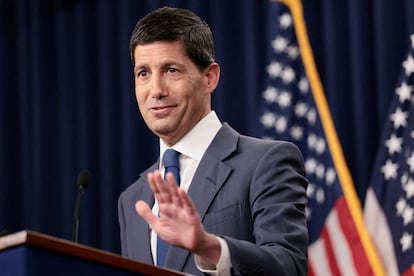

Wednesday’s Federal Reserve meeting was a bit like a Wes Anderson film: what mattered was not so much the ending as the way the story was told. The outcome came with a spoiler alert. More than 90% of analysts expected no change in interest rates, and they were right. The Fed left rates unchanged at 3.75% to 4%, less than a week before the U.S. midterm elections, which are being shaped by an affordability crisis fueled by persistent inflation.
Fed Chair Kevin Warsh, chosen by U.S. President Donald Trump to lower borrowing costs across the economy, had already disappointed the president in September when he backed a quarter-point rate hike, the first increase in three years, in response to rising prices driven by energy-market disruptions caused by the war with Iran.
“Economic activity is expanding at a strong pace. While uncertainty remains elevated owing, in part, to geopolitical developments, domestic spending has been resilient,” the Fed said in a brief statement, reflecting the new communication style introduced by Warsh and intended to avoid giving markets advance signals. “Productivity growth is strong, and capital investment is robust. Job gains have kept pace with the workforce, and the unemployment rate has changed little.”
The central bank’s statement was almost identical to the one issued in September, when it raised rates. “Inflation remains elevated,” it said. “The accumulation of more information will help the Committee determine the policy stance appropriate to ensure a timely return of inflation to the Committee’s 2% goal. The Committee will deliver price stability.”
Analysts had expected the Fed to pause its fight against inflation less than a week before the elections, even though September’s inflation reading of 3.7% came in higher than forecast. Following the traditional playbook that favors caution during election periods unless action is unavoidable, the central bank decided to hold rates steady. That caution, however, exposed divisions within the Fed, with two dissents: Beth Hammack, president of the Federal Reserve Bank of Cleveland, and Lisa Cook, both of whom favored a quarter-point rate increase.
Indeed, while the Fed chose to pause rate hikes on Wednesday, analysts expect policymakers to return to tightening once they have a clearer picture of inflation. Trump has already indicated that he intends to intensify action against Iran after the midterms, a step that could exacerbate the energy crisis and drive fuel prices higher still in a country where diesel is approaching record levels and gasoline prices have risen roughly 40% over the past year.
Federal Reserve decisions affect borrowing costs throughout the economy. They influence the interest rates households and businesses pay on loans, mortgages and auto financing, while also sending signals to financial markets about economic risks.
The meeting took place in the middle of a midterm election campaign that appears increasingly challenging for the president’s Republican Party. Polls show Trump’s approval rating falling to new lows. His controversies and political missteps have weighed on Republican candidates, who are also struggling with voter concerns about affordability and the cost of living. Democrats are within reach of regaining control of the House of Representatives and also have a chance of winning a majority in the Senate. If they succeed, Trump’s final two years in office could become considerably more difficult.
Sign up for our weekly newsletter to get more English-language news coverage from EL PAÍS USA Edition