
Netflix vs. Paramount: Inside the blockbuster battle to become the new king of Hollywood
The dispute between the two companies to take control of Warner ushers in a new phase in the entertainment industry, and it’s not yet clear how it could impact workers and audiences
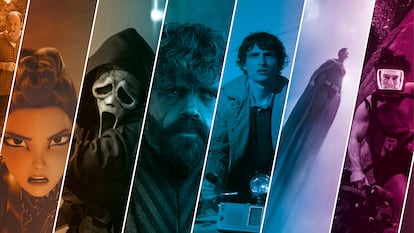

“After more than 30 years, we now have our own story. It’s a matter of seizing opportunities to become the world’s largest entertainment company,” Ted Sarandos, CEO of Netflix, said a month ago in an informal chat with EL PAÍS during the inauguration of the streaming platform’s first themed center in the world. His words have proven prophetic.
It’s a cold Tuesday in early November, and Sarandos, 61, has arrived at the launch party for Netflix’s new business in a small town just outside Philadelphia called King of Prussia, home to a massive shopping mall of the same name. There, the media group has opened its latest venture: a themed entertainment center featuring a restaurant, store, game rooms, an escape room, and other attractions inspired by characters from its most popular series such as Squid Game, K-Pop Demon Hunters, One Piece, and Wednesday. It’s a concept the company plans to gradually expand worldwide. Sarandos wears a custom blue suit and pristine white sneakers that make him look younger. He deflects questions about a rumored bid for Warner Bros. Discovery, which is also being pursued by Paramount, Skydance, and Comcast. At that moment, Netflix’s offer is just an unconfirmed rumor, but the executive doesn’t deny it.
A week later, Sarandos visited the Oval Office to meet with U.S. President Donald Trump for over an hour. He wanted to signal his intention to acquire Warner Bros.’ iconic film studios and streaming business, which includes HBO and the full catalog of series and movies, giving Netflix access to titles like Game of Thrones and the DC superhero franchise, including Batman, Superman, and the Justice League. Additionally, HBO would add 130 million subscribers to Netflix’s existing 300 million. Netflix calculates that the expanded catalog could generate profitable franchises and products over the next decade. Sarandos insisted that the deal would not create a monopoly, arguing that YouTube, Disney, and Fox are ahead in terms of audience share. Trump hinted that he won’t interfere in the deal, because, as a businessman, he believes Warner Bros. should be sold to the highest bidder. So Sarandos was pleased as he left the meeting with Trump, with whom he maintains a certain friendship.
Sarandos, the son of an electrician and a homemaker, knows the business: he’s a die-hard film buff. As a young man, he worked at a video rental store in a shopping mall in Phoenix, his hometown, recommending movies to customers. This is broadly similar to what the platform does with its algorithm. Today, he is the CEO of Netflix, alongside Greg Peters, with whom he shares leadership of the company.
Founded in 1997 as a DVD-by-mail rental service, Netflix transitioned to streaming in 2007, aiming to conquer households by offering movies and series online on demand. Six years later, the company’s fortune changed with its first original production, House of Cards, which became an instant hit. Today, Netflix leads the streaming industry, has 300 million subscribers — nearly as many as all its competitors combined — streams live events, manages advertising, licenses merchandise from its hit series, and pursues an aggressive strategy to expand its business.
After visiting the White House, Sarandos saw a clear path and ordered the final push for the empire founded in 1923 by the Warner brothers. On Thursday, December 4, while attending the premiere of a documentary about the anniversary of The New Yorker magazine, Warner Bros. Discovery (WBD) announced that its board had approved the sale of its studios to Netflix for $83 billion, with a commitment to absorb more than $10 billion of debt. The agreement expressly excludes the cable television business, which includes networks such as CNN, TNT, TBS, and Discovery Channel, among others. If finalized, the deal would surpass Disney’s 2019 acquisition of 21st Century Fox for approximately $72 billion and would mark the end, as we know them, of the legendary Hollywood major studios that emerged at the beginning of the last century.
“The transaction not only redefines the competitive landscape of streaming, but also places Netflix in an unprecedented position by integrating Warner Bros.’ vast catalog, home to some of the world’s most lucrative franchises,” explains Antonio Di Giacomo, senior market analyst at XS.com. “These represent strategic assets that allow for audience diversification, the development of spin-off products, and the expansion of a global presence in markets where competition has intensified,”
The Netflix team had been secretly preparing the deal for several weeks, and when they learned of Warner’s decision, they popped the champagne. “I know some of you are surprised that we’re making this acquisition, and I completely understand why,” Sarandos said during a conference call with analysts the following day to explain the deal. “Over the years, we have been known as builders, not buyers.”

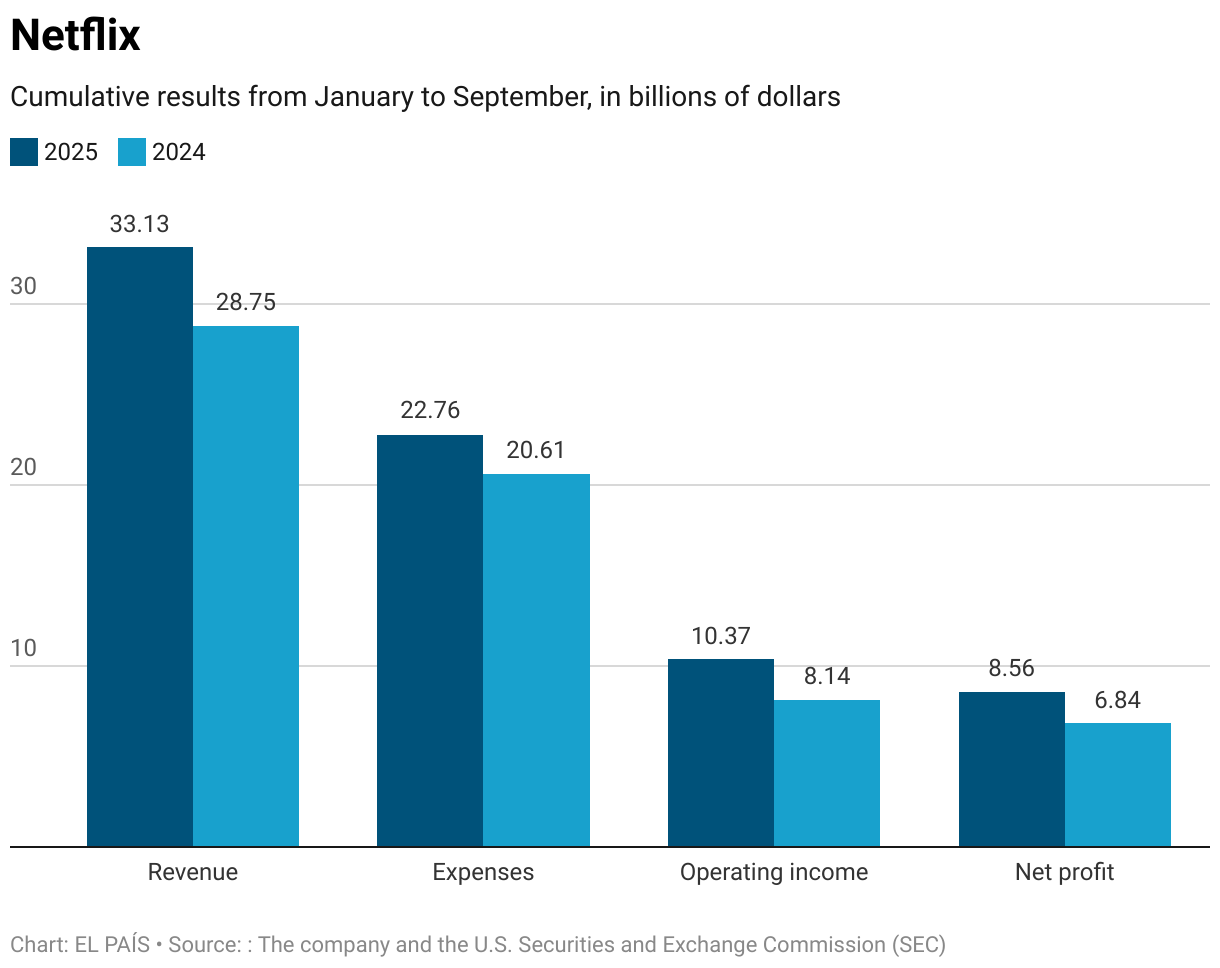
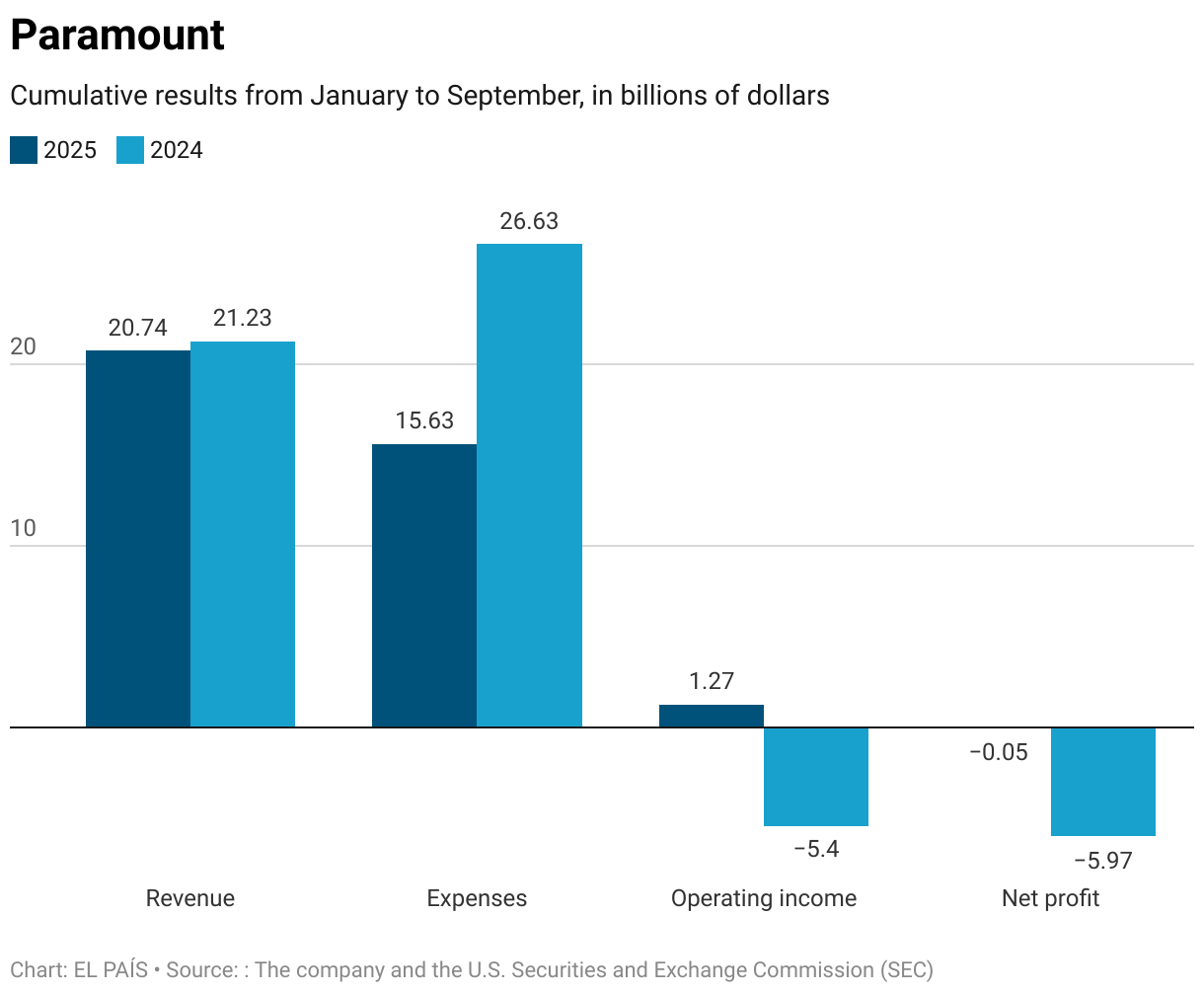
The taste of victory lasted only a few days. The following Monday, Paramount Skydance launched a hostile takeover bid for the entire Warner Bros. Discovery group worth $108.4 billion, including debt, in one of the largest corporate deals in the history of cinema. Paramount wants to thwart the Netflix deal and is lobbying antitrust regulators.
The move, described as bold and aggressive by analysts, has unleashed one of the biggest battles in recent memory in the entertainment industry. A war with all the ingredients of a soap opera: money, outsized egos, wealthy family dynasties, political ramifications, the White House in the mix, betrayals and, above all, an open ending that threatens to reshape the century-old film and audiovisual industry.
Neither deal is viewed favorably within the industry. Screenwriters, producers, and cinemas believe it will reduce competition, lead to thousands of job losses, and harm an industry already damaged by the rise of streaming, which has transformed production into a factory-like process. Although more content is being produced than ever before, wages are lower, jobs are more precarious, and products are often of lower quality to satisfy the frenetic demand for downloads — a business that is devastating traditional cable networks.
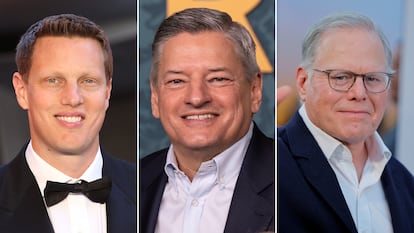
Sarandos has sought to dispel some doubts. He has pledged to keep theatrical releases in place, as Warner has traditionally done, but industry insiders note that the executive has long questioned the future of cinemas. Paramount, for its part, has promised to preserve jobs, yet says it expects to generate savings of nearly $5 billion if it succeeds with its hostile takeover bid. Meanwhile, it is already laying off workers.
Start of hostilities
In reality, the corporate battle began a couple of months before Sarandos’ visit to King of Prussia, driven by a single ambition: David Ellison, the new owner of Paramount Skydance, is obsessed with creating a film empire.
David, 42, is the son of Larry Ellison, founder of the tech giant Oracle and the world’s second-richest man. The younger Ellison initially tried his hand at acting, but soon realized he was not cut out for it. He went on to set up a small production company, Skydance, which quickly found success with films such as Top Gun: Maverick, World War Z and the Mission: Impossible franchise. But David is as ambitious as his father. After tough negotiations, in September he managed to close the purchase of Paramount for $8 billion, in a deal where the small fish swallowed the big one. He tapped family resources to take over the studio founded in Hollywood in 1914; the package also included cable television channels such as CBS, MTV, Nickelodeon and Comedy Central.
His sister, Megan Ellison, also used her father’s money to try her luck in the film industry: she founded the production company Annapurna and, with more artistic ambitions than her brother, produced Academy Award-winning films such as Her and Zero Dark Thirty. But Megan does not have David’s business acumen.
The two siblings grew up with their mother, the third of Larry Ellison’s four wives, on a horse farm in Woodside, near San Francisco Bay, where their father owned a lavish estate inspired by a 16th-century Japanese palace. Their mother was a pivotal influence, instilling in them a love of cinema. Every Sunday she took them to the movies to see the week’s new releases. At home they had a collection of more than 2,000 VHS tapes. During the summers, they traveled around the world with their father aboard a superyacht called Ronin, nearly 60 meters long and designed by Norman Foster.
The Ellisons make no secret of their close friendship with Trump. Larry Ellison is one of the Republican Party’s biggest donors, and the president has publicly backed the business moves of the Oracle founder and his son. David also bought The Free Press in October, a conservative digital outlet run by Bari Weiss, a former New York Times opinion journalist who has become a scourge of traditional media and an influential voice among Republicans and the MAGA movement. Ellison has placed Weiss at the helm of CBS, confirming the conservative shifit of legacy media thanks to the president’s allies.
Trump has also tapped his friend Larry Ellison to take part in the group of U.S. business leaders that will acquire TikTok’s U.S. subsidiary following an agreement with Beijing.
Following the purchase of Paramount, the family has become one of the most powerful dynasties in the world with a conglomerate of television channels, media outlets, radio stations, entertainment platforms and film studios, under the umbrella of a historic brand in the Hollywood audiovisual industry.
Even so, David Ellison wants the icing on the cake. After acquiring Paramount, which has around 80 million subscribers, he needs Warner Bros. Discovery to become the world’s leading entertainment company. He requires Warner’s film and television catalog to add HBO’s 130 million subscribers and challenge Netflix’s dominance of the streaming business. The Hollywood giant’s studios would allow him to digitize processes, use artificial intelligence to cut costs, and ramp up production. He would also gain control of CNN, reducing media opposition to Trump.
That may be why Paramount executives boast that their bid would face fewer regulatory hurdles. And that may well be true, judging by Trump’s remarks last Sunday, when he said he would take part in reviewing the Netflix–Warner merger process. “There could be a problem,” he said, citing the size of the resulting giant. “They have a very big market share,” the Republican insisted. “When they have Warner Bros., that share goes up a lot,” the U.S. president warned. “I’ll be involved in that decision.”
The hostile takeover bid launched by Paramount this past Monday consists of an all-cash offer of $30 per share for the entirety of WBD. It closely mirrors the last proposal Ellison had submitted to Warner’s board just four days earlier. The total value comes to around $108.4 billion, including debt — higher than Netflix’s roughly $83 billion, also including debt.
Paramount’s proposal is financed by approximately $11.8 billion from the Ellison family’s resources and another $24 billion from sovereign wealth funds in Saudi Arabia, Abu Dhabi, and Qatar. The Apollo fund, Redbird Capital Partners, and Affinity Partners — the investment vehicle of Jared Kushner, Trump’s son-in-law — are also involved. The president maintains excellent relations with the Middle Eastern monarchies. They gifted him a plane and he has done business with them.
The deal signed by Netflix offers a payment of $27.75 per share, to be paid in cash and stock, but it applies only to the Warner subsidiary that houses the historic film studios, the film and television catalog — with classics such as Casablanca, Singin’ in the Rain, The Godfather, and Full Metal Jacket — and the HBO streaming service, which enjoys a strong reputation in the industry for high-quality productions such as The Sopranos, Friends, and The Wire.
Netflix has excluded the cable television business, including the news network CNN, TNT, and Discovery, which analysts value at between $2 and $4 per share. The two bids are difficult to compare because they target different parts of the business. Ultimately, the valuation assigned to those cable television networks will be what differentiates the two offers.
The agreement already signed by Netflix includes a $2.8 billion breakup fee that WBD would have to pay if it decides to walk away from the contract. For its part, the company led by Ted Sarandos would have to pay $5.8 billion if the deal collapses due to its own fault, or if it fails to secure antitrust approvals within 18 months.
Sarandos told shareholders last Monday that he was not surprised by Paramount’s reaction and that he is fairly confident about the deal with Warner Bros. The historic studio has until Monday, December 22, to respond to Paramount’s offer. Netflix retains the option to match the Ellisons’ bid.
The negotiation offensive
The breakup-fee clause was one of the conditions that tipped the balance for the third character in this corporate soap opera, David Zaslav, CEO of Warner Bros. Discovery, to accept Netflix’s offer over that of Paramount Skydance. To understand the battle between the two companies, it is first necessary to understand Zaslav — and what he did with an icon like Warner.
Born 65 years ago into a Jewish family in Brooklyn, Zaslav had a meteoric career as an executive at NBC, where he was involved in the launch of all the group’s cable channels. He soon began rubbing shoulders with the industry’s heavyweights by turning Discovery into one of the leading companies in the cable television business, with outlets such as Eurosport and travel and nature channels. His biggest move came in 2021, when he persuaded shareholders to merge with Warner Bros. to create an industry giant, becoming one of the highest-paid executives in the industry with a salary of nearly $52 million. The deal did not turn out well: the stock plunged, employees endured constant cost-cutting, and viewers have seen few standout releases — Barbie aside — with lower-quality productions geared toward streaming.
That’s why, for the past couple of years, he’s been looking for a way out. For months, he’s been in talks with David Ellison, who had shown interest before becoming an industry mogul, but nothing materialized until last September, when events accelerated after Skydance was able to finalize its purchase of Paramount.
A few months earlier, Zaslav had decided to split Warner Bros. Discovery into two subsidiaries. One would house the most profitable assets, including the historic Hollywood studios, the film catalog, and the streaming platform with HBO and its series. The other would group together the cable television business with CNN, Discovery, and the rest of the networks — a sector in decline due to the rise of streaming platforms.
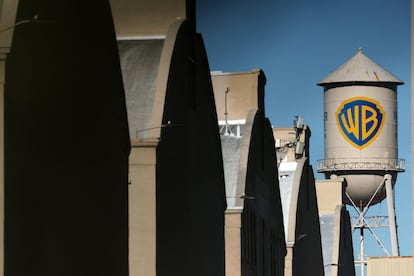
The documents filed by Paramount with the U.S. Securities and Exchange Commission (SEC) allow for a detailed reconstruction of the negotiations, which began in early September with an offer of $19 per share and, after intense talks, ended last Thursday, December 5, with several desperate calls and text messages with an offer of $30. By then, Warner executives had already made up their minds and didn’t even answer their phones or respond to the persistent WhatsApp messages sent from Paramount.
Analysts blame the deal’s failure on the Ellisons’ hubris. The initial $19 offer was far too low, and publicly they boasted that their closeness to Trump would spare them regulatory hurdles. But Zaslav was not satisfied. On October 21, he decided to invite other companies to submit bids. Netflix and Comcast — owner of NBCUniversal and Peacock — entered the fray, and the three-way negotiations quickly intensified.
Zaslav was always suspicious of Ellison’s intentions. He didn’t accept any of the six formal proposals presented to him since September. During that period, they held private dinners and lunches to try to find common ground, some involving family members, at Zaslav’s home on Woodland Drive, one of Hollywood’s iconic properties.
And although some progress had been made, it wasn’t enough. The Warner Bros. board had expressed concern about the financing structure and the origin of the non-U.S. investors, since Saudi Arabia, Qatar, Abu Dhabi, and China’s Tencent were among the major financiers. They feared it could trigger scrutiny from the U.S. Committee on Foreign Investment, which reviews the national security risks of foreign investment. Ellison promised to drop Tencent, but the other Middle Eastern investors remained.
Paramount said that neither the sovereign wealth funds nor the investment vehicle of Trump’s son-in-law would seek executive positions or governance rights, since they viewed the deal purely as a financial investment.
After learning that Warner Bros. had chosen Netflix, David Ellison felt cheated and betrayed. On Thursday night, he was distraught upon learning that his company was being left out of the running. His lawyers issued a letter questioning the fairness of the process. According to the SEC filing, “the Warner Bros. Board and its advisors chose on that pivotal December 4th to make no effort to even speak with Paramount or its representatives about anything.” Paramount even conveyed to Warner executives that they were willing to improve their offer, but received only silence. There was no response.
“The board’s overriding priority, more than valuation, was choosing a bidder that could sign immediately, withstand regulatory scrutiny and close on the terms required,” a WBD board source told the Financial Times.
Biographies about Larry Ellison portray him as a ruthless and unscrupulous character. Nicknamed the “samurai of Silicon Valley” for his fiercely competitive nature, he bought a World War II fighter plane replica when his son was just 13 so they could learn to fly together. The Ellisons are said never to give up, and the battle has only just begun. As David Ellison put it on Monday in an interview with CNBC: “We’re here to finish what we started.”
Sign up for our weekly newsletter to get more English-language news coverage from EL PAÍS USA Edition









































