
Nicaragua, ‘the land of poets’ where reading its writers is forbidden
With books ‘seized’ by customs officials and festivals under lock and key, the regime of Daniel Ortega and Rosario Murillo is suppresing the last bastion of freedom left to Nicaraguans: culture
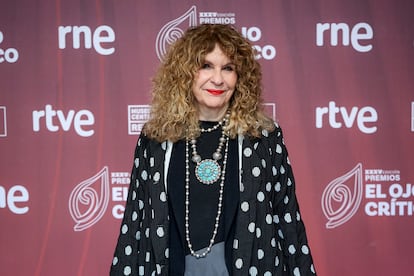

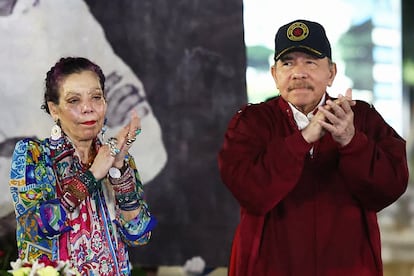
On the morning of April 25, the Nicaraguan writer and poet Gioconda Belli received an alert from Managua: customs officials had banned the entry of her latest novel, Un silencio lleno de murmullos (A Silence Full of Murmurs), into the country from which she is in exile. The book joins other titles by Nicaraguan authors whose sales have recently been blocked by the regime of Daniel Ortega and his wife and co-president, Rosario Murillo. “The dictatorial power fears the truths that literature illuminates. That is why they expel us, exile us, and imprison us. This happens and has happened to writers throughout history,” Belli reacted. The censorship of her work is the latest chapter in a systematic offensive that has outlawed 81 cultural institutions in the country, confiscated festivals, and replaced independent creative work with an official offering controlled by the presidential family.
Belli’s book tells the story of a guerrilla mother and her daughter, separated by the weight of political commitment and family secrets. At the same time, it reconstructs the citizen uprising of April 2018, which marks its eighth anniversary this month, and offers a scathing critique of the brutal repression unleashed by Ortega and Rosario Murillo against the protesters. Censorship of the work of prominent Nicaraguan authors is another form of the regime’s persecution and silencing of critical voices. Orders placed by the few bookstores that remain open have been held up at customs. The most striking case was Tongolele no sabía bailar (Tongolele Didn’t Know How to Dance), the novel by Sergio Ramírez, winner of the Cervantes Prize and also an exile in Madrid, like Belli. Ortega stripped both writers of their Nicaraguan citizenship, and their properties were confiscated.
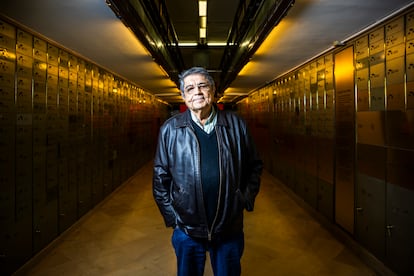
While books by international authors are sold in bookstores, national authors considered “traitors to the nation” by the ruling couple have been banned from the shelves. For example, editions of poetry collections by Ernesto Cardenal, the Trappist poet whose funeral mass was desecrated on March 4, 2020, by regime mobs in the Managua Cathedral, are becoming increasingly scarce. Booksellers say they prefer not to place any more orders, a form of self-censorship to protect themselves from cultural repression.
“They won’t be able to defeat people’s desire to read. There are many ways to read nowadays, without permission. I’m not happy that they’re preventing my novels from being published. But I am saddened that the Nicaraguan people are being prevented from reading their writers,” says the poet Belli, born in a country with a robust literary and poetic tradition, of which she is one of the most prominent exponents. Nicaraguans are proud of this tradition; they consider themselves “a land of poets.” Belli won the Reina Sofía Award for Ibero-American Poetry in 2023. Cardenal and the writer Claribel Alegría are also among the award winners.
The censored novels by Belli and Ramírez are based on the 2018 protests that the Ortega-Murillo regime violently suppressed, leaving more than 350 people dead, thousands imprisoned, and thousands in exile. The regime, especially Murillo, is attempting to impose a narrative of “an attempted coup,” while human rights organizations have stated that crimes against humanity were committed in Nicaragua, as documented by the United Nations Group of Experts and the Inter-American Commission on Human Rights (IACHR).
The conflict between Murillo and independent culture is not new. Since the 1980s, Ortega’s wife clashed with the poet Cardenal, who headed the Ministry of Culture during the Sandinista revolution. She wanted to lead the cultural institution, and the struggle lasted for years, until she succeeded in eliminating the ministry and creating the Nicaraguan Institute of Culture in its place, with herself as president, in 1989. Cardenal himself wrote in his memoirs: “When the elections were lost, there was no longer a Ministry of Culture because Rosario Murillo had done away with it. She always wanted to be Minister of Culture.”
Cultural repression beyond novels
In addition to the ongoing censorship of books, the regime has extended cultural repression to all areas. More than 5,600 NGOs have been outlawed since December 2018, including at least 81 cultural institutions that were shut down. Among the censored initiatives are the foundation that manages the Granada International Poetry Festival, one of the most important literary events in the region, of which Gioconda Belli was a member; the Nicaraguan Academy of Language; the Luisa Mercado Foundation, created by Sergio Ramírez to organize the Centroamérica Cuenta festival (now a traveling festival throughout the region), whose headquarters were confiscated by the regime; and the Nicaraguan Writers’ Center, which held an annual competition to showcase new literary talent. One of the few independent theaters operating in Managua, the Justo Rufino Garay Theater, was recently seized by the regime.
Murillo, on the other hand, promotes an official cultural program that she designs herself. The most emblematic example dates back to January 22, 2020, when she announced the Rubén Darío Arts Festival in Granada, a replica of the Poetry Festival that had been held in the country for 15 years and in which hundreds of poets from around the world participated. Camila Ortega, the daughter of the presidential couple, has her own fashion show, Nicaragua Diseña (Nicaragua Designs), financed with public funds through the Nicaraguan Tourism Institute.
Other children of the presidential couple also use the state to indulge their whims, as is the case with Laureano Ortega, considered the heir to the regime, who organizes an opera festival every year through his Incanto Foundation, financed with funds from ministries and Managua City Hall. A few years ago, Laureano Ortega staged the Puccino Festival at the National Theater of Managua, the country’s premier cultural institution. It was the first time that Giacomo Puccini’s Turandot and La Bohème had been performed in Central America, with Laureano himself making his debut as a tenor in a theater packed with public officials and state employees forced to listen. Juan Carlos Ortega Murillo fills the void left by these concerts with his band Ciclos, also with state support.
Meanwhile, independent musicians and artists were expelled from the country or fled into exile, where they survive in precarious conditions. Among them is Carlos Mejía Godoy, considered the greatest exponent of Nicaraguan popular music, author of Ay, Nicaragua, Nicaragüita — considered a second national anthem by Nicaraguans — and hits such as Son tus perjúmenes, mujer and El Cristo de Palacagüina.
Furthermore, the Ortega-Murillo family brand has extended even to beauty pageants. After accusing the organizers of Miss Nicaragua of “treason,” in April 2024 Murillo announced her own pageant, Reinas Nicaragua (Queens of Nicaragua), also directed by Camila Ortega. In it, the contestants thank “Commander Ortega and Comrade Rosario” upon their introductions. The pageant emerged after Sheynnis Palacios, the first Nicaraguan to win Miss Universe, became a national symbol and ended up in exile with her family.
Sign up for our weekly newsletter to get more English-language news coverage from EL PAÍS USA Edition









































