
The day Paul Weller switched bands
After disbanding The Jam, the British musician embarked on a new phase with his group, The Style Council, focusing more on soul and a different political consciousness. Now, its debut album is being reissued
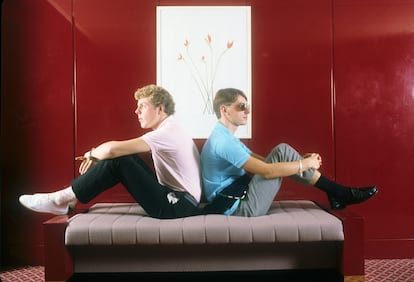
Fans of The Jam were stunned when, in October 1982, Paul Weller announced the end of the band. They were at the height of their powers, turning out hit after hit, far from any hint of creative crisis, and in better shape than any of the other punk‑era groups they had emerged alongside. Weller, Bruce Foxton and Rick Butler would put a final full stop to their story a couple of months later, at a farewell concert at the Brighton Centre in London. Dressed in his suit and wielding his inseparable Rickenbacker, Weller swore they would never reunite. What would come next?
Weller had a plan: he would leave behind that high‑octane, black‑and‑white, razor‑edged sound and pivot toward something soulful, jazzy and sophisticated — a multicolored palette that would only sharpen his stylish, mod persona. The name of the new venture said it all: The Style Council. He needed just one partner, a keyboardist who looked as if he had walked straight out of a conservatory (though he had played with Dexys Midnight Runners and The Merton Parkas): the calm, composed Mick Talbot. When they needed extra support, they would call on collaborators — or honorary councillors — such as Tracey Thorn and Ben Watt, a couple with their own project soon to be known as Everything But The Girl.
The public’s shock was enormous. No more energetic anthems: now came jazz instrumentals. Goodbye to guitar riffs: they had been replaced by delicate soul melodies. Before, the icy poses of a working‑class trio in their industrial hometown of Woking. Now, Weller and Talbot cycling with springtime cheer, hair slicked back, squeezed into tight cycling jerseys. And the hardest pill to swallow — The Bitterest Pill, as one of The Jam’s songs put it — was that the Union Jack had been traded for European hues. This Weller preferred Paris to London.
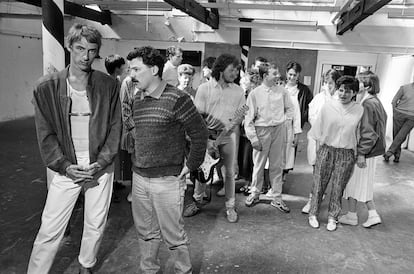
That’s what The Style Council was all about: a powerfully assertive blend of soul, funk, and jazz on the one hand, and Enlightenment ideals, political progressivism, and Europeanism on the other. All this unfolded while Margaret Thatcher’s conservative policies loomed like a dark cloud over — and this is no small example — the coal mining industry, a sector that would be profoundly damaged by her privatization and liberalization initiatives and, ultimately, by the mass closure of mines. Weller would become the standard-bearer of this struggle, creating the Red Wedge political and cultural movement, which, in the mid-1980s, brought together various British musicians (Billy Bragg, Communards, Blow Monkeys) to form a united front.
But let’s rewind a little. In 1983, The Style Council released a series of singles, including Speak Like a Child, Money-Go-Round, and Long Hot Summer, songs compiled on Introducing The Style Council, a mini-album that — unbelievably — was released in the United States, Canada, Japan, and the Netherlands… but not in the United Kingdom. Unless they bought an import, British listeners had no access to a full album by the new group until the release of Café Bleu in February 1984. Although the debut performed well commercially, the charts delivered a small sting: it didn’t reach No. 1; it stopped at No. 2.
Café Bleu is the true starting point of The Style Council’s career. In these 12 songs — including gems like My Ever Changing Moods, You’re The Best Thing, and Headstart for Happiness — the former mod‑punk turned delicate jazzman politicizes pop and opens a modernist current shaped by a new Paris‑London axis. The album even includes a political manifesto by the 18th‑century French revolutionary Jean‑Paul Marat, underscoring the group’s socialist, anti‑establishment and anti‑capitalist stance.
The reissue of Café Bleu highlights the album’s enduring musical vitality, but it also invites reflection on its extramusical meaning. Far from a typical round‑number anniversary — it now turns 42 — this return to Weller’s repertoire (he released Find El Dorado last year) also revives his internationalist outlook. Four decades after Thatcher, 20 years after Iraq, a decade after Brexit, the Weller we hear again is the same one who recently opposed his own government and the genocidal massacre in Gaza by organizing, alongside Brian Eno, a series of large‑scale concerts in support of Palestine. The mod godfather was and continues to be one of the most politically aware figures in the music industry.
Sign up for our weekly newsletter to get more English-language news coverage from EL PAÍS USA Edition









































