
‘Wicked’ and the controversial practice of splitting a film into two: ‘It’s like releasing the same thing twice’
Releasing two movies for the price of one is the industry’s big strategy for milking franchises, even if some might feel cheated
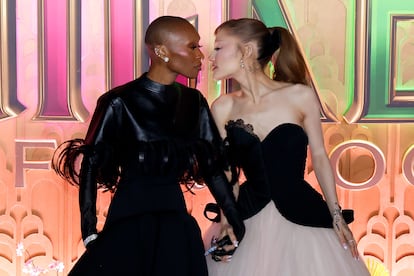

It took Spanish pop group Los Sírex less than three minutes to explain what they would do if they had a broom, but last year the film Wicked — that is, L. Frank Baum’s The Wonderful Wizard of Oz (1900) told from the villain’s perspective — spent nearly three hours just narrating how the Wicked Witch of the West found the implement that allows her to fly. This didn’t prevent the film, starring Cynthia Erivo and Ariana Grande, from becoming the highest-grossing Broadway adaptation, while using only half of its script. For the modest price of another ticket, the second half, Wicked: For Good, has just arrived in theaters, grossing nearly $226 million worldwide in its opening weekend. The combined budget stands at around $300 million, and that figure was already more than covered by the initial installment, which had box office returns of over $750 million, so everything the second part generates will be pure profit.
A lucrative business, it has expanded to commit to film a phenomenon that has been running for over 20 years on Broadway. Premiering in 2003, the eponymous stage musical is the fourth longest-running show on the circuit and the second most successful, behind The Lion King (1997). With music by Stephen Schwartz and a script by Winnie Holzman, it is inspired by Gregory Maguire’s novel Wicked: The Life and Times of the Wicked Witch of the West (1995), which imagined a favorable biography for the much-maligned spell-caster from The Wizard of Oz, based on the idea that the victors had distorted history. The division of Wicked into two parts separates the acts into which the musical is divided on stage, even though, including the intermission, the performance lasts less than three hours, making the decision difficult to defend from the standpoint of mere fidelity to the source material.
Not surprisingly, when production began and director Jon M. Chu officially announced the two films, many criticized the move as a cash grab. Some might have had reason to feel cheated: although the on-screen credits listed it as Wicked: Part 1, the official title used for promotion on marquees and trailers omitted the distinction and was simply Wicked.
“From a cinematic standpoint, it doesn’t make sense. From an economic standpoint, it does,” explains Alberto Mira, a film professor at Oxford Brookes University and an expert on musicals, a subject to which he has dedicated several books. “The complete musical isn’t even enough for a single three-hour film, but they’ve excused themselves by saying they’ve added a lot of things, like new songs.” The two adaptations stretch the runtime to about five hours, something that is especially noticeable in the second installment, which has received worse reviews. In its defense, the second act of Wicked has also always been considered inferior to the first, as is the case in many Broadway musicals, which are burdened with resolving the plot quickly after the first act closes with a grand finale (in this case, Defying Gravity, its most famous song). In Wicked: For Good, there is more time to develop issues such as that of enslaved animals, which is almost forgotten in the play, or to follow in parallel the events of The Wizard of Oz, also testimonial on stage.
This doesn’t change the fact that each part lacks substance in terms of plot. Far from being presented as a film and its sequel, each with its own story, Wicked is half a story in two parts, with a pacing that lacks narrative economy. “It’s a complete disregard for how film plots work. The ending of Wicked [the 2024 installment] isn’t really an ending,” says Mira, who has no doubt that “the criterion is, above all, commercial,” even though its creators have passionately argued about their desire to do justice to the original by giving it more space. “You either enjoy the film or you don’t, but the goal is to maximize the audience and the number of things they can sell. Now, suddenly, they can include The Wizard of Oz. Ariana Grande is going to have a bigger role. They’re going to include new songs. Last year, I didn’t buy the soundtrack because I know that this year they’re releasing an edition that includes both parts. It’s about adding more things to have more sales criteria and releasing a film twice. They run the same marketing campaign again, and the actresses have the same chance at an Oscar. It has to do with how films are made now, designed to sell more merchandise and double the profit. Marvel has also conditioned us to watch a film as if it were an episode of a television series.”
At the last Academy Awards, although Erivo and Grande didn’t win, Wicked took home two awards — for best costume design and production design — from 10 nominations. The creators have confirmed they are exploring new stories to further develop the Wicked universe. Also, capitalizing on its popularity, a Spanish version of the show recently premiered in Madrid. Tickets are more expensive than a cinema ticket, but the show offers both the beginning and the end, all in one.
To be continued
Leaving a story in suspense, while often associated with TV series and cliffhangers, is very common in commercial cinema. The Empire Strikes Back (1980), the second Star Wars film, ended with the famous revelation about the connection between its hero, Luke Skywalker, and Darth Vader, as well as Han Solo’s cryogenic freezing. Back to the Future Part II (1989) dared to fade to black with a memorable open ending where the protagonists were left stranded in different eras of history. The same strategy was used in Pirates of the Caribbean: Dead Man’s Chest (2006), which left the central character in limbo between life and death, ultimately resolving their fate in the trilogy’s conclusion.
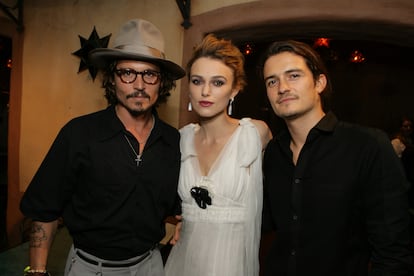
However, they still served a satisfying narrative, with their own conflicts and Aristotelian structure. Marty McFly may not have returned to the future at the end of his second film, but the core issue was resolved: after a selfish attempt to alter the course of history by exploiting time travel and experiencing disastrous consequences, Marty learned from his mistake and managed to rectify it. The third installment had such a strong individual identity that it even changed genre to become a Western.
The phenomenon of splitting films is different from that of those sequels and has its direct precedent in Harry Potter and the Deathly Hallows (2010-11), which adapted the seventh and final book of the saga but was divided into two films, allowing Warner Bros. to stretch an intellectual property that it continues to exploit with a new television series in production. Its profitability was quickly proven, and it was followed by Twilight: Breaking Dawn (2011-12), the cinematic finale of the vampire-lovers franchise, also split in two. Suddenly, the industry became an enthusiastic friend of this fan culture that demanded faithful adaptations of its favorite works and that no detail be omitted — on the condition that it could be sold. The material that lay in the editing room, in DVD extras, or in extended versions became essential footage for event films, where the cumulative effect is more important than the functional.
Director Francis Lawrence, for his part, admitted to regretting splitting The Hunger Games: Mockingjay (2014-15) into two parts. “What I realized in retrospect — and after hearing all the reactions and feeling the kind of wrath of fans, critics and people at the split — is that I realized it was frustrating. And I can understand it. Making people wait a year [with the story only half-finished] I think, came across as disingenuous, even though it wasn’t,” he admitted to People. Lawrence returned with a prequel, The Hunger Games: The Ballad of Songbirds & Snakes (2023), with the firm intention that it be a standalone episode. At over 150 minutes, it boasts the longest runtime in the franchise. “It’s a long book, but we got so much shit for splitting Mockingjay into two — from fans, from critics, from everybody — that I was like, ‘No way. I’ll just make a longer movie.’”
From a novel of barely 300 pages, The Hobbit (1937), Peter Jackson also extracted a trilogy of lengthy films between 2012 and 2014, precisely for one of the audiences most inclined to consume extended versions: the fandom of The Lord of the Rings (2001-03). For this remarkable expansion, he claimed to have taken Tolkien’s appendices into account. “That obsession with putting everything that happens in the damn novel into a film, personally, is incredibly distracting to me,” confesses Mira. “I imagine it goes hand in hand with the tastes of certain people, those who complain that things are missing, but in a film, things have to be left out. Films have been made of War and Peace [1867], and it has 800 pages. In a two-hour film, obviously things will be missing, but what you can do is summarize and create your own narrative. Materials have always been condensed.”
In any case, there are fortunate examples, like Denis Villeneuve’s Dune (2021-24), another film whose initial installment conveniently omitted “Part 1” from its title. “The thing about Dune is that it’s an immense novel. I really like David Lynch’s version [1984], but it’s true that in the last three-quarters of an hour it goes at breakneck speed. Villeneuve’s is better explained; the plot unfolds differently. Could it have been made into just one film? Yes, of course, but in this novel it’s more difficult to remove elements without destroying the plot; it all falls apart. Lynch tried and even made a five-hour cut. But Dino De Laurentiis [the producer] told him absolutely not.”
Nor does splitting a film into two guarantee revenue. The most resounding failure was the Divergent trilogy (2014-16), whose final installment, Allegiant, was announced as two films and ended with a “Part One Ending” message that proved to be more terminal due to its dismal box office performance. Even Tom Cruise backtracked after Mission: Impossible – Death Reckoning Part One (2023) failed to meet financial expectations and removed the “Part One” from streaming platforms, in addition to retitling its sequel The Final Reckoning (2025), so that no one would feel like he had unfinished business. Since 2023, Spider-Man: Into the Spider-Verse and the Fast & Furious instalment Fast X have been left unfinished with no sign of completion in sight, after the plot was split and their sequels ran into production problems.
If sacralizing texts can be profitable, it makes sense that the latest to jump on the bandwagon is Mel Gibson, who has already announced The Resurrection of the Christ, his long-planned sequel to The Passion of the Christ (2004), as two separate films. At least, instead of a gap of years, his idea is to adhere to the 40 days between Good Friday and Ascension Day, releasing one in March 2027 and the other in May. A new way of passing the collection plate.
Sign up for our weekly newsletter to get more English-language news coverage from EL PAÍS USA Edition









































