
Charlie Hunnam, the actor who always says ‘no’: ‘I always feel like I’m one failed film away from being out of work’
The British actor is more famous for the films he turned down, like the ‘Fifty Shades of Grey’ saga, than for the ones he’s starred in. But television has been his refuge, and his role as Ed Gein in ‘Monster’ might be the most acclaimed of his career
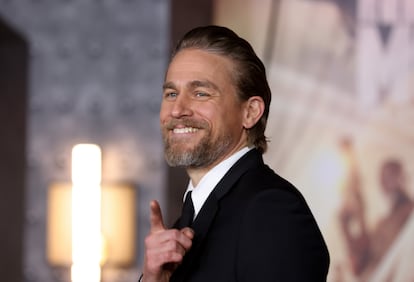

No film news was more talked about in 2013 than the departure of Charlie Hunnam from Fifty Shades of Grey. A month before production began, the actor pulled out of the multi-million-dollar project that was set to make him a star, forcing the production company to urgently search for a replacement. There was speculation at the time that his departure from the project was due to the risqué scenes described in the script, something hard to believe considering that almost 15 years earlier, a barely 19-year-old Hunnam had introduced British audiences to a rim job. In the late 1990s, Aidan Gillen, the scheming Littlefinger from Game of Thrones, had run his tongue over the teenage Hunnam’s bare bottom, to the scandal (or delight) of Channel 4 viewers on the controversial series Queer as Folk. The brilliant series by Russell T. Davies, responsible for Doctor Who and Years and Years, spawned — like almost all successful European products — an inferior U.S. remake.
Hunnam had entered television with a bang and quickly heeded the siren call of Hollywood, rubbing shoulders with Madonna and competing with major stars for lucrative roles. However, more than 20 years later, what stands out most in his filmography are the roles he turned down and the blockbusters that, despite seemingly being poised for box office success, ended up as resounding flops.
At 45, the Newcastle-born actor has another chance to prove his mettle with The Ed Gein Story, the third installment of Ryan Murphy’s Monster saga. After cannibal Jeffrey Dahmer and the Menéndez brothers comes one of Hollywood’s most invoked killers; his figure can be found behind Norman Bates in Psycho, Buffalo Bill in The Silence of the Lambs, and even Leatherface in The Texas Chain Saw Massacre.
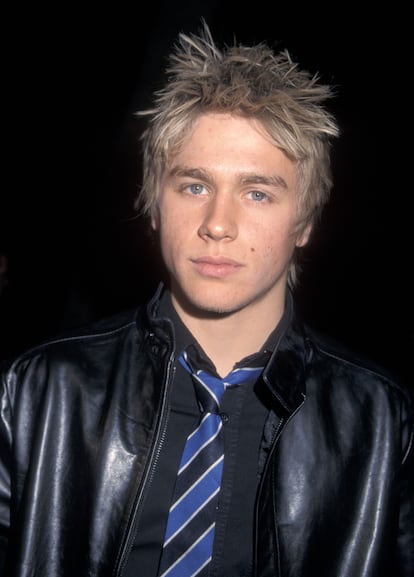
Hunnam is a surprising choice. Looking back at his early career, the man known as the “Butcher of Plainfield” seems like the most unlikely role for the actor, who started out as a cherubic Kangol cap model. He was discovered at 17 in a sporting goods store, but modeling wasn’t his thing. Since the agency that signed him had a television division, he soon appeared on the U.K. teen series Byker Grove, and after just three episodes, he hit the big time.
When he signed up for Queer as Folk, Davies thought, “Well, he’s obviously beautiful — let’s hope he can act.” And he knew, despite never having set foot in acting school. The role was his, and overnight, that inexperienced unknown transformed into Nathan, the 15-year-old schoolboy who becomes “the one-night stand that never went away” for promiscuous Stuart Alan Jones. The series became a phenomenon, with a 100% rating on Rotten Tomatoes, because there was quality and risky television before HBO. Critics fell in love with this oddity that uninhibitedly recounted the lives of a group of gay men in Manchester.
In Hollywood, he was offered another series, similarly risqué but much more sleazy: Judd Apatow’s Undeclared, alongside Seth Rogen. It wasn’t a success, but for the first episode he earned more than he had for the entire two seasons of Queer as Folk. His face was starting to become recognizable, and Madonna was asking him over for dinner. “She told me not to tell the cab driver whose house I was going to,” he told The Independent. He got so nervous that he got out of the taxi a mile early, arriving covered in sweat and with a Wonder Woman Pez dispenser as a gift, because “well, what wine would you take to Madonna for dinner?” There he ran into Sandra Bernhard and Debbie Mazar, whom he idolized for her role in Goodfellas. Hollywood loved him.
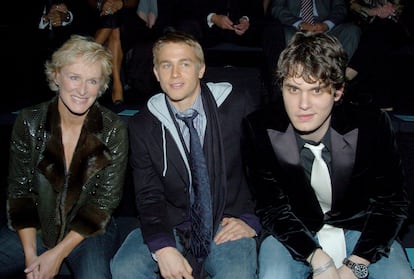
A year later, he had already bought a house. “It’s crass to talk about money, but I had a load of money in the bank. So I thought, ‘Do the smart thing,’ and I bought this place.” In film, he began by doing what was expected of a British actor: a Charles Dickens adaptation. Nicholas Nickleby (2002) went unnoticed, and he landed supporting roles in the Oscar-winning Cold Mountain (2003) and Alfonso Cuarón’s cult classic Children of Men (2006).
He was one step away from becoming a star, something that had never been in his plans. His childhood hadn’t been easy. His parents had divorced when he was two, and he’d gone to live with his mother. School had been a disaster. He was expelled, and he didn’t much care. He was more interested in rugby and acting than in his studies. Perhaps that’s why, in the beginning, despite his luminous face, he always aspired to violent and tormented roles.
“Growing up feeling like I didn’t have a lot of control and — I was a sensitive guy in a really tough environment. And so that created a bit of trauma and a little bit of self-loathing and I wanted to explore that and work through it in some of the characters that I was playing,” he told GQ after turning 40. “But, thankfully I’ve worked through that and those types of character are just not quite as interesting to me anymore.”
The big movies weren’t coming as quickly as his meteoric rise suggested, but he wasn’t worried because he considered his career to be a long-term one. He turned down typical handsome-guy roles, such as a horror film directed by Kevin Williamson, creator of Dawson’s Creek, and produced by Bob Weinstein.
“I was to be a wolf guy. I remember being in the room with Bob. I was like, ‘Listen, I’m really flattered and I appreciate how much you want to work with me...’ He goes, ‘OK, 750.’ ‘It’s not about the money, honestly.’ ‘OK, 850.’ ‘Listen, that money would absolutely change my life but I can’t do it. I don’t believe in this project,” he confessed to The Independent. “Then I’d come home and bang my head off the wall and think, ‘What the fuck am I doing? What if my career doesn’t turn out the way I want and I’ve just thrown away all this money and don’t have the career I want?’”
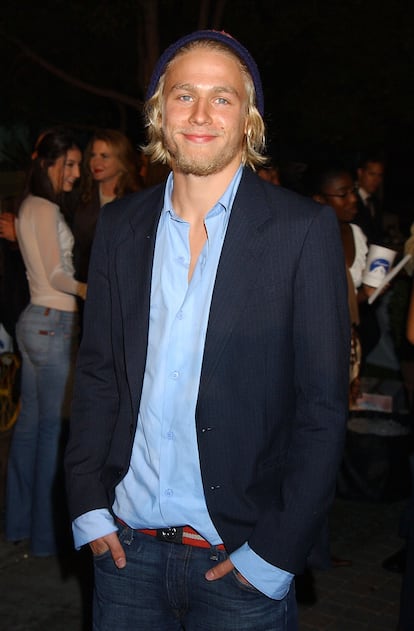
He spent almost two years out of work and, consequently, without income, but that didn’t change his stubbornness. “I have 60 years to earn money, but the decisions I make in the next five years will define my career,” was what he thought when he arrived in Hollywood. And he kept his word.
In fact, he found himself in such financial straits that he saved himself from ruin only thanks to a script he wrote based on the story of Dracula, which he sold to Brad Pitt’s production company. This lack of resources is behind some of his riskiest decisions. He turned down a role in 300 because he was committed to Cuarón making Children of Men. Zack Snyder’s offer was more attractive, but he had fallen in love with Y tu mamá también and wanted to work with the Mexican director.
An actor is defined by the roles they get, the ones they don’t get, and the ones they turn down. Hunnam was on the final shortlist to play Anakin Skywalker, but the part ultimately went to Hayden Christensen. The reason, he stated in 2023, was a bad meeting with the director. Nor was he Aldous Snow in Forgetting Sarah Marshall (2008), a role written for him by his friend from the Undeclared days, Jason Segel. “I had to stand my ground and say, ‘Look, it’s nothing personal. I’m just following my direction. I’m in a weird situation, and I’m trying to define for myself what the path forward is.’”
He also didn’t want to be part of the DC universe. The actor confirmed to ComicBook that he was approached to play Green Arrow, although he wasn’t sure if it was for a series or a movie. “Honestly, I don’t remember who,” he said. “It was some people in suits, brought the idea to me and thought it would be terribly exciting for me to play Green Arrow and I did not share their enthusiasm.” “I don’t know who Green Arrow is so I don’t want to offend anyone,” he said. “I looked at one picture and I was like, ‘I’m not sure green’s my color and I’m pretty sure spandex isn’t my material.’”
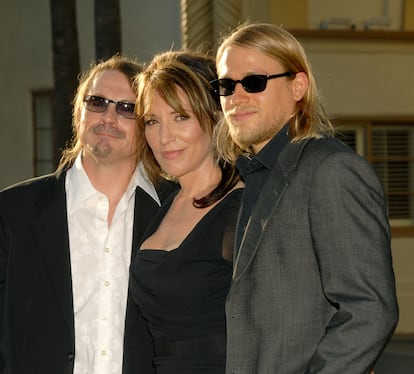
And of course, Fifty Shades of Grey is always there. “Turning it down was the worst professional experience of my life,” he confessed years later to Moviefone. Author E. L. James herself had announced he had been chosen, and the uproar was such that he had to hire a bodyguard. He seemed delighted with a role he claimed to have been preparing for his entire life, and suddenly, everything blew up in the air. “I was going to finish Sons of Anarchy around 11:00 p.m. Friday night and had to fly out to Vancouver the next morning to shoot Fifty Shades of Grey, missing the entire first week of rehearsals and having to start shooting on Monday morning. And then the following Monday I was starting Crimson Peak in Toronto. Honestly, I had a bit of a nervous breakdown.”
The motive was simply that. “I got into more than I could handle, and it was sad. It was the most emotionally destructive thing I’ve ever had to deal with professionally,” he confessed. Turning down Crimson Peak could have been a solution, but he had worked with Guillermo del Toro on Pacific Rim (2013) and wanted to do it again. “People asked me, ‘What the hell are you doing?’ Whatever I want. That’s my answer.”
The Jax Teller he couldn’t shake off in 48 hours is, at least so far, the greatest role of his life. He played him in Sons of Anarchy for six years. Teller was the vice president (later president) of a California biker gang, a tough guy with many layers. To recreate him, Hunnam based the role on his father, his great inspiration, even though they didn’t live together. “He’s a real serious guy from Newcastle,” he told The Independent. “He was a scrap-metal merchant, and before that he was involved in security for clubs at the high end. He’s not particularly big. But before I was born he was much, much bigger, big as a house. You know what that scrap-metal world is like — there’s some hard boys.”
He struggled to accept the series coming to an end, even though he knows it did so at just the right time. “I put all my effort into it,” he said. “I put everything I had into that show. I lived it as much as I could. I never got in a car the whole seven years. I was only on my bike and rolling around with a bunch of real bikers and occasionally acting like a maniac. Ending it was a real celebration; we ended at just the right time. The tendency, when something makes a lot of money, is to keep doing it, even after it’s reached its natural end, and I was really glad that everyone had the discipline and integrity not to do that with Sons of Anarchy.”
Television has given him the success that has eluded him in film. There were titles that seemed like surefire hits — yet neither Pacific Rim nor Crimson Peak connected, nor did James Gray’s ambitious The Lost City of Z (2016). But the most surprising disappointment was Guy Ritchie’s King Arthur: Legend of the Sword (2017), a production that seemed to have everything going for it.
Hunnam, however, is not discouraged because he believes he works with good directors and tells interesting stories. “But I always feel like I’m one failed film away from being out of work.” Television, though, has provided a safe haven. In 2023, he made up for having said no to 300 by participating in Zack Snyder’s Rebel Moon and now, the fruitful Ryan Murphy has opened the doors to his universe. Maybe now, his time has come. And if not, he’ll remain true to himself, which is always to do whatever he wants.
Sign up for our weekly newsletter to get more English-language news coverage from EL PAÍS USA Edition









































