
Manolo Blahnik: ‘Marie Antoinette invented a style that was copied by all of Europe’
The famed shoemaker is sponsoring an exhibition at the Victoria & Albert Museum in London that traces the legacy and cultural influence of the last queen consort of France
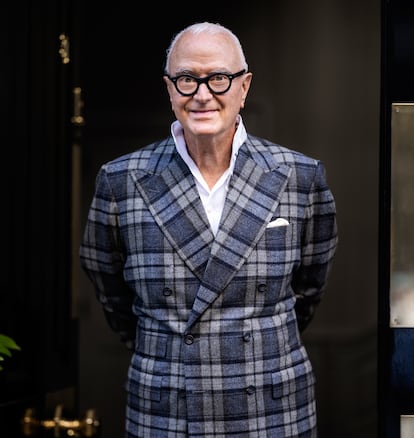

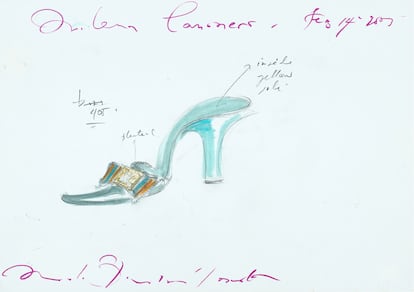
In 2004, Manolo Blahnik received one of the most rewarding commissions of his career: recreating the footwear of France’s last queen consort, Marie Antoinette, for the cinema. That work for Sofia Coppola’s film, released in 2006 with a fabulous sequence devoted entirely to shoes, closed the first circle of a fascination that had begun for Blahnik in his childhood in La Palma in Spain’s Canary Islands, when his mother read him and his sister Evangelina Stefan Zweig’s biography of the ill-fated queen.
Two decades after that collaboration, a second circle is now closing with the exhibition opening on September 20 at London’s Victoria and Albert Museum. Sponsored by the Spanish shoemaker, Marie Antoinette Style brings together 350 pieces highlighting the aesthetic legacy of a woman who changed the rules in the cradle of fashion.
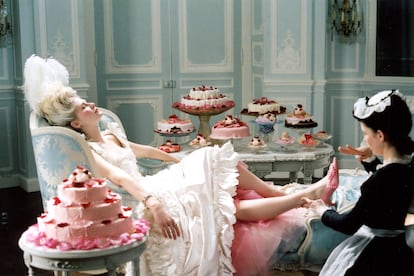
Blahnik has spent his life studying the reviled historical figure, who in recent decades — thanks in part to the Antonia Fraser biography on which Coppola’s film is based — has been reappraised, as reflected in the new exhibition.
Confined to stodgy Versailles, forced to renounce her family and country of Austria, Marie Antoinette developed a unique style that broke with the strict dictates of French court etiquette. Her influence, as the show’s curator, 18th-century expert Sarah Grant, points out, ended up influencing everything from wigs to furniture.
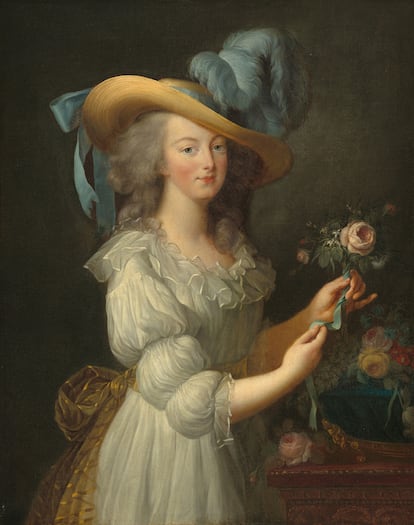
The exhibition — the first in the United Kingdom devoted to the queen consort — includes loans from private collections and pieces seen for the first time outside of Versailles, in addition to a large number of dresses, shoes, jewelry and personal objects that demonstrate the profound influence of a woman who was guillotined at 37 years of age, victim of a populist hate born that began with the court’s disdain and, once in the streets, was fueled by all kinds of pamphlets in which she was demonized for being a woman and a foreigner to boot.
“Marie Antoinette was an outsider in the French court, turned over by her mother at just 14 years old, displaced from all her roots. Her persona is tragic and fascinating,” says Blahnik in a video call from London.
That Viennese teenager, lonely and isolated, “invented, in a spontaneous and natural way, a style that was copied by all of Europe. But what is truly striking,” he continues, “is her astounding longevity, how her presence in popular culture continues to this day. For me, this exhibition is another dream fulfilled, the re-vindication of Marie Antoinette.”
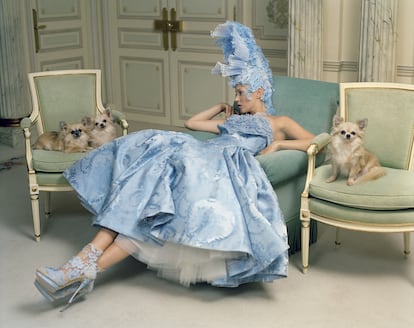
Blahnik has a thousand anecdotes associated with the historic figure and her recreations, like his discovery of Debbie Reynold’s Hollywood memorabilia museum in Las Vegas, where the dresses designed by American costume designer Adrian (who also created the costumes for The Wizard of Oz) worn by Norma Shearer in the 1938 biopic were kept.
What no one expected was that this century would bear witness to a shift in the way Marie Antoinette is perceived, driven by new perspectives on gender. “Marie Antoinette was a woman with power and personality, and that generates a lot of misogyny,” explains Sarah Grant. “She was treated much worse than any man.”
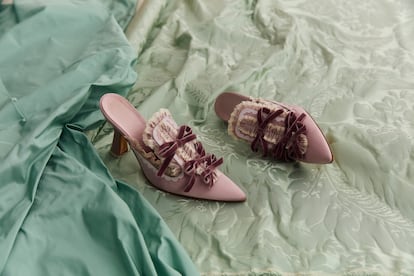
While Fraser’s book may have been the inflection point for this new narrative, The Wicked Queen by essayist Chantal Thomas also analyzes how popular imagination, guided by the libels of the time, demonized the sovereign to the point of delirium. She was, to put it simply, a victim of the irresponsible fake news of the time.
In the 19th century, Eugenia de Montijo was the first to reappraise Marie Antoinette’s legacy, explains Grant. “Her influence has been and continues to be enormous, in both fashion and decor,” she says. “She practiced politics through dresses and furniture. Her sensibility was very modern. For example, she used her monogram everywhere and changed the strict customs of the court not only in wardrobe, but also in child-rearing.”
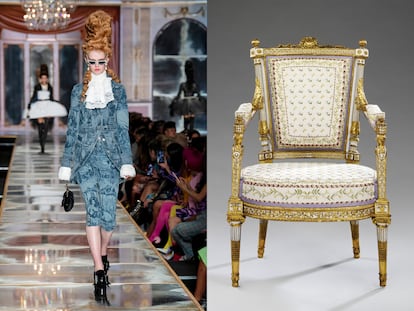
Shoes, of course, play a special role in the Victoria & Albert exhibition. “Blahnik started out studying the museum’s models from the 18th century, so that’s another circle that is closing,” says Grant.
Marie Antoinette bought four pairs a week, and her diminutive foot — she was 5’5” and wore a size 5.5 — was brought back to life with the models Blahnik designed for Coppola’s film.
At that time, the designer (who put together a capsule collection for the occasion of the museum exhibition) had only one instruction from the director: “Don’t be academic, imagine Marie Antoinette today,” he recalls.
And in his own way, he did just that. “It’s not just about his enormous knowledge of the subject,” Grant points out. “For me, the most surprising thing is how Blahnik managed to revive the spirit of Marie Antoinette, even the way she walked at the time, by reimagining her footwear.”
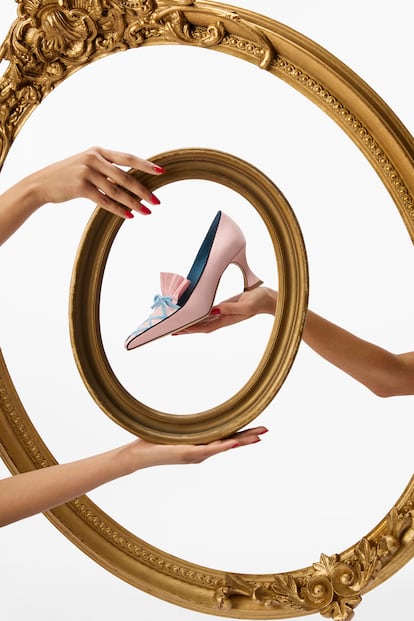
After Coppola filmed her version of the Versailles legend, the shoes were returned to Blahnik’s old office on King’s Road. The movie had yet to premiere and the incredible shoes — handmade from original fabrics in pastel pink, green, blue and yellow — seemed to have a life of their own, like the characters in a story. Such is the mysterious nature of Blahnik shoes: they make you imagine stories. And in the case of Marie Antoinette, they also serve to close circles.
Sign up for our weekly newsletter to get more English-language news coverage from EL PAÍS USA Edition









































