Broadway’s ‘Mexodus’ sheds light on the Underground Railroad to Mexico
The musical, written and performed by Brian Quijada and Nygel D. Robinson, under the direction of David Mendizábal, opens in September
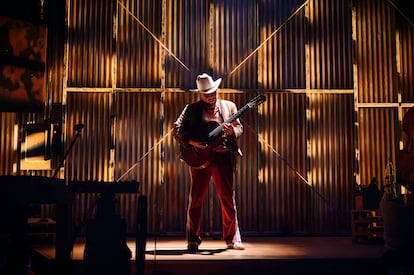
A little-known chapter of U.S. history is coming to the Broadway stage next month. The musical Mexodus brings to life the odyssey of African Americans who fled slavery in the United States by crossing the Rio Grande into Mexico through a network of secret routes known as the Underground Railroad. While the journey enslaved people undertook northward in search of freedom is better known, this innovative theatrical experience focuses on the southbound crossing and premieres in the cultural capital of the world at a sensitive moment for the bilateral relationship between the two neighboring countries.
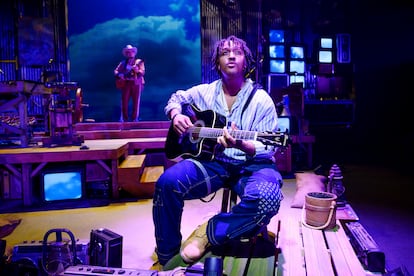
Written and performed by Brian Quijada and Nygel D. Robinson, under the direction of David Mendizábal, the two-person play is an exciting multicultural history lesson about Black and Latino communities, weaving together various musical influences into a captivating sonic universe. The musical follows a person in search of freedom and an unexpected ally as they forge an extraordinary bond that transcends borders.
Amid President Donald Trump’s migration crackdown, Salvadoran-American actor Quijada and Ecuadorian director Mendizábal emphasize the importance of telling the story of thousands of Americans who migrated south in search of a better life. “At a time when immigration is under attack and Mexico is often portrayed negatively, I find it profoundly important to offer a story that celebrates solidarity,” Mendizábal tells EL PAÍS.
Mexodus will begin performances on September 9, ahead of its official opening on Thursday, September 18, at Audible’s Minetta Lane Theatre in New York City.
Question: How did the idea to create this musical come about?
Brian Quijada. In 2017, I came across an article about the Underground Railroad that mentioned it went south into Mexico. I was fascinated. What drew me to the idea was that it was a different take on the same U.S.-Mexico border today, this time with an American immigrant crossing into Mexico in search of safety and a better life. But I didn’t pursue the idea until I met my colleague Nygel D. Robinson in 2020.
David Mendizabal. None of us on the creative team had heard of the Underground Railroad that ran to the south, where enslaved people sought refuge decades before the United States abolished slavery. It’s a powerful narrative that challenges dominant representations of the U.S.-Mexico relationship, as well as the erasure of our history.
Q. The United States is witnessing a fierce anti-immigrant drive under President Trump. Why is the story of Mexodus so relevant today?
B. Q. Often, when people don’t know their history, they tend to repeat themselves. But if we step back and examine politics and try to view migration patterns with a more empathetic lens, we can be a more understanding society.
D. M. The moment we’re living in this country is especially dangerous. There are active efforts to erase the historical contributions of Black and Latinx communities, and to use the immigration narrative as a political weapon. Mexodus responds to that.
Q. As children of immigrants, what captivated you most about the story of thousands of slaves who fought for their freedom?
B. Q. In the 1970s, my parents crossed the border into the United States in search of a better life. In this country, immigrants are so demonized that I wanted to paint that journey in a different light, while highlighting a piece of forgotten history.
D. M. My father is from Ecuador. He came to this country at 15, learned English, studied law, and founded his own immigration law firm. I grew up learning the power of storytelling through him, listening to his clients’ stories, and seeing how sharing a truth could be transformative. At a time when immigration is under attack and Mexico is often portrayed negatively, I find it profoundly important to offer a story that celebrates solidarity.
Q. What has been the biggest challenge in directing this work?
D. M. One of the most exciting challenges has been balancing the historical dramaturgy of 1851 with the contemporary parallels of 2025. In the play, Brian and Nygel play themselves as well as the fictional characters Carlos and Henry. Weaving their personal stories together with those of Carlos and Henry, to connect the past with the present, requires a very clear vision and aesthetic. The goal is to reflect the current struggles that still separate Black and Latinx communities, while also acknowledging the historical cycles in which we remain trapped as a country.

Q. What message do you want the audience to take away after seeing the musical?
B. Q. There are many moments in history when people of different races have united against oppression. Cesar Chavez fought for civil rights. An African American woman climbed the Statue of Liberty to protest the fact that migrant children were being held in cages. Young African American and Latinx artists created hip hop in the Bronx out of a need to celebrate life in marginalized communities. We want people to leave the theater dancing, singing, and remembering that we are stronger when we come together instead of apart.
D. M. We want to tell a hopeful story without ignoring the very real challenges of building solidarity within systems that continue to divide us. As the United States continues down troubling paths that erase the history and contributions of Black and Brown people, it becomes more urgent to tell an honest story, one that showcases both the struggle and the possibility of rising up together.
Q. The musical fuses reggaeton, hip hop, gospel, and live looping. Why was it important for the show to feature these musical genres?
B. Q. Hip hop, boleros, gospel, and reggaeton are the music of our people. That’s why we felt the need to integrate them into our musical. We pay homage to those who came before us and influenced us. We wanted to create something for our community.
Q. Do you think Broadway is offering more opportunities for Latinos to tell their stories and be part of them?
B. Q. It’s undeniable that Latinos are having a moment on Broadway. This year, history was made when two Latino-led shows premiered on Broadway: Real Women Have Curves and Buena Vista Social Club. Progress is slow, but when you witness history, it’s hard not to feel inspired and hopeful that our stories will be heard.
Sign up for our weekly newsletter to get more English-language news coverage from EL PAÍS USA Edition