
The race against time to save Xochimilco, Mexico City’s ancient wetland
Initiatives from human hair filters to micro-nano-bubble injections are being deployed to restore the canals that sustain the threatened axolotl
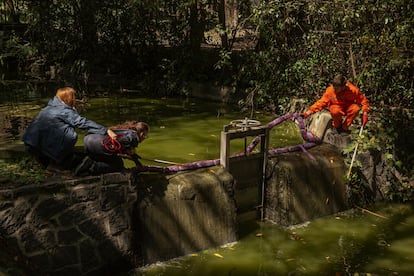
Xochimilco was once the garden of what today is Mexico City, until the voracious urban growth of one of the hemisphere’s largest capitals wound up absorbing it. Today, its labyrinth of canals constitutes a kind of rural island in the metropolis, and its survival is under constant threat. Among the wetlands and boats, dozens of people are resisting and searching for ways to preserve the area’s ancestral ways of life and its greatest symbol: the axolotl (Ambystoma mexicanum). The key lies in the water.
Axolotls, amphibians that are native to the zone, are excellent indicators of water quality. According to the latest census, their population fell from 6,000 creatures per square meter in 1998 to 36 in 2014. Luis Zambrano, an investigator from the National Autonomous University of Mexico (UNAM), has spent decades studying the species and its decline.
Zambrano attributes the axolotls’ woes to three factors: deteriorating water quality, the spread of invasive carp and tilapia, and the pressures of urbanization and the loss of agricultural land. To address all three, he created Chinampa Refugio, a project that uses water‑filtration systems to isolate chinampas from the surrounding canals. The result is a clean‑water refuge for axolotls, protected from invasive fish that feed on their eggs and young.
A chinampa is an artificial island that is held in place by the roots of ahuejotes, an endemic species of willow tree. This distinctive system was part of the area’s 1987 designation as a UNESCO World Heritage Site, and is as endangered as the axolotl. The chinampa zone is divided into five areas that are primarily agricultural areas, and nine tourist ports.
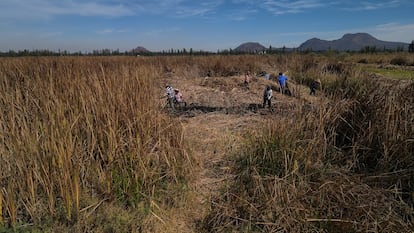
For Lucio Usobiaga, the greatest challenges are the declining social value of the profession and the lack of generational renewal. The agroecology professor began his work in Xochimilco when he was researching the possibility of opening an organic store, but years later, even after the closure of that business, he remains in the area. “I’ve realized how much is here, how much is needed, and it kept me here,” he says.
Usobiaga, the co-founder of agro-ecological project Arca Tierra, finds hope in those who have decided to keep the chinampa tradition alive, despite complicated circumstances. Local residents are dealing with the “abandonment of the chinampas,” he warns. “They provide a livelihood for many families, for the producers as well as the people who consume the products,” explains Refugio Rodríguez from the Center for Research and Advanced Studies.
Rodríguez worked on a project dedicated to treating agricultural soil with orange peels and coffee, alongside Usobiaga and other producers. Now, she is looking to improve the condition of the canals: “The water carries with it a large amount of micro-organisms that, when it gets hot, are released into the atmosphere,” she says. That leads to the proliferation of invasive species like water lilies, which harm native plants by blocking sunlight and reducing oxygen levels in the canals.
To address the issue, her team has adapted a system to inject micro-nano-bubbles of oxygen from the trajineras, the boats that traverse the canals. A solar‑powered motor pumps canal water through specialized tubing that oxygenates it before returning it to the channels as the boats move along. They have installed seven such systems. “We want the technology to have a social and environmental benefit,” says the expert.
It is not the only creative solution in the area. Matter of Trust uses filters made of human hair to absorb pollution. They have placed installations near the Fernando Zelada tourism port and in a San Gregorio chinampa, working with Don Augustín, a local producer, explains Mattia Carnini, regional director of the U.S. non-profit.
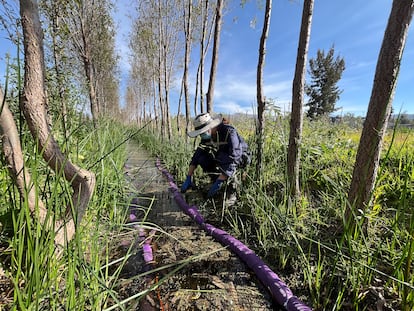
The filters work thanks to the structure of human hair. “If we look at it under a microscope, it’s like little stacked ice cream cones,” Carnini explains. The wide space between cones allows them to trap contaminants. The hairs can also retain heavy metals, which become intertwined in their keratin.
Carenini and her partner, Constanza Soto, who are both Chilean, arrived in Mexico through L’Oréal, one of their primary clients. They opened two salon locations last year. Today, they have nearly 30 in various states.
Their business depends on their affiliation with corporations, beauty salons, and the community. Salons participate through a club-like program, for which they pay a symbolic fee. They are also involved in making the filters. “They are not only the ones who provide the raw material, they are also our ambassadors,” says Carenini, adding that the program has gotten a great response. Their product meets the needs of communities with limited access to clean water, like Xochimilco.
The area is serviced by five treatment plants, including the Cerro de la Estrella wastewater treatment plant in Iztapalapa, which provides 80% of the liquid. According to Rodríguez, its facilities operate at low efficiency. The final product is not high quality, but can be used for agriculture and navigation along nearly 112 miles of canals.
“The chinampa population asks for help explicitly or silently,” says Usobiaga. But he believes that often, the support that arrives is limited — especially when it has to be accountable to lines of research and academic objectives. He says, although there are academics who have done a lot for the community, projects have not managed to effect systemic change.
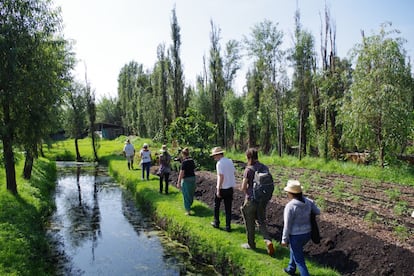
That’s why the producer thinks that private collaborations between businesses, non-profits and the community can make up for the shortcomings of academic programs. “They take a more practical approach, one focused on community outcomes,” he says.
The Matter of Trust project is one example. Its funding comes from large companies that need to treat wastewater, and for Carenini, that partnership is essential. “It is compatible to teach the technology to a community and sell the devices,” she says. The patent is open, and the organization actively encourages others to adopt and replicate the system.
Zambrano is also concerned about how disconnected academic projects can be from the Xochimilco community. That is why he has sought out alternatives. The first step was to simplify the design of the filters, which contained volcanic rock, gravel and plants. “One of the problems was that the fish farms said maintenance was too complicated,” he says.
Design flexibility alone, however, is not enough to strengthen the project from an agricultural perspective. To work to this end, the team organizes community fundraisers to support the producers. Their crowdfunding campaigns are tied to an educational theme related to axolotls. Additionally, they created the Chinampa Refugio designation, which is negotiated every year with the chinampa workers. However, that initiative has not taken off as expected. “As consumers, we’re not used to valuing this kind of certification,” Carnenini says.
“The ultimate goal is even more difficult than the certification, because what we want is a shift in society’s perception,” says Zambrano. “We seek the restoration of Xochimilco as a cultural and ecological site of importance for Mexico City — a place that is like the pyramids of Teotihuacán, only alive.”
Sign up for our weekly newsletter to get more English-language news coverage from EL PAÍS USA Edition









































