
Florida and Texas: The frontiers of reproductive health and abortion access in the US
In both states, with large Latino and immigrant populations, maternal care deserts are expanding. The lack of specialists, economic barriers, and language obstacles limit access to essential care
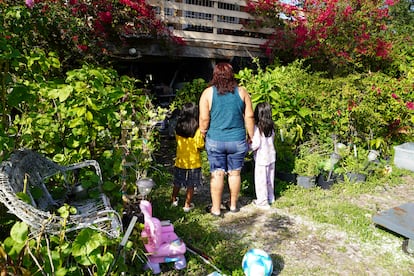

Known as the tomato capital of the United States, Immokalee is an agricultural community in southern Florida. A couple of hours from cosmopolitan Miami, palm trees stand beside dirt roads where cucumber, pepper, and eggplant are grown; hens roam the yards of small houses and people carry shovels and hoes. Although it is part of Collier, one of the state’s wealthiest counties, there is no hospital with a labor and delivery ward or specialists to handle an obstetric emergency. Pregnant people must drive up to an hour to receive care.
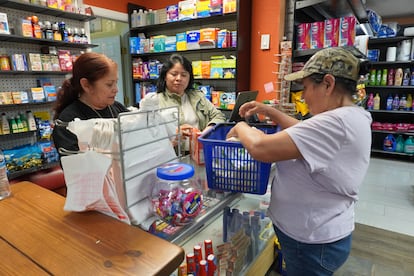
In this largely Latino region, the poverty rate exceeds 28%. Many families do not own a car or have the means to pay for frequent long-distance travel. It is not uncommon to hear of women giving birth on the road. “They have their babies halfway and don’t make it to the hospital. One of my friends was ready to have her baby and, well, she didn’t make it,” says Silvia Sabanilla, who has lived in the area for nearly 30 years.
This is a reality that is spreading across Florida, where maternal care deserts are growing. The Florida Association of Community Health Centers says that in almost 20% of counties it is hard to find specialists who care for mothers and babies. Added to that are figures from the Center for Healthcare Quality and Payment Reform showing that 91% of the state’s rural hospitals lack obstetrics and gynecology services, the highest rate in the country.
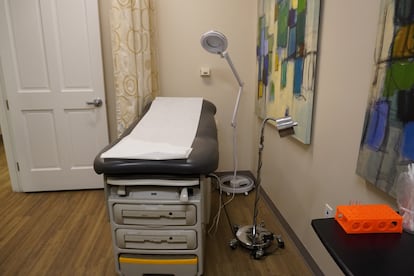
There is another element that completes this picture today: fear. Since 2023, Florida medical centers may ask patients about their immigration status. And although patients are not required to answer, many avoid going to the doctor, even when they need to.
Healthcare Network is the only federally qualified center offering basic maternal care in Immokalee. In 2024, it treated about 2,200 pregnant patients. In 2025, that number fell to 1,959. “Historically, our trend had been to serve more and more people. That’s why we asked ourselves what is changing in the environment and how those changes are affecting our patients,” reflects its medical director, Jamie Khemraj.
Those who do dare to seek care must walk long distances, despite extreme heat that can reach 100°F. Dr. Khemraj recalls a recent case involving a woman from Guatemala. “She walked three miles in plastic sandals because she had no other option. That day she was diagnosed with a sexually transmitted infection.”
Experts say the situation in Florida is the result of a more complex political system. Since 2022, after the ruling that had allowed abortion nationwide up to 24 weeks was overturned, reproductive justice has been central to the local political agenda. Restrictions are like a shockwave. As Democratic representative Anna Eskamani puts it: “Florida has one of the most restrictive abortion laws in the country. Its effects reach every area of maternal care. Both women who are building a family and decide to have a child and those who want to end a pregnancy face a very difficult landscape.” And this is the breaking point.
According to the state budget, nearly $30 million a year is allocated to a network of so-called crisis pregnancy centers — many linked to religious groups — where women are persuaded not to have abortions. Meanwhile, in regions like Immokalee there is no prenatal care. “Here it simply doesn’t exist. There is no care in that specialty. There are no specialists in this community,” Dr. Khemraj says.
That means no ultrasounds to assess fetal development or detect potential complications. Healthcare Network’s medical director says patients who need those services are referred to Naples, about a 40-minute drive away, where there is only one clinic staffed by a single specialist who sees all the region’s women.
On the national map, Florida is not the only state showing reproductive health warning signs. In Texas, the National Women’s Law Center reports that more than 320,000 Latinas live in maternal care deserts and more than 200,000 live in counties lacking abortion access. There, borders are part of everyday life for nearly three million Latinas who could become pregnant. Many are immigrants who, paradoxically, find it unthinkable to leave, travel, or move. Projections indicate that among the immigrant population, four in 10 women lack legal documentation.
In the Rio Grande Valley in the south of the state, resources are scarcer. The March of Dimes organization reports that between 27% and 43% of women of childbearing age in that area are uninsured. That was the case for Mónica (an assumed name). She was 23 and studying criminology when she became pregnant for the first time. “I wasn’t doing well financially or emotionally; I still wanted to continue my studies. I wasn’t prepared,” she admits. It was 2023, shortly after the Supreme Court overturned Roe v. Wade.
Before the near-total ban, Latinas accounted for the majority of abortions in Texas, according to the State Health and Human Services Commission. After the restrictions, a University of Houston study found that this group’s birth rate increased by more than 5%.
After seeking alternatives in New Mexico and Colorado, Mónica gave up. “I would have preferred to have an abortion and couldn’t because it’s illegal here in Texas.” With a diagnosis of depression and no insurance, she faced a complicated pregnancy. “From the stress I had, I started bleeding… I worried they would put me in jail if the fetus died or something happened to it,” she recalls.
In Texas, this story goes back to 2003, when local lawmakers passed the Woman’s Right to Know Act, which required a 24-hour waiting period before an abortion and forced clinics to provide misinformation that included fetal images and claims of alleged links to cancer, a connection science has already debunked.
In 2011, an ultrasound was added as a mandatory step for abortion. In 2017, health insurance coverage for abortion was banned.
In 2021 SB8 went into effect, limiting abortion to six weeks and allowing anyone to sue someone who helps a woman obtain an abortion. It made no exceptions for rape or incest. That was not the end. In 2022 the “trigger law” began to apply, banning abortion from “conception” and making it a crime in almost all cases.
“I want them to understand that, even just once, they should put themselves in our shoes and think that living in Texas isn’t for everyone,” Mónica laments. The numbers complete the picture. An analysis by the Gender Equity Policy Institute found that between 2019 and 2022, maternal mortality in Texas increased by 56%.
Mariana Pineda contributed reporting from Texas. This report was produced with support from the Pulitzer Center.
Sign up for our weekly newsletter to get more English-language news coverage from EL PAÍS USA Edition









































