
ICE wasted millions of dollars on its expansion of detention centers, according to a government report
The Government Accountability Office found that the agency pursued projects without a comprehensive strategy and warns of additional costs
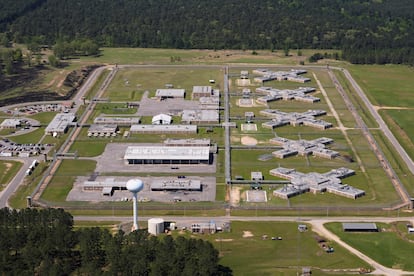

Millions of dollars earmarked to expand U.S. immigration detention capacity ended up in warehouses that will now be sold, in tents that never housed a detainee, and in food purchased for empty facilities. These are the findings of a report by the Government Accountability Office (GAO), which documents how the rapid expansion of U.S. Immigration and Customs Enforcement (ICE) has left behind abandoned projects, sunk costs, and new financial commitments.
The report, released Thursday, notes that the agency undertook six major initiatives without a comprehensive strategic plan to determine where it needed to expand its capacity, how much it would cost to maintain it, and which facilities would actually be necessary. The lack of planning led to course corrections, stalled projects, and wasted resources just as ICE prepares to manage tens of billions of additional dollars.
The expansion accelerated during Donald Trump’s second term. The number of people in ICE custody rose from about 39,000 detainees in January 2025 to approximately 67,000 on July 30, 2026. At the same time, Congress approved $45 billion to increase the agency’s detention capacity as part of the legislation known as the One Big Beautiful Bill Act.

One of the clearest examples of the spending questioned by the GAO involves the warehouses that ICE acquired to convert into detention centers. The agency spent approximately $1.07 billion to purchase 11 facilities but later decided to put seven of them up for sale. None of the warehouses ever housed detainees.
The operation also resulted in nearly $20 million in unrecoverable expenses related to services, security, utilities, and other costs associated with the properties. The other four warehouses have not yet begun to house migrants either. At two of them, located in Arizona and Maryland, renovation plans were put on hold due to legal challenges, while the investment needed to bring them up to standard was estimated at hundreds of millions of dollars.
Meanwhile, in Guantánamo, ICE spent $2.85 million on tents with a capacity for about 5,000 people, but never used them to house detainees because the facilities did not meet federal standards. By June, the average number of migrants detained there was just 16 people per day.
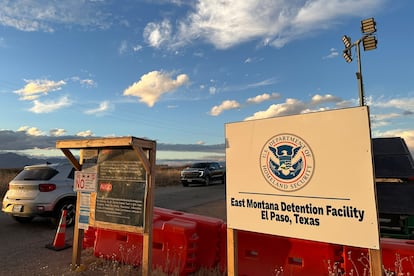
Another instance occurred at Camp East Montana in El Paso, Texas. The government purchased $7.1 million worth of food that it ultimately did not need for the facility. In addition, it spent another $11.5 million on services over a two-week period while the center remained empty.
In Florida, the federal government allocated up to $608 million to reimburse the state for the costs of operating the facility known as Alligator Alcatraz. According to the report, the cost per detainee reached $249 per day, compared to the $92 that ICE normally pays—a difference of 171 percent. The facility closed in June.
ICE also used facilities operated by the Federal Bureau of Prisons. The agreement covers eight centers and requires the immigration agency to cover the full cost of maintaining them, including expenses related to overtime and temporary staff. The average cost amounts to $182 per day per detainee.
While some of these projects were abandoned or put on hold, ICE continued to purchase existing facilities. In July, the agency acquired two private detention centers in California for $1.47 billion, and in August, it purchased two more in Kansas and Minnesota for $734 million. The GAO noted that ICE had not assessed how much it would cost to maintain those facilities in the long term.
The federal agency believes that the absence of an overall strategy has contributed to the agency moving forward with, halting, and modifying projects without sufficient planning. Heather MacLeod, the GAO’s director for Homeland Security and Justice, summed up the problem by noting that the lack of planning had led to “stops and starts” that ultimately resulted in waste.
The Department of Homeland Security, for its part, has defended the pace at which ICE is expanding its capacity and has noted that the new funding approved by Congress allows the agency to move forward with its operations.









































