The federal prosecutor fired by Trump less than an hour after taking office files a lawsuit
Roger Rogoff is seeking reinstatement as U.S. attorney for the Western District of Washington, arguing that his dismissal violated the law and the Constitution
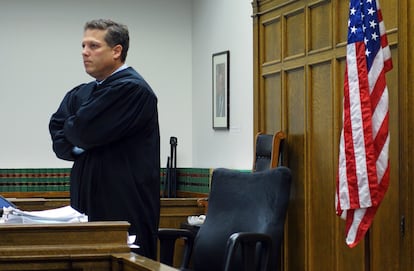

Just 54 minutes after taking office as U.S. attorney for the Western District of Washington, Roger Rogoff was fired by President Donald Trump. He has now filed a lawsuit against the federal government seeking to regain the position. Rogoff argues that his removal was unlawful and that he should remain in office until the position is filled by a presidential nominee confirmed by the Senate.
The lawsuit, filed Tuesday, makes Rogoff the first U.S. attorney appointed by a panel of federal judges to challenge his dismissal by the Trump administration in court. The case comes amid a broader dispute over who has the authority to temporarily lead U.S. attorney’s offices when those positions remain vacant.
Rogoff was unanimously selected last week by federal judges in the Western District of Washington to lead the U.S. attorney’s office in Seattle. His appointment followed months of vacancy and was made under the procedure established by federal law for such situations.
Less than an hour after he was sworn in, however, Rogoff received an email from a White House staff member informing him that the president had ordered his dismissal. Acting Attorney General Todd Blanche later publicly confirmed the decision.
In the lawsuit, Rogoff argues that the president lacks the authority to remove a U.S. attorney appointed by a federal court under this process. According to the filing, federal law allows district court judges to appoint a U.S. attorney after an interim appointment made by the Department of Justice expires and the Senate has not yet confirmed a nominee put forward by the White House.
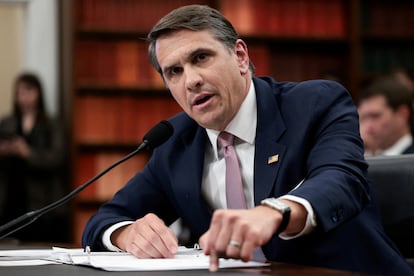
Under that argument, those conditions still apply in the Western District of Washington because the office remains without a Senate-confirmed U.S. attorney. Rogoff is therefore asking a federal judge to declare his firing unlawful and order his reinstatement until the standard nomination and Senate confirmation process is completed.
The lawsuit also argues that Trump’s decision violates the Constitution’s separation of powers by preventing a congressional appointment mechanism from operating as intended. It further claims that Rogoff was denied due process when he was removed immediately after taking office.
According to Rogoff, the administration’s actions effectively disregard the process established by Congress to ensure continuity in U.S. attorney’s offices when vacancies remain unfilled for extended periods.
The Trump administration, however, rejects that interpretation. A Justice Department spokesperson said the federal court did not coordinate Rogoff’s selection with the department beforehand and argued that the president acted within his authority in removing him. Blanche echoed that position in a social media post, stating that while district court judges may appoint a temporary U.S. attorney, the president retains the authority to dismiss that individual. He also criticized the judges for, in his view, abandoning the longstanding practice of consulting with the administration before making such appointments.
The process for appointing U.S. attorneys
The dispute centers on the procedure for filling vacancies in U.S. attorney’s offices. Under normal circumstances, U.S. attorneys are nominated by the president and must be confirmed by the Senate. While that process is underway, the attorney general may appoint an interim U.S. attorney for up to 120 days. If no nominee has been confirmed by the end of that period, federal law allows district court judges to appoint a U.S. attorney to serve until the vacancy is permanently filled.

Although Rogoff’s lawsuit is the first of its kind, it is not the first clash between the Trump administration and the federal judiciary over these appointments.
During Trump’s second term, several U.S. attorneys appointed by federal judges were dismissed shortly after taking office. Among them was James Hundley, who was appointed to replace Lindsey Halligan in Virginia after a federal judge determined that she had been serving unlawfully. Hundley was fired just hours after being sworn in.
Donald Kinsella was also removed after being appointed by federal judges to fill a vacancy in the Northern District of New York following the departure of John Sarcone III. In both cases, the Justice Department defended the president’s authority to decide who leads U.S. attorney’s offices.
Rogoff said he expected to be dismissed shortly after taking office. Even so, he joked about his brief tenure, describing it as “the greatest 54 minutes of my life.”