
Two Venezuelan doctors detained by Texas immigration officials in less than a week
The arrest of Rubeliz Bolívar — despite her having a work permit — follows the detention of another healthcare worker. Both were working in communities with limited access to healthcare
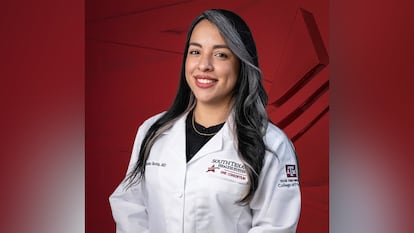
Rubeliz Bolívar was preparing to board a flight at McAllen Airport in Texas when she was detained by immigration agents. She was traveling with her five-year-old daughter, a U.S. citizen, to California, where she had an asylum interview scheduled with her husband. Instead of making it to that interview, she ended up in custody. After being separated from her mother, the child was later handed over to relatives.
The detention occurred on April 11 and has sparked a swift reaction from migrant rights organizations and politicians. Bolívar had been living in the United States for nearly a decade and held a work permit valid through 2030. In addition, she was working as an emergency medicine resident at the South Texas Health System in the Rio Grande Valley, a region officially designated as having a shortage of healthcare workers.
Colleagues and organizations have cited the case as an example of how current immigration policies continue to affect professionals who meet legal requirements. “Dr. Bolivar followed our laws, obtained valid work authorization, and dedicated herself to caring for patients in one of the most underserved regions in the country,” stated L. Anthony Cirillo, president of the American College of Emergency Physicians (ACEP), in a press release. “Detaining physicians who are here legally and serving communities in need of vital emergency care is not targeted enforcement. It is a threat to the health of the American people, and it must stop.”
Similarly, Pauline Wiltz, president of the Association of Emergency Medicine Residents, highlighted the case’s impact on both public health and the individual: “Dr. Bolivar is a frontline emergency medicine resident and a mother. Every shift she misses is care delayed for patients in crisis. Every moment in detention, her child is kept from the safety she deserves. This isn’t just policy, these are people. It’s a family. It’s a physician our communities need and depend on.”
For his part, Victor Haddad, deputy mayor of McAllen, criticized the arrest and defended Bolívar’s record, highlighting her role in an area where the shortage of doctors is critical. “She followed the rules. She dedicated her life to healing others,” he said in a statement to The New York Times.
The case comes just days after the arrest of another Venezuelan doctor in the same region. On April 6, Ezequiel Veliz was arrested by Border Patrol agents at a checkpoint in Sarita, Texas, while traveling to Houston with his husband.
Veliz, 32, had worked as a family doctor in the Rio Grande Valley, where he treated patients with chronic conditions such as diabetes and hypertension. He had entered the country legally, but lost his job after his immigration status expired and was in the process of obtaining a new visa.
His arrest was described as sudden by his husband: “He said ‘they’re detaining me…’ I started crying. I’m like ‘no! This can’t be happening.’” Since then, family members, lawyers, and lawmakers have demanded explanations regarding his whereabouts and legal status. Complaints have also emerged regarding the conditions of his detention. “They are all in a cell sleeping on the floor on extremely thin mats. They share a single bathroom and have no privacy,” Genesis Kuzhel, a friend of the doctor, told Telemundo after speaking with him.
Federal authorities have not provided specific details regarding Bolívar’s detention. Instead, they have advocated for stricter immigration controls, including the suspension of visa processing for citizens of certain countries. In practice, these measures have left professionals facing legal uncertainty, even when they were working within the health‑care system.
Sign up for our weekly newsletter to get more English-language news coverage from EL PAÍS USA Edition









































