
Judge reinstates unannounced congressional visits to ICE facilities
The ruling reactivates legislative oversight of federal centers amid escalating allegations of abuse and deaths in custody
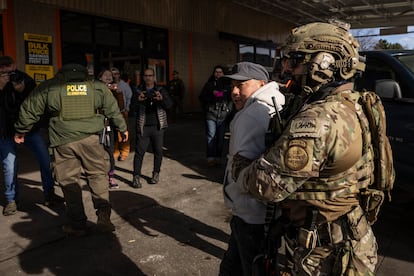

A federal judge has once again reined in the Trump administration by ordering, for the second time, that the Department of Homeland Security (DHS) allow members of Congress to conduct unannounced visits to Immigration and Customs Enforcement (ICE) detention centers. The decision, issued Monday by District Court Judge Jia M. Cobb, temporarily blocks the requirement to give seven days’ notice to inspect these facilities and reinforces the legislature’s right to oversee the conditions in which thousands of people are held in federal custody.
The ruling responds to a lawsuit filed by more than a dozen Democratic members of Congress, including representatives from Minnesota, Colorado, Texas, New York, and California, who reported being expelled or directly prevented from entering detention centers after attempting to make unannounced visits. The case has become one of the main legal fronts against the government’s immigration offensive at a time marked by increased detentions, citizen protests, and allegations of abuse in federal facilities.
Judge Cobb’s order is temporary. It will be valid for an initial period of 14 days while the case proceeds.

One of the episodes that triggered the lawsuit occurred on January 10 at the Bishop Henry Whipple federal building, outside Minneapolis, Minnesota. Representatives Ilhan Omar, Angie Craig, and Kelly Morrison managed to briefly enter the premises but were forced to leave shortly thereafter. The building, originally designed for short-term detentions related to immigration hearings, has become a hub for ICE operations in the state. People detained there described overcrowded cells, a lack of adequate food, and insufficient medical care.
Morrison later stated that what she saw during a recent visit was not what one would expect in the United States. She explained that her office had received multiple complaints about “cruel, unsafe, unlawful” conditions, including testimonies from women who recounted experiences she described as “harrowing.” “Everything I saw showed me this operation is chaotic, disorganized, ineffective, and dangerous,” she said.
In January, the Trump administration, through Homeland Security Secretary Kristi Noem, reinstated a policy that requires lawmakers to give one week’s notice of their visits. The DHS defended the measure on grounds of security and internal order. However, Judge Cobb ruled that the policy likely violates the law by relying on funds that Congress itself had prohibited from being used to limit legislative access. The judge had already blocked an earlier version of the rule in December, noting that unannounced oversight is key to evaluating facilities whose populations can increase or decrease abruptly.
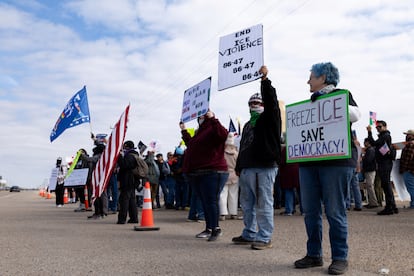
The ruling applies nationwide. In the United States, there are nearly 200 facilities that house people in ICE custody, including local jails used for immigration detention. In Colorado, the Aurora facility was one of the locations cited in the lawsuit. Democratic Congressman Jason Crow reported being turned away in July 2025 when he attempted to inspect the facility. “Why do they need seven days to prepare and get ready for a member of Congress’s visit, right? What are they hiding?” he asked.
Criticism of conditions in Aurora has been backed by activists such as Jeanette Vizguerra, who spent nine months detained at the center before being released in December. Vizguerra described rooms with dozens of people sharing just three showers and three toilets, as well as the prolonged use of the same blankets for weeks. Adams County health authorities confirmed in January that an investigation had been opened into reports of untreated disease outbreaks and poor medical care.
In Texas, the controversy intensified with the opening of the Camp East Montana center in El Paso, considered the largest in the country, with a capacity for up to 5,000 detainees. Since August 2025, at least two people have died there, and a total of six deaths have been recorded in ICE centers so far in 2026. The death of Gerardo Lunas Campos, a 55-year-old Cuban immigrant, was classified as a homicide by the El Paso County medical examiner.
Sign up for our weekly newsletter to get more English-language news coverage from EL PAÍS USA Edition









































