
Two families from Trinidad and Tobago sue the US over the deaths of their relatives in boat strikes
Chad Joseph and Rishi Samaroo were killed when the vessel they were traveling on back from Venezuela was bombed
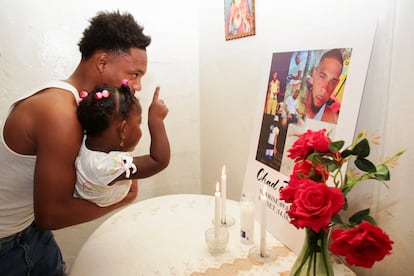

Two families in Trinidad and Tobago have filed a lawsuit against the government in Washington over the deaths of two of their relatives in one of the United States’ attacks against alleged drug-running boats in the Caribbean on October 14. It is the first lawsuit filed in U.S. courts against the anti-drug campaign that Washington used for months to justify its increasingly aggressive pressure on Venezuela’s Chavista regime, a campaign that ultimately culminated in a military operation that captured president Nicolás Maduro and his wife, Cilia Flores, in Caracas on January 3.
In the lawsuit, filed on behalf of the families by civil rights lawyers in the United States, it is stated that Chad Joseph, 26, and Rishi Samaroo, 41 — both from the fishing village of Las Cuevas in Trinidad — were returning home from Venezuela, where they had been working, when the boat they were traveling in was hit. The two of them and four other people died in the strike, the fifth attack acknowledged by Washington in the military anti-drug campaign it launched on September 2 to pressure the Venezuelan government.
The Donald Trump administration has provided limited details about each of these attacks. The strikes are usually announced in a brief message on social media, accompanied by a video showing a boat exploding. The message includes the number of people killed and claims that the sunken vessel belonged to a drug trafficking organization and was carrying drugs. It does not identify the victims, the type of narcotic allegedly on board, or the cartel that supposedly organized the voyage.
Although the U.S. government maintains that this type of attack is perfectly legal and an appropriate response to cartels included on its list of foreign terrorist organizations, numerous experts and various lawmakers — most of them from the opposition Democratic Party — believe they constitute extrajudicial executions that violate international law and U.S. law.
The lawsuit filed by the families of Samaroo and Joseph, submitted to a court in Massachusetts, comes four days after the Pentagon reported the 36th attack last Friday in waters of the eastern Pacific. So far, there is evidence of at least 117 deaths resulting from these strikes.
In the lawsuit, the families’ representatives explain that Joseph had spent the last months of his life working in Venezuela, as an agricultural laborer and fishing. He had begun looking for a boat to take him back to Las Cuevas, where he had a wife and three children, but the United States launched its campaign. The worker was “increasingly frightened” at the prospect of making the journey by boat, according to what he told his family in phone calls. The last call came on October 12, when he told his wife he had found a vessel and would arrive within a matter of days. On October 14, a U.S. missile sank another boat accused of drug trafficking. The Joseph family believes Chad was on board: when they tried to reach him, his phone was disconnected. They have not heard from him since.
“These premeditated and intentional killings lack any plausible legal justification,” the lawsuit states. “Thus, they were simply murders, ordered by individuals at the highest levels of government and obeyed by military officers in the chain of command.”
In December, the family of a Colombian citizen, Alejandro Carranza Medina, also chose to pursue legal action following the death of their relative in another attack against an alleged drug-running boat. In that case, the family filed a complaint for human rights violations with the Inter-American Commission on Human Rights (IACHR) in Washington.
Sign up for our weekly newsletter to get more English-language news coverage from EL PAÍS USA Edition









































