
Texas Republicans push back against the suspension of GOP-favoring electoral map
The state attorney general has appealed to the Supreme Court, while the governor and conservative legislators have condemned the ruling as judicial overreach
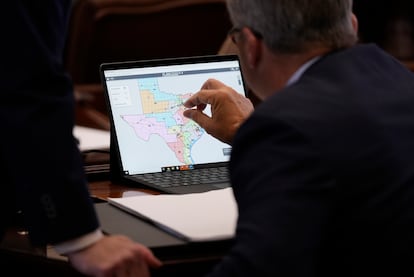

The latest aftershock from the political earthquake over electoral map redesigns in the United States hit Texas this week. On Tuesday, a panel of federal judges blocked the new congressional map approved by the state that benefited the Republican Party and, in doing so, not only disrupted preparations for the 2026 elections but also unleashed an unprecedented internal revolt among Republicans themselves.
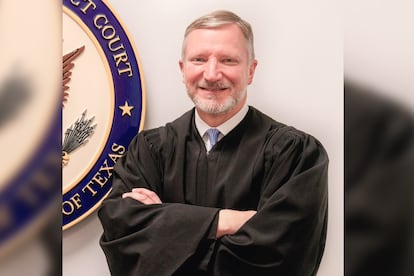
The ruling — written by Judge Jeffrey Brown, a Donald Trump appointee with clearly conservative leanings — concluded that the map approved this summer constitutes unconstitutional racial gerrymandering. In response, the Republican leadership in Texas — where they control every branch of government — has closed ranks and launched an offensive to restore the map introduced over the summer, appealing directly to the U.S. Supreme Court while denouncing what they call a judicial attack on legislative authority.
But the figure at the center of this storm is not a progressive judge or a Democratic appointee, but Brown. For more than two decades, Brown has been a reliable ideological ally for Texas governors, attorneys general, and conservative advocacy groups. His ruling therefore jolted the state’s Republican Party, provoking accusations of betrayal and a cascade of attacks.
Brown rose quickly through the Texas judicial ranks. Appointed in 2001 by then-governor Rick Perry to the 55th District Court, he eventually reached the Texas Supreme Court, where he served on an all-Republican bench. His rulings earned him praise among conservative activists: he repeatedly sided with opponents of same-sex marriage and openly expressed anti-abortion positions. When Donald Trump nominated him to the federal judiciary in 2019, Texas Attorney General Ken Paxton hailed him as a judge with “fidelity to the Constitution,” while Governor Greg Abbott praised his “commitment to the rule of law.”
That long record made his Tuesday ruling all the more unexpected. Brown and Judge David Guaderrama — a Barack Obama appointee — concluded that the 2025 map was not merely a partisan maneuver but a deliberate racial reengineering of Texas’s congressional boundaries. While partisan gerrymandering is legal under federal law, racial gerrymandering is not. According to the court, Texas officials crossed that line when they sought to dismantle so-called “coalition districts” —where no single racial group holds a majority — and replace them with districts explicitly designed to have Hispanic majorities, which over the past decade have begun voting consistently for Republicans, a first in the state’s history.
Brown wrote that Abbott “explicitly directed the Legislature to redistrict based on race” and prioritized eliminating coalition districts to comply with what state leaders interpreted as guidance from the Department of Justice. Brown’s ruling found there was “substantial evidence that Texas racially gerrymandered” its maps.
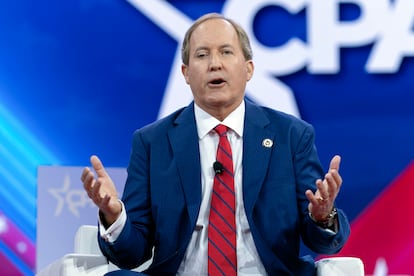
Republican leaders reacted immediately. Attorney General Paxton appealed to the Supreme Court, accusing the “radical left” of attempting to “undermine the will of the people,” despite Judge Brown’s impeccable conservative credentials. Governor Abbott called the ruling “clearly erroneous” and argued that the judiciary had usurped powers reserved for the legislature.
Meanwhile, the state’s political and electoral machinery descended into chaos. Counties had already begun reconfiguring electoral districts, hiring poll workers, and processing candidate filings based on the now-suspended map. Suddenly, they are forced to improvise solutions with less than three weeks until the December 8 filing deadline. Many Republican candidates had already begun campaigning — and fundraising — in districts that no longer legally exist.
“I’m not concerned about it,” insisted Representative Pete Sessions, a Republican from Waco, according to The Texas Tribune. “It’ll go to the Supreme Court, and we’ll be fine.”
But other Republicans acknowledged strategic mistakes. Former state legislator and ex-chair of the Texas Republican Party Matt Rinaldi wrote on X that party leaders made “an unforced error” by relying on a misreading of a Department of Justice letter that led Republicans to modify coalition districts. That approach, he said, could give courts the impression in their final decision that racial motives — not political ones — guided the redistricting.
The political upheaval was soon matched by a nearly equally forceful response from the judiciary. Judge Jerry Smith, a Ronald Reagan appointee and the third member of the panel — the only one who disagreed with the suspension of the maps — issued a combative 104-page dissent that reads more like a political argument than a technical legal opinion.
“Fasten your seatbelts. It’s going to be a bumpy night!” the opinion begins, before launching accusations that Brown and Guaderrama sidelined him, rushed the ruling, and prevented him from having enough time to draft his dissent. He described their behavior as “pernicious judicial misbehavior” and called Brown an “unskilled magician” trapped in an “illogical straitjacket.”
Smith argued not only that the map’s authors acted out of partisan interests — a constitutionally permissible motive — but also that the majority’s decision favored Democratic elites. He even claimed that the main beneficiaries of Brown’s ruling were billionaire philanthropist George Soros and California Governor Gavin Newsom, allegations reminiscent of long-standing right-wing conspiracies that immediately drew criticism from Latino civil rights organizations.
LULAC, one of the plaintiff organizations, argued Smith’s interpretation contradicted the facts. “Protecting voters from racial discrimination is not activism; it is a constitutional obligation,” LULAC CEO Juan Proaño said.
A race against time to decide the appeal
Texas’s appeal is now in the hands of Judge Samuel Alito, who handles emergency petitions from states in the Fifth Circuit. The Supreme Court could temporarily stay the ruling and allow Texas to use the disputed map in the 2026 midterm elections while litigation continues. A decision is expected within days: candidate registration is already underway, and election administrators warn that last-minute map changes could confuse voters and disrupt preparations for the March primaries.
Despite the chaos, the district court insisted that the blame does not lie with the judiciary, but with the legislators. “The legislature — not the court — redrew Texas’s congressional map weeks before precinct-chair and candidate-filing periods opened,” the ruling states. “The state chose to ‘toy with its election laws close to’ the 2026 congressional election.” That decision, taken under express orders from U.S. President Donald Trump, sparked a nationwide battle over redistricting, in which California has already approved a new distribution that would give Democrats five additional House seats in the 2026 elections.
The ruling also serves as a reminder that judges, even conservative ones, sometimes defy political expectations. It’s a point worth remembering as the case heads to the Supreme Court, where conservatives hold a 6-3 majority. For now, however, Texas Republicans show no signs of introspection. Their strategy is clear: confront, challenge, and escalate, betting that the Supreme Court will ultimately rule in their favor.
Sign up for our weekly newsletter to get more English-language news coverage from EL PAÍS USA Edition









































