
A 9/11 defendant is ruled unfit for trial after a medical panel finds torture left him psychotic
The ruling means Ramzi bin al-Shibh will not be tried together with his four 9/11 co-defendants, whose case will now proceed without him
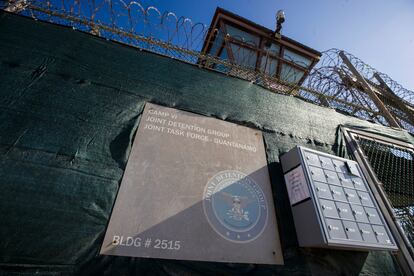
A military judge at Guantánamo Bay has ruled one of the 9/11 defendants too mentally ill to stand trial, after a military medical panel found that the man’s abuse in CIA custody years earlier has rendered him psychotic. Guantánamo military commission spokesman Ronald Flesvig confirmed the ruling by Judge Col. Matthew McCall. The ruling means Ramzi bin al-Shibh will not be tried together with his four 9/11 co-defendants, whose case will now proceed without him.
McCall made the ruling Thursday night. A notice on the military commission’s website Friday said his written decision was under security review and unavailable.
A Yemeni, al-Shibh is accused of organizing one cell of the 19 hijackers who carried out the Sept. 11, 2001, attacks, which killed nearly 3,000 people. A military medical panel last month diagnosed him as having post-traumatic stress disorder with secondary psychosis, and linked it to his torture and solitary confinement during four years in CIA custody after his 2002 arrest.
Al-Shibh has complained for years since his transfer to the U.S. naval base at Guantánamo Bay, Cuba, that his guards were attacking him, including by invisible rays, so as to deprive him of sleep and cause him pain.
Defense attorney David Bruck argued at a hearing by the military court Tuesday for McCall to accept the medical panel’s finding that al-Shibh’s mental issues were too severe for him to meaningfully take part in his defense.
Bruck pointed to what he said was al-Shibh’s solitary confinement over four years in detention at CIA black sites, and torture that included his being forced to stand sleepless for as long as three days at a time, naked except for a diaper and doused with cold water in air-conditioned rooms, for the man’s lasting belief that his American guards were still conspiring to deprive him of sleep.
Bruck indicated that al-Shibh would be expected to remain in custody if found incompetent to stand trial.
Sign up for our weekly newsletter to get more English-language news coverage from EL PAÍS USA Edition









































