
Rep. Steve Scalise is diagnosed with blood cancer and undergoing treatment
The No. 2-ranking House Republican described the cancer as ‘very treatable’ and said it was detected early
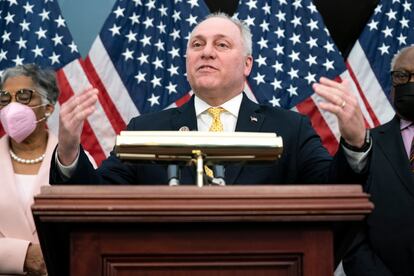
Rep. Steve Scalise, the No. 2-ranking House Republican, said Tuesday he has been diagnosed with a form of blood cancer known as multiple myeloma and is undergoing treatment. Scalise, 57, said he will continue to serve in the House. He described the cancer as “very treatable” and said it was detected early.
The Louisiana Republican was among several people wounded in 2017 when a rifle-wielding attacker fired on lawmakers on a baseball field in Alexandria, Virginia, outside Washington. Scalise was shot in the hip and endured lengthy hospitalizations, multiple surgeries and painful rehabilitation.
The cancer diagnosis came, Scalise said, after he had not been feeling like himself in the past week. Blood tests showed some irregularities and after additional screening, he said he was diagnosed with multiple myeloma.
“I have now begun treatment, which will continue for the next several months,” Scalise said in a statement. “I expect to work through this period and intend to return to Washington, continuing my work as Majority Leader and serving the people of Louisiana’s First Congressional District.”
Scalise also thanked his medical team and said he was “incredibly grateful we were able to detect this early and that this cancer is treatable.”
“I will tackle this with the same strength and energy as I have tackled past challenges,” Scalise said.
Colleagues in the House and members of Louisiana’s congressional delegation offered Scalise and his family their encouragement in response to the announcement, some recalling his determination following the 2017 shooting.
“The same faith, family support, and internal strength that made Steve such an inspiration to others after he was shot will bring him through this illness and once more inspire us all,” said Sen. Bill Cassidy, R-La.
Sign up for our weekly newsletter to get more English-language news coverage from EL PAÍS USA Edition









































