
David Samson, anthropologist: ‘Humans went through a radical evolutionary experiment. We are the primates that sleep the least’
A new book draws on ethnography, neurobiology, and primatology to argue that our reduced sleep is not a byproduct of modern stress, but an evolutionary advantage.

Sleep is no longer what it used to be. Or at least that is the widespread feeling. For years, there have been warnings about a silent pandemic of insomnia. The problem is no longer seen as an individual or medical issue, but as a social phenomenon linked to long working hours, digital hyperconnection, anxiety, and hectic lifestyles.
Some figures support this idea. In Spain, the Spanish Society of Neurology estimates that more than half of adults sleep fewer hours than recommended, and that nearly 50% fail to get restorative rest. The use of sleeping pills has tripled in less than 20 years, as if society had ended up turning rest — a biological necessity — into just another variable to optimize, enhance, and hack.
Sleep is essential for eliminating metabolic waste from the brain, improving synapses, and maximizing the efficiency of cognitive processing. So if we are sleeping less, we would be facing a major problem. Or maybe not.
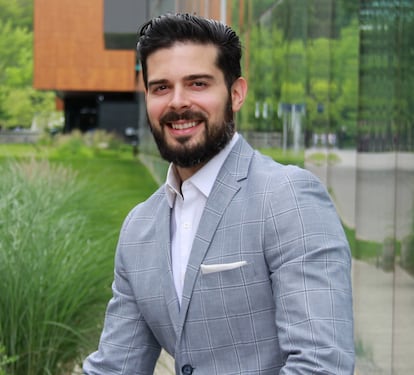
David Samson, an evolutionary anthropologist at the University of Toronto in Canada, raises a provocative question: what if the reduction in sleep hours were not a consequence of our busy modern lives, but an evolutionary advantage? To support this idea, he draws on scientific studies and his own experience.
For years, Samson studied chimpanzees, orangutans, and lemurs. He lived (and slept) with two populations of hunter-gatherers: the Hadza in Tanzania and the BaYaka in the Republic of the Congo. He observed that humans are the primates that sleep the least, yet we live longer, healthier lives, and have greater cognitive capacity. This is the “human sleep paradox,” the central theme of his book The Sleepless Ape.
Samson agreed to speak with EL PAÍS by video call, although he warned that he had slept little the night before. His second child is only a week old, so his sleep is fragmented and irregular. He’s up at night caring for the baby when it cries. However, he acknowledges that this time they are managing much better, because they are putting into practice a custom he learned while living with hunter-gatherer tribes — one that is somewhat unusual in the United States: co-sleeping. This personal anecdote brings to the table one of the book’s key themes: the enormous cultural variety in how people sleep around the world.
Question. Sleep is essential for health and cognition, yet humans sleep less than any other primate, live longer and are more intelligent. How is that possible?
Answer. It is a paradox. When I began studying sleep in great wild apes, in orangutans in captive environments and later with lemurs in the lab, we were the first to collect data on more than 30 primate species, a sample size that allows very sophisticated phylogenetic analyses. That means you can take the sleep patterns across the entire primate order and model them while controlling for evolutionary history: brain size, body size, diet, social structure… We found that great apes sleep around nine and a half to 10 hours. The owl monkey can reach 17 hours of sleep a day. Tarsiers sleep 15 hours, lemurs between 13 and 14. But humans… what we discovered was extraordinary: given our body size, brain size, social structure and terrestriality, the model predicts we should sleep 11 and a half hours per 24-hour period.
But humans, on average worldwide, both in small-scale societies and in large industrialized societies, sleep about seven hours. That means humans went through a radical evolutionary experiment to become the primates that sleep the least in the entire order. And it’s not because we are a wild species prone to bad habits, but because of our evolution.
Q. We don’t sleep less because of this crazy, stressful pace of life; rather, we are more efficient…
A. Exactly. If you listen to the news, you’d think we are the poorest sleeping cohort of humans that has ever existed because of technology, phones and artificial light at night. But it turns out that is not the case. In an article we published last year in [the scientific journal] Proceedings B, we analyzed cultures around the world and found that small-scale societies, like the Hadza in Tanzania or the Baka of the Congo, sleep significantly less — an average of 6.4 hours — and their sleep is much more fragmented than ours. So that argument holds no empirical weight. In fact, we’ve actually been sleeping better.
Q. What did you learn about sleep while living with these hunter-gatherer societies?
A. They sleep 45 minutes less per night on average, which is physiologically massive. Regarding sleep efficiency, in large-scale societies it is around 88%, above the 85% the National Sleep Foundation considers high quality. In small-scale societies, it is around 70%, about 15 points lower. They sleep less and in a more fragmented way.
But here is the interesting part: when you analyze circadian function indices, their circadian rhythms are stronger. Their biological clocks are much more synchronized with their environment. And that matters enormously. The Himba, who on average sleep about four and a half hours at night, have fairly good health metrics in cardiovascular terms, mental health and modern diseases. I think much of that is due to the metabolic timing of all the independent clocks in their bodies being synchronized with their environment. They do not separate their bodies from the environment the way you and I do.
Q. So it’s not so much how many hours you sleep as when you sleep, and whether you follow the rhythm of nature?
A. Exactly. There is very interesting research on this. A paper published last year in PNAS analyzed sleep and health in 30 different countries. They all showed a similar curve: sleeping very little is bad for health, but sleeping a lot — 10 or 11 hours — is also bad. However, depending on the culture, you can shift that optimum point. For some cultures, the optimum is seven or eight hours, and for others — with perfect health — it is six. My hypothesis is that cultures that sleep less but remain healthy have light diets much more in tune with their environment, and probably are not deprived of the temperature and light oscillations that signal the body when to perform crucial functions.
Q. How did this happen and what were the evolutionary advantages of this change?
A. It happened about 1.8 million years ago, when human shelter innovation began. Over a few hundred thousand years there was a gradual reduction in total sleep time: natural selection cut down on non-REM sleep. At the same time, thanks to fire, we went from chewing five or six hours a day like a chimpanzee, or eleven hours like a gorilla, to chewing roughly an hour a day. We not only reduced our sleep budget from 11 to seven hours, but also our chewing budget. And what we gained was immense extra time to socialize, strengthen bonds, hunt, learn to knap flint and use tools. We gained more time.
Q. Is this an ongoing evolution? Are we still slowly reducing sleep hours?
A. I think it would be interesting to see how far natural selection could go, but my hunch is that we have already optimized total sleep duration as much as we can. That being said, there are unique genetic variants, such as the DEC2 gene: if you are heterozygous for DEC2, with two large copies, you can function reasonably well without any cognitive deficit on about five hours a night. There are families with this genetic trait. Evolution might have more room to reduce sleep, but there are things that sleep does that simply require time. Slow-wave sleep, for example, is associated with the generation of leukocytes, natural killer T cells and immune function. The system needs that time.
Q. There is a cultural and identity component to how we sleep. In Spain, the siesta remains relatively popular. Is that a good habit?
A. That is an extraordinarily complicated question. I am part of the siesta panel at the National Sleep Foundation, with about 30 other experts. We have spent 18 months reviewing the available scientific literature and debating to reach a consensus. I view the siesta as a supplement. If you were in Canada in winter and did not produce enough vitamin D because there is little sun, you would supplement your vitamin D. Similarly, if you are sleep-deprived, it is probably beneficial to take a 20- to 30-minute nap. Data show that more than an hour can be detrimental. The important thing is to be aware that naps can reduce the homeostatic drive for sleep — the process of accumulating sleep pressure while you are awake. If you suffer from insomnia and wake at 3 a.m., I would recommend skipping naps, getting up an hour earlier and going to bed a bit later to build that homeostatic drive and get your sleep to span past 3 a.m. without waking.
Q. In your book you predict that in the future we will reach a “Sleep Enlightenment.” How can we improve the way we sleep?
A. The Sleep Enlightenment consists of doubling down on what we already do well and adding what we lack. We receive a lot of criticism for our poor sleep hygiene, phones and all that. But the truth is we have physically safe and comfortable sleep environments that allow deep, high-quality sleep. What we have lost is the connection with the outside world.
If we double down on the advances in sleep technology we have already achieved, and at the same time recover alignment with our circadian rhythms, we will be on the threshold of that Enlightenment. How? Anchor your day with morning light. Spend more than 15% of your daily time outdoors, exposed to full-spectrum sunlight at different times of day. If you can, walk in green environments: leaves absorb infrared light, which fuels our mitochondria. There is a chromophore in mitochondria, cytochrome c oxidase, the terminal enzyme that allows mitochondria to breathe, convert oxygen into water and generate ATP. Without sufficient infrared light, we cannot fuel our bodies. And when you are indoors, choose warm light of about 2,000 Kelvin, fire-like light.
If we do all that while retaining the benefits of the sleep technologies we have developed, I believe we are on the brink of a Sleep Enlightenment as a species.
Sign up for our weekly newsletter to get more English-language news coverage from EL PAÍS USA Edition









































