
End of Daylight Saving Time: When do the clocks go back in the US?
The switch will happen in the early hours of the morning on Sunday, November 6
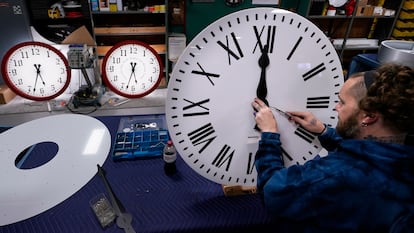

Daylight Saving Time (DST) will come to an end in the United States on Sunday, November 6. The clocks will go back one hour in the early hours of the morning. Smartphones and other devices connected to the internet will automatically make the change, which happens at 2am.
The United States has maintained DST even though there has been debate about ending the measure – as other countries have done – for decades. The clocks are moved one hour forward in summer on the basis that it saves electricity by making better use of natural daylight. But there is no proof this is the case or that the measure is effective.
In which US states does Daylight Saving Time end?
Only two states in the United States do not observe DST: Hawaii and Arizona (with the exception of the Navajo Nation). In these areas, there is only one standard time for the whole of the year.
In 1960, US Congress defined the start and end dates of Daylight Saving Time for the entire country. However, since it was not a federal reform, in that decade some states opted not to follow the measure for commercial and geographic reasons, as is the case, for example, in the state of Arizona. Indiana also did not observe DST until 2006, when the state decided to change its laws.
When does daylight saving time end in the US?
In the United States, Daylight Saving Time ends on the first Sunday in November and starts again on the second weekend in March. This means that clocks will go forward one hour on March 12, 2023, when Daylight Saving Time ends.
As is the case in other countries, the United States opted to move its clocks forward during the summer to take advantage of natural daylight hours and save energy. There are many stories about how the initiative began, but all concern this idea. Benjamin Franklin, the founding father of the United States, is often credited with inventing Daylight Saving Time. But he, in fact, only suggested that people change their sleep schedules – not the time itself – to save money on candles.









































