
From the Oslo to the Berlin patient: Lessons learned from 10 people ‘cured’ of HIV
A study confirms a new case of long‑term remission following a stem cell transplant from a donor with a unique genetic mutation

Timothy Brown will forever hold a prominent place in the history of medicine. Better known as the Berlin patient, this man marked an unprecedented milestone in 2009 by becoming the first person with HIV to be free of the virus after receiving a very particular stem cell transplant. Doctors, cautious at the time, spoke of remission. But, for all intents and purposes, he was cured. There was no trace of the virus in his body, and there never was again: Brown died in 2020, but from a relapse of the cancer he had suffered from. His emblematic case demonstrated that eradicating the AIDS virus was possible and paved the way for a therapeutic strategy that, although difficult to scale to the entire HIV-positive population, now includes 10 cases in remission: 10 people considered cured.
The latest confirmed case was published Monday in the journal Nature Microbiology. He is the Oslo patient — a 62‑year‑old man who, after receiving another unique stem‑cell transplant to treat a blood cancer, stopped taking antiretrovirals and has now spent four years off treatment and free of the virus.
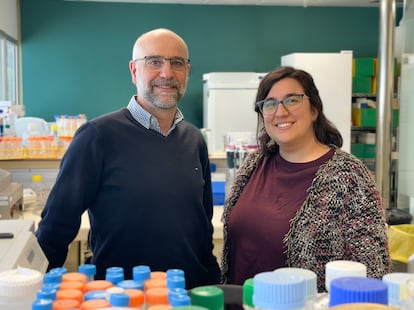
“At first, they said that a cure was impossible, that the Berlin patient was a fluke. But 10 patients later, we know that it is possible to cure [HIV infection], and what we have to see now is how to scale it up,” reflects Javier Martínez-Picado, a researcher at IrsiCaixa and co-leader of the international consortium IciStem, which published this latest finding.
HIV remains incurable to this day. And it poses a challenge to science: cunning and relentless, it can destroy the immune system, hide within our own cells, and mutate at extraordinary speed. It typically infects healthy cells — CD4 lymphocytes are its favorite — and integrates itself into their genetic material to stay out of sight and evade the body’s defensive army. That is how it survives. Antiretroviral drugs can suppress it to minimal levels, but they never eliminate it entirely: the virus lies dormant, tucked away in a kind of hideout inside infected cells (the viral reservoir), and if treatment is stopped, it rebounds with astonishing speed.
The AIDS virus always comes back. Or so it was believed for decades. The exceptional cases described — like Brown’s or the Oslo patient’s — have upended the rules of the game. “These milestones allow us to better understand how a cure occurs and to move toward strategies that are more applicable to all people living with HIV,” says the IrsiCaixa researcher.
The story of how this small group of exceptional cases came to be dates back to the 1990s, when doctors identified a healthy man who, despite repeated exposure to HIV, never became infected. Genetic studies revealed that he carried the CCR5 Delta‑32 mutation — a genetic error that prevents the virus from entering the cell.
That discovery sat in the scientific literature for years without clinical application, until the mid‑2000s, when German hematologist Gero Hütter, Brown’s physician, revived it to design an unusual therapeutic plan for his patient. Timothy had leukemia and needed a stem‑cell transplant to treat his cancer, so Hütter set out to find a donor who was not only compatible but also carried the CCR5 Delta‑32 mutation. The idea was to kill two birds with one stone: cure the cancer and free him from HIV at the same time.
And he succeeded.
Killing two birds with one stone
In stem cell transplantation, treatment begins with powerful chemotherapy to destroy the bone marrow, where the malignant tumor is located and where HIV also hides in one of its reservoirs. The chemotherapy wipes out both the cancer and the latently infected cells. Then, with the transplant of stem cells from a healthy donor, the marrow is repopulated with an army of healthy cells, the blood disorder is cured, and HIV is eliminated.
But it doesn’t end there. When the new cells also carry the rare CCR5 Delta‑32 mutation, the virus is unable to open the molecular gateways it needs to enter and reinfect the cell. In other words, even if a trace of HIV were to remain after the transplant, it would have nowhere to go — it simply couldn’t penetrate the cell.
That is what happened to Brown — and to a handful of others up to this latest case in Oslo. After the transplant, their antiretroviral medication was withdrawn and the virus did not rebound. Adam Castillejo, known as the London patient, has now been free of HIV for nearly 10 years.
The newly reported case, the Oslo patient, who had myelodysplasia, is one of the oldest in the cohort. He received the transplant from his brother, who carried the mutation.
These cases are beginning to move beyond the realm of medical anecdotes. The study of the Oslo patient is part of the international IciStem 2.0 consortium, coordinated by IrsiCaixa, which since its creation has followed 40 people with HIV who have undergone stem‑cell transplants. Among these cases, Martínez‑Picado explains, not all received cells from a donor with the virus‑resistant mutation. “There may be more cases like the Berlin or Oslo patients, but until now we haven’t felt confident stopping treatment in people who didn’t have the mutation,” the physician acknowledges.
The trickle of remissions over the past 15 years has already allowed scientists to draw lessons from this therapeutic approach. They know, for example, that when the donor has two copies of the mutation, HIV remission can be achieved. When there is only one copy — or none — the virus may reappear once antiretroviral therapy is withdrawn. But even in this case, there are exceptions: the Berlin patient 2 and the Geneva patient achieved remission, even though their donors did not carry the double mutation.
According to researchers at IrsiCaixa, this suggests that although the CCR5 Delta‑32 double mutation increases the chances of success, it is not the only mechanism involved.
“What we have learned is that the reason the viral reservoir disappears is not the mutation itself, but the donor’s allogeneic immunity [an immune reaction of the donor’s cells that detects the patient’s own cells as foreign and destroys them, also eliminating all those infected with HIV],” explains Martínez-Picado. “This reaction is crucial. Then, the presence of the mutation is an added benefit because it means that if any reservoir reactivates, it will have nowhere to go.”
The Geneva patient is, for now, the only case of remission without the mutation playing a role.
“This is not the solution to HIV”
Scientists admit that, for now, stem cell transplantation is not a viable option for everyone with HIV. It is a complex and high-risk procedure. “We are only performing transplants on people with hematological malignancies,” says Martínez-Picado. “This is not the solution to HIV. Currently, antiretroviral therapy is safe and, although it doesn’t cure HIV, it is effective [in keeping the virus under control]. In this context, undergoing a transplant doesn’t make much sense.”
The paradigm established by these 10 cases has nonetheless spurred new lines of research aimed at eradicating the virus. One avenue is the elimination of infected cells through genetic engineering. At IrsiCaixa — a research center funded by the La Caixa Foundation — scientists are exploring the potential of CAR‑T therapy, which involves modifying a patient’s own immune cells in the laboratory so they can recognize and destroy HIV‑infected target cells. It would be akin to “clearing the bloodstream of infected cells so the body can repopulate itself with healthy ones,” explains María Salgado, who leads a project evaluating this strategy, in a statement.
Other teams are also investigating gene therapies to modify the CCR5 gene and induce the well‑known CCR5 Delta‑32 mutation, thereby blocking the virus from entering cells.
Sign up for our weekly newsletter to get more English-language news coverage from EL PAÍS USA Edition









































