
Westlife’s comeback: The boy band that overcame bankruptcy, mental health struggles and fading from the spotlight
After more than a decade of musical obscurity, Shane Filan, Nicky Byrne, and Kian Egan are celebrating 25 years of their career with a new album and European tour
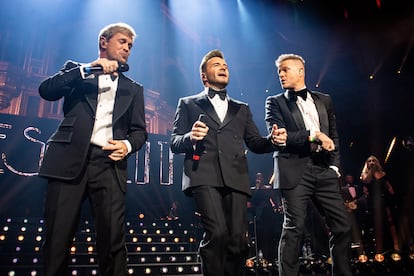

Westlife is a boy band capable of filling arenas 25 years after their debut — even if the group’s members are now in their late forties. The Irish group, the natural successors to phenomenon acts like Take That and Backstreet Boys in the early 2000s, has returned to the stage to celebrate a quarter-century as the “good guys of pop.”
The illustrious Royal Albert Hall in London hosted the highly anticipated first concerts that Shane Filan, Nicky Byrne, and Kian Egan — while the fourth member, Mark Feehily, has declined to join at this time due to health issues — will perform to mark the anniversary across Europe, in addition to presenting new songs and a new album.
The band behind hits such as My Love and If I Let You Go are taking the stage dressed in tuxedos, accompanied by an orchestra, and ready to perform as long as their “hips and fans” allow it. The success of this new iteration has been so great that cinemas across the U.K. will screen their latest concert starting November 29, and the band has expressed their excitement about making the most of the emotions they continue to inspire in their fans.
“At 47 I go, ‘You know what? There’s a lot of shit in the world. So if you can bring joy to somebody’s life and your own, why not?’” Nicky Byrne recently told The Sun.
The band’s journey began under the expert, controlling, and paternalistic eye of Louis Walsh, the manager who had previously led another Irish teen band, Boyzone, to success. They were also under the wing of Simon Cowell, the powerhouse of the British music industry and creator of TV formats like The X Factor and American Idol, as well as a co-architect of One Direction.
Egan, Feehily, and Filan, schoolmates from the Irish town of Sligo, initially formed a sextet with three other friends, who were eventually dismissed after Cowell demanded changes to the lineup, reportedly calling them “the world’s ugliest band.” Nicky Byrne and Brian McFadden joined later, having beaten hundreds of applicants in a casting call, with the sole mission of following to the letter the formula of 1990s manufactured pop: strong voices, good looks, and polished manners.
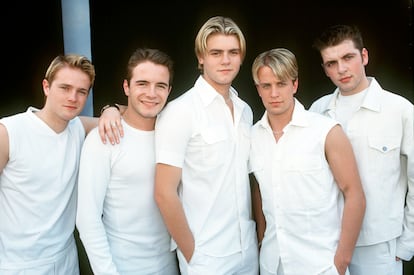
The five young Irishmen, dressed in pure white, set themselves apart from other bands of the era by rejecting even the slightest hint of rebellion, defiance, or party antics. There were no tattoos, earrings, provocative choreography, or flashes of individual personality: they presented themselves as the ideal sons-in-law, with the simple promise of packing the most devoted romance into three-minute ballads.
A perfectly tuned, well-oiled machine, they didn’t even falter when one member, McFadden, left the band in 2004, citing exhaustion. With near-military discipline, they released nine studio albums in nine years, completed just as many tours, sold over 55 million copies, and even launched an official perfume and chocolate bar.
But the machine soon began to falter, and the band’s immaculate image started to show its first cracks. The tight control of their managers, opaque contracts, the prioritization of commercial interests over artistic ones, and a grueling schedule that left them little time to build a life outside the stage gradually eroded the relationships among the members.
“It was made very clear to us by the powers that be that our personal lives 100% came second to Westlife,” McFadden admitted in the BBC documentary Boybands Forever. “We had times where we had relatives die, and we couldn’t go to the funeral because there was a gig or an interview that day.”
“We lived in fear of Louis [Walsh],” added Kian Egan. “He was like: ‘You’re done. I’m going to kick you out of the band. I’m going to put you on the next plane home. Only four people can fit in a taxi, not five.’”
Up until their first breakup in 2012, the decline of Westlife’s image was as gradual as it was unstoppable. Shane Filan, the lead vocalist, declared bankruptcy after losing several million dollars in a failed real estate investment. He revealed that he went from being a millionaire to having to search for coins at the bottom of his wardrobe just to feed his wife and three children. He even had to sell his wedding ring, and despite performing in packed concerts, his bank account never exceeded €470 ($545). Accounts recalling their years of international success show that fame came at a cost.
Mark Feehily, who would later publicly come out as gay, has explained in interviews that he suffered from depression and “suicidal thoughts” because he believed he could never tell anyone his true sexual orientation. “I used to stay in my hotel room. I’d be there for hours, days sometimes, and I had no motivation to go outside. I thought to myself, ‘If I can’t be myself, why bother?’ [...] My mind went to some very dark places,” he told Attitude magazine. The British tabloid press was quick to label Westlife a “cursed” band.
The following years were marked by silence, personal projects, and lives slowly returning to normal without scandal. Since their solo careers failed to take off, they reinvented themselves as TV hosts and reality show contestants — until 2018, when they announced their unexpected reunion, riding the profitable wave of millennial nostalgia that they have been exploiting ever since without remorse.
“You see the generations coming to the shows, people letting their hair down, people remembering the songs from their first kiss, the first dance, all those special things that music does,” said Byrne. “Not even just for the fans — we’re having the time of our lives.”
Sign up for our weekly newsletter to get more English-language news coverage from EL PAÍS USA Edition









































