
Trump’s police, out of control
Immigration agents shot and killed a second protester in Minneapolis, making it clear they consider themselves to be above the law
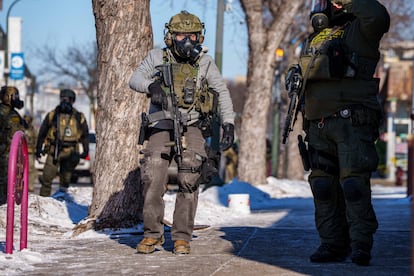

The confrontation between the Trump administration and its own citizens descended to a new level of darkness on Saturday with the shooting death in Minneapolis of Alex Jeffrey Pretti, a 37-year-old nurse, at the hands of immigration police. Federal agents fired numerous shots at Pretti after subduing him and struggling with him on the ground. Pretti was participating in a protest against the presence of Immigration and Customs Enforcement (ICE) units in Minneapolis. He was a U.S. citizen, a resident of Minneapolis, and worked as a nurse in the intensive care unit of the city’s veterans hospital. His murder in broad daylight by a force that acts with no limits on the use of violence is poised to become a symbol of the fight against the Trump administration’s brutal immigration crackdown.
Pretti’s death comes two weeks after ICE agents, also in Minneapolis, killed Renee Good, a 37-year-old American woman who was protesting from her car. Authorities were quick to blame the victims, despite videos recorded by witnesses contradicting their version. In Pretti’s case, the same narrative dynamic has been replicated in the initial hours of shock.
A wave of outrage is sweeping across U.S. cities, mostly progressive environments where the contributions of immigrants are valued, in response to the human, social, and economic consequences of an unprecedented level of police brutality that White House zealots are calling “the largest deportation operation in history.” This public opposition has become especially intense in the state of Minnesota, where this federal police force has been deployed since the end of last year, when a YouTuber posted a video accusing Minnesota’s Somali community, settled there for decades, of a multimillion-dollar fraud involving public assistance.
Some 3,000 agents from this immigration enforcement agency have since participated in indiscriminate raids that have been criticized by governors and mayors across the country for their brutality. Their methods, their masks and their military-style tactics are more geared toward creating a spectacle of cruelty than following a logic of public safety. If there are any excesses, they can count on the full backing of the White House. As in the case of Renee Good’s death, the Trump Administration accuses the victims of “domestic terrorism” and of provoking the ICE agents’ reaction.
Unfortunately, this is a form of impunity with which all police forces have always operated in the U.S. This reality is especially painful in Minneapolis, the city where a local police officer suffocated George Floyd, a Black man, to death in 2020. The incident sparked the massive Black Lives Matter protests across the country. The U.S. of those days still seems like a more peaceful country, though. ICE was a marginal police force before Trump’s return to the White House, dedicated to detaining immigrants with deportation orders. The current administration has transformed it into a force that occupies the streets. No one knows how far the tension might escalate in a country with hundreds of millions of firearms in private hands that transcend ideology. Public safety is not a marketing tool at Trump’s disposal. In Minneapolis, a sinister path has been opened for American democracy.
Sign up for our weekly newsletter to get more English-language news coverage from EL PAÍS USA Edition









































