
Mexican reporter Carmen Aristegui: ‘There is a war against critical journalism’
The news and opinion writer just won Spain’s ‘Diario Madrid Award’ and was named a World Press Freedom Hero by the International Press Institute

The news and opinion writer just won Spain’s ‘Diario Madrid Award’ and was named a World Press Freedom Hero by the International Press Institute
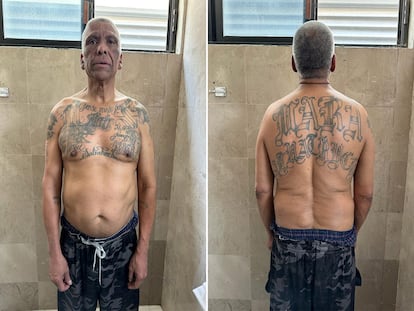
José Wilfredo Ayala, second-in-command of the notorious MS-13 criminal organization and one the FBI’s most wanted fugitives, faces multiple charges in New York

Violence and organized crime are on the rise across the region, upending government plans and putting citizens on alert

The Salvadoran president has appointed two U.S. crypto investors to lead the country’s National Bitcoin Office, as the IMF issues more warnings about the country’s so-called volcano bonds
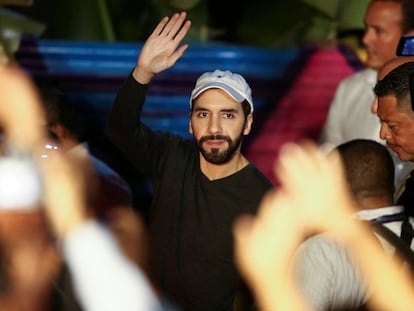
Does feeling safer inevitably imply giving up human rights and civil liberties?
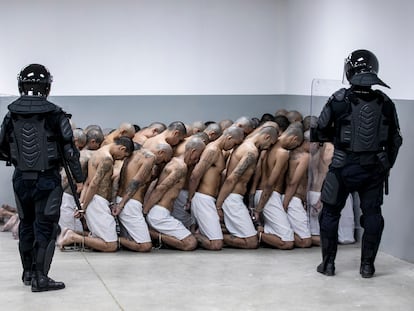
Two former inmates talk to EL PAÍS about the terrors they saw while imprisoned in the country’s jails, which are at breaking point due to Bukele’s controversial crackdown on gangs

One year ago, President Nayib Bukele suspended constitutional rights and started an all-out offensive on gangs, leading to the arrest of more than 65,000 people
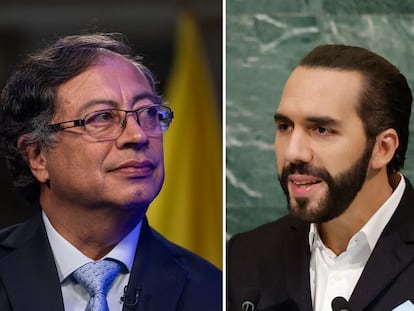
Right-wing politicians like María Fernanda Cabal admire the president of El Salvador, while leftist president Gustavo Petro sees him as a foe
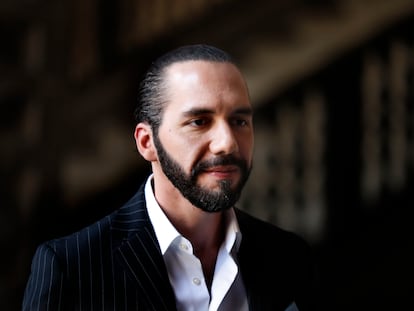
The Salvadoran president’s fierce war on gangs has quelled rampant violence and gained him unprecedented popularity while exacting a heavy toll on rights and freedoms
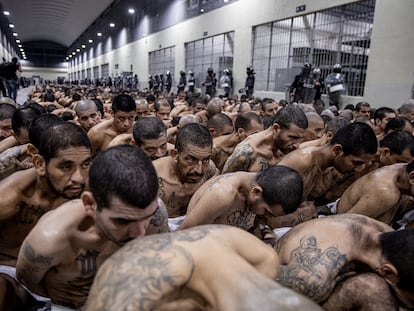
The prison transfer came the same day El Salvador’s congress voted to approve yet another extension of emergency rules that allow police to round up suspected members of street gangs
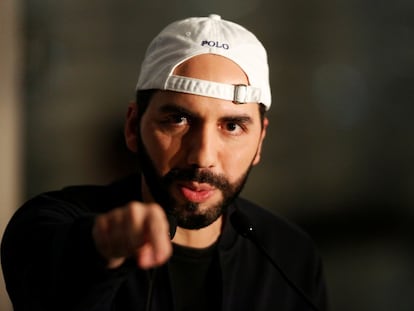
The technocrat president of El Salvador has transformed into an authoritarian despot with no regard for the rule of law and human rights
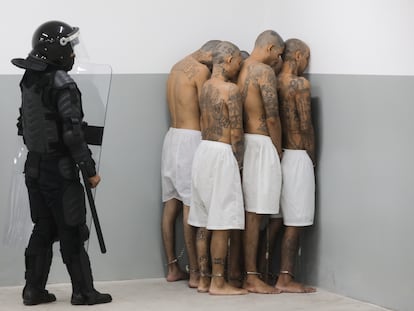
Shortly after the US government accused his administration of negotiating with gangs, El Salvador’s president made a political calculation and responded with a heavy hand
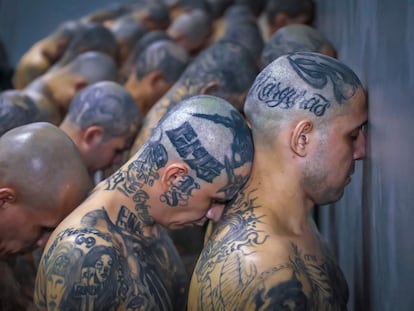
The president assures that the prisoners ‘will live for decades’ in the immense prison built as part of his controversial security strategy, where they will not be able to do ‘any more harm to the population’
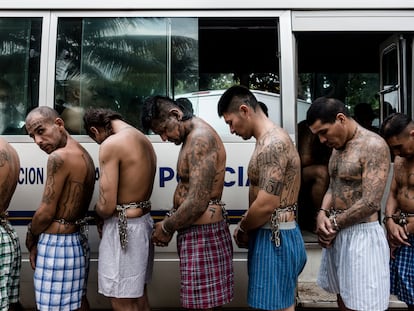
The records, to which Human Rights Watch has had access, have exposed overcrowding, deaths in custody and the detention of over 1,000 minors including children as young as 12

The Mara Salvatrucha, the largest and most dangerous criminal structure in the country, is losing ground thanks to President Nayib Bukele’s state of emergency. But at what cost?
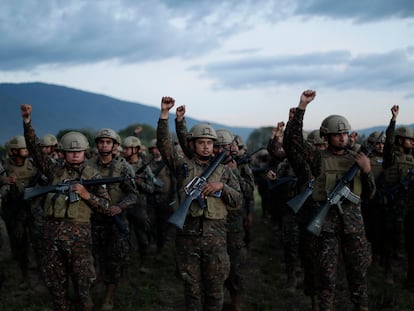
The move marks an escalation of the president’s controversial crackdown on criminal organizations, which has been widely condemned by human rights groups